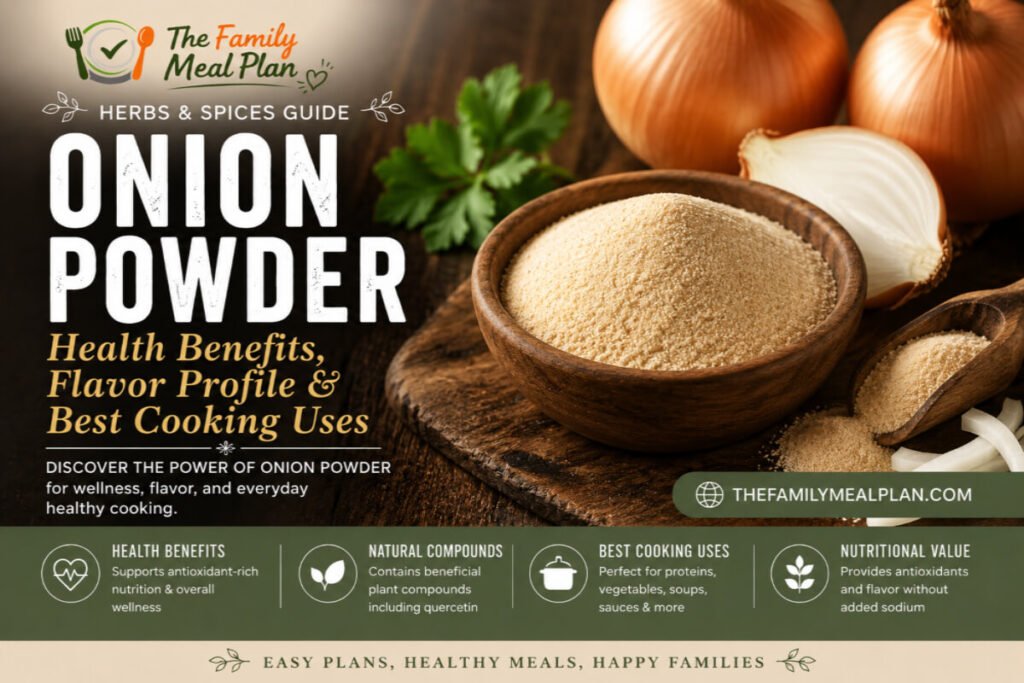
Onion Powder
Most people reach for onion powder to add flavor, but few realize that this simple pantry staple originates from one of the most widely studied vegetables in nutrition research.
Produced by carefully dehydrating fresh onions, onion powder concentrates many of the naturally occurring compounds that have attracted attention in discussions surrounding heart health, blood sugar regulation, antioxidant protection, immune support, healthy circulation, digestive wellness, metabolic health, and healthy aging.
For centuries, onions have played a central role in food cultures throughout Europe, the Mediterranean, Asia, the Middle East, and the Americas. Long before modern nutrition research existed, onions were valued not only for their flavor but also for their perceived wellness-supportive properties. Today, researchers continue exploring many of the same naturally occurring compounds that helped establish onions as one of the world’s most widely consumed vegetables.
Much of the scientific interest surrounding onions centers on quercetin, flavonoids, sulfur-containing compounds, polyphenols, and antioxidant-rich phytonutrients. These naturally occurring plant compounds have been studied in relation to cardiovascular wellness, cellular protection, healthy inflammatory responses, cholesterol-conscious nutrition, blood sugar regulation, immune support, digestive health, and overall wellness-focused eating patterns.
While onion powder should never be viewed as a medication or miracle food, it represents a practical way to incorporate onion-derived compounds into everyday cooking. The dehydration process preserves much of the onion’s characteristic flavor while creating a convenient shelf-stable ingredient that can be easily added to soups, sauces, vegetables, proteins, seasoning blends, marinades, meal prep recipes, and family dinners.
Today, onion powder remains one of the most versatile ingredients in healthy home cooking because it delivers both flavor and nutritional interest. Modern wellness-focused lifestyles increasingly emphasize whole foods, plant-rich meals, and ingredient awareness, making onion powder a valuable pantry staple for cooks seeking both convenience and flavor.
Throughout Mediterranean-inspired cooking, vegetable-forward meals, heart-conscious eating patterns, and practical family cooking, onion powder continues to support nutrient-dense meals built around simple ingredients and balanced nutrition.
Its unique combination of culinary versatility, concentrated flavor, and connection to one of the world’s most extensively researched vegetables helps explain why onion powder remains a foundational ingredient in healthy kitchens around the world.
Onion Powder: More Than Just a Convenience Seasoning
Walk into almost any pantry and you’ll find onion powder sitting quietly beside garlic powder, paprika, black pepper, and other everyday seasonings.
Because it is so common, most people rarely think about it.
Yet few pantry ingredients begin with a vegetable that has received as much scientific attention as the onion.
Unlike many seasonings that exist primarily to add flavor, onion powder originates from a vegetable rich in naturally occurring antioxidants, flavonoids, sulfur compounds, polyphenols, and phytonutrients that continue to attract interest throughout modern nutrition research.
Researchers have investigated onions in relation to heart health, blood sugar regulation, healthy circulation, immune support, digestive wellness, antioxidant protection, and healthy aging. While onion powder is not identical to fresh onions, it remains connected to the same plant compounds that have made onions a subject of nutritional study for decades.
The dehydration process concentrates onion flavor while preserving many of the characteristics that make onions nutritionally interesting. This allows home cooks to enjoy onion-derived flavor and plant compounds in a convenient shelf-stable form that works across countless recipes.
At the same time, onion powder remains one of the most practical ingredients in healthy cooking. It enhances vegetables, proteins, soups, sauces, grains, legumes, and homemade meals without requiring chopping, peeling, or additional preparation.
This unique combination of convenience, versatility, and nutritional interest helps explain why onion powder continues to hold a permanent place in kitchens around the world.
Understanding onion powder goes beyond learning when to season a recipe. It means understanding how a simple pantry ingredient connects to one of the most frequently studied vegetables in modern nutrition science.
💡 Building flavorful homemade meals often starts with understanding how simple herbs, spices, and pantry ingredients work together. Onion powder remains one of the easiest ways to add concentrated flavor while incorporating onion-derived plant compounds into everyday cooking.
Why Onion Powder Matters in Healthy Cooking
Onion powder sits at the intersection of flavor, nutrition, and practical home cooking.
While many seasonings contribute flavor alone, onion powder provides concentrated onion flavor while retaining a connection to the naturally occurring compounds that have made onions a topic of ongoing nutritional interest.
Understanding onion powder’s health benefits, plant compounds, nutritional profile, dehydration process, storage recommendations, flavor pairings, and cooking applications can help home cooks make more informed ingredient choices while creating healthier meals built around whole foods and simple pantry staples.
This is one reason onion powder appears so frequently throughout our:
- Healthy Recipes
- Family Dinners
- Flavor & Seasoning Guides
- Meal Prep Recipes & Planning
- Mediterranean-inspired meals
- Vegetable-forward recipes
- Homemade seasoning blends
- Soups and stews
- Roasted vegetable dishes
- Practical family cooking guides
Whether your goal is improving everyday nutrition, increasing vegetable intake, building more flavor naturally, or becoming a more confident home cook, onion powder remains one of the most valuable pantry ingredients to understand and use regularly.
Quick Health Benefit Highlights
Onion powder is commonly associated with:
● Commonly associated with heart health, healthy circulation, and cardiovascular wellness
● Frequently discussed in relation to blood sugar regulation and metabolic wellness
● Rich in quercetin and flavonoids associated with antioxidant protection and cellular health
● Linked to healthy blood pressure and cholesterol-conscious nutrition discussions
● Frequently associated with immune-supportive and wellness-focused eating habits
● Commonly connected to anti-inflammatory nutrition and whole-food lifestyles
● Supports digestion-conscious eating habits and gut-friendly nutrition patterns
● Associated with antimicrobial compounds studied for their role in supporting wellness
● Frequently included in Mediterranean-style dietary patterns linked to long-term health
● Commonly discussed in relation to healthy aging, cellular protection, and nutrient-dense nutrition
● Contains sulfur-containing compounds naturally found in allium vegetables
● Derived from one of the most extensively studied vegetables in nutrition science
💡 Much of the scientific interest surrounding onions centers on quercetin, sulfur compounds, flavonoids, antioxidants, and other naturally occurring plant compounds that continue to be studied for their potential role in cardiovascular wellness, metabolic health, cellular protection, and healthy aging.
Save This Guide for Later
Before exploring the complete Onion Powder: Health Benefits, Flavor Profile & Best Cooking Uses guide below, save this resource so you can quickly revisit onion powder nutrition facts, quercetin research, antioxidant-rich plant compounds, cardiovascular wellness discussions, blood sugar regulation topics, flavor pairings, storage recommendations, and practical ways to use onion powder in healthy homemade meals.
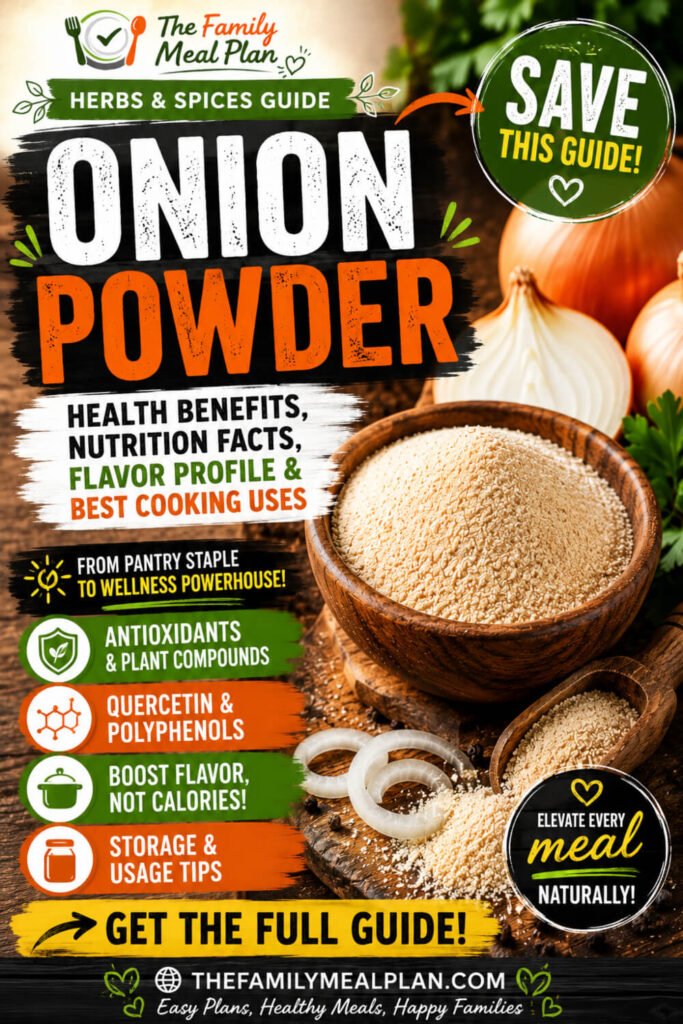
Onion powder is far more than a simple seasoning. From quercetin and antioxidant-rich flavonoids to sulfur compounds, cardiovascular wellness research, metabolic health discussions, and everyday culinary versatility, understanding onion powder can help you create more flavorful and wellness-focused meals throughout the year.
💡 Beyond its savory flavor and everyday convenience, onion powder’s growing reputation in wellness-focused nutrition stems from the naturally occurring compounds inherited from fresh onions—compounds that continue to attract attention in research involving heart health, blood sugar regulation, immune support, antioxidant protection, and healthy aging.
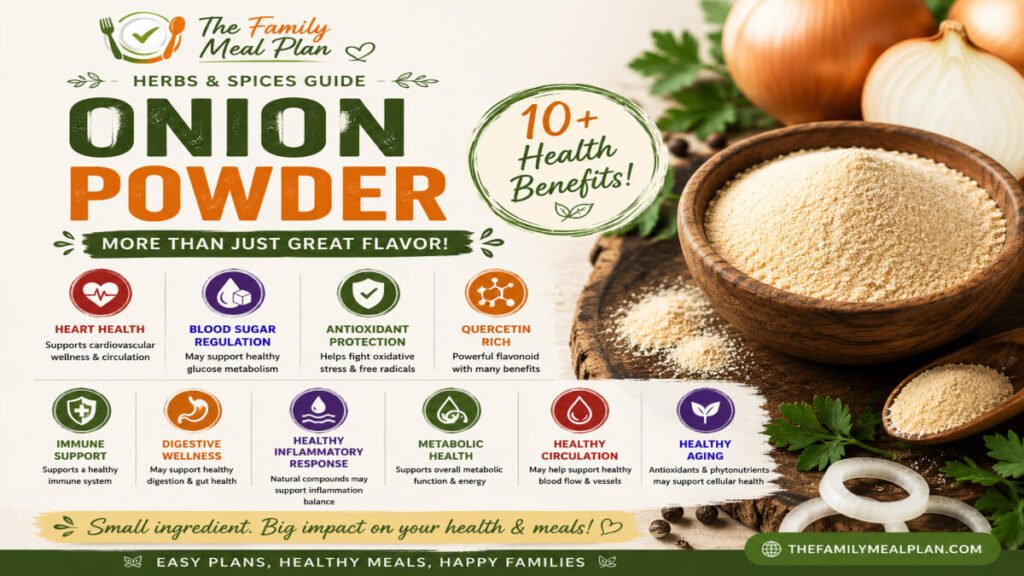
10+ Health Benefits Commonly Associated with Onion Powder
While onion powder should always be viewed as part of a balanced dietary pattern rather than a standalone solution, researchers continue exploring how onion-derived compounds may contribute to overall wellness.
Much of this interest centers around quercetin, flavonoids, sulfur-containing compounds, antioxidants, and polyphenols that naturally occur in onions and continue to attract scientific attention in relation to cardiovascular health, blood sugar regulation, immune function, healthy aging, and cellular protection.
Some of the most commonly discussed health benefits associated with onion powder include:
1. Antioxidant Protection & Cellular Health
One of the most frequently discussed aspects of onion nutrition is its antioxidant content.
Throughout normal metabolism, the body naturally produces unstable molecules known as free radicals. When these molecules accumulate in excess, they may contribute to oxidative stress, a process researchers associate with cellular aging and various chronic health concerns.
Onions naturally contain a variety of antioxidant compounds, including flavonoids and polyphenols, that help support the body’s defenses against oxidative stress.
Because onion powder is produced from dehydrated onions, many of these naturally occurring compounds remain present in concentrated form.
Although onion powder is typically consumed in small amounts, regular use as part of a plant-rich dietary pattern may contribute to overall antioxidant intake.
This antioxidant activity remains one of the strongest and most consistently discussed areas of onion research.
2. Quercetin and Flavonoid Support
Among all compounds found in onions, few receive more scientific attention than quercetin.
Quercetin is a naturally occurring flavonoid that functions as both an antioxidant and plant-protective compound within the onion itself.
Researchers continue investigating quercetin in relation to:
- Cellular protection
- Cardiovascular wellness
- Healthy inflammatory responses
- Immune function
- Healthy aging
- Metabolic health
Because onions are considered one of the most recognized dietary sources of quercetin, onion powder remains closely associated with many of these discussions.
While concentrations vary based on onion variety, growing conditions, dehydration methods, and storage, quercetin remains one of the primary reasons onions continue attracting nutritional interest.
3. Heart Health & Healthy Circulation
Cardiovascular wellness represents one of the most common themes throughout onion-related research.
Scientists continue studying how the antioxidants, flavonoids, sulfur compounds, and polyphenols found in onions may support heart-conscious dietary patterns.
Research discussions often focus on:
- Healthy circulation
- Blood vessel function
- Antioxidant protection
- Cardiovascular wellness
- Healthy blood pressure support
- Cholesterol-conscious nutrition
Although onion powder should never be viewed as a treatment or substitute for medical care, it remains connected to many of the same naturally occurring compounds that have helped make onions a subject of cardiovascular research.
This is one reason onions continue to appear throughout many Mediterranean-style dietary patterns associated with long-term wellness.
4. Blood Sugar Regulation & Metabolic Wellness
Another major area of interest involves onion consumption and metabolic health.
Researchers continue investigating how various compounds found in onions may influence:
- Glucose metabolism
- Blood sugar regulation
- Insulin sensitivity
- Energy utilization
- Metabolic wellness
While many findings remain under active investigation, onions frequently appear in discussions surrounding blood sugar management and wellness-focused nutrition.
Because onion powder originates directly from onions, it often appears within the same broader research conversations.
Future studies will continue helping researchers better understand these relationships.
5. Healthy Inflammatory Response Support
Inflammation is a normal biological process that plays an important role throughout the body.
Researchers continue exploring how nutrition may help support healthy inflammatory balance, particularly through foods rich in antioxidants and plant compounds.
Much of the interest surrounding onions in this area focuses on:
- Quercetin
- Flavonoids
- Sulfur compounds
- Polyphenols
Laboratory and nutritional research continues examining how these compounds may contribute to overall wellness and healthy inflammatory responses.
As part of a dietary pattern rich in vegetables, fruits, herbs, spices, legumes, and whole foods, onion-derived compounds remain a frequent topic in anti-inflammatory nutrition discussions.
6. Immune System Support
Many wellness-focused eating patterns emphasize ingredients rich in naturally occurring antioxidants and phytonutrients.
Because onions contain numerous bioactive compounds, researchers have long been interested in their potential relationship to immune function.
Although onion powder is not consumed in medicinal quantities, it contributes flavor and plant compounds that support diverse, plant-rich eating habits.
This association with immune-supportive nutrition remains one reason onions continue to hold a prominent place in traditional food cultures around the world.
7. Digestive Wellness & Gut Health
Digestive health remains another area frequently connected to onion consumption.
Historically, onions have appeared throughout traditional food cultures where digestive wellness was closely tied to overall health.
Modern research continues exploring how compounds found in onions may interact with digestive processes and contribute to broader wellness discussions.
Fresh onions naturally contain prebiotic fibers, while onion powder primarily contributes concentrated flavor and certain retained plant compounds.
Although onion powder differs from fresh onions nutritionally, it remains connected to the broader digestive-health discussions that often surround onion consumption.
8. Cholesterol-Conscious Nutrition
Heart-conscious eating patterns often emphasize foods associated with cholesterol awareness and cardiovascular wellness.
Researchers continue exploring how onions and onion-derived compounds may fit into dietary approaches designed to support long-term heart health.
While onion powder itself should not be viewed as a direct cholesterol-lowering ingredient, onions remain frequently discussed within nutritional research related to:
- Cardiovascular health
- Lipid metabolism
- Antioxidant protection
- Cholesterol-conscious nutrition
This connection helps explain why onions are commonly included in wellness-focused dietary recommendations centered around whole foods.
9. Antimicrobial Compound Research
One of the lesser-known areas of onion research involves antimicrobial activity.
For centuries, onions have appeared in traditional food and wellness practices throughout numerous cultures.
Modern researchers continue exploring sulfur-containing compounds and other naturally occurring substances found in onions for their potential antimicrobial properties.
Although much of this research remains ongoing, antimicrobial activity continues to represent a recurring topic in onion-related scientific literature.
10. Healthy Aging & Cellular Protection
Healthy aging discussions often focus on reducing oxidative stress and supporting long-term cellular function.
Because onions contain antioxidant compounds such as quercetin, flavonoids, and polyphenols, researchers continue exploring their potential role in healthy aging strategies.
While no single ingredient determines long-term health outcomes, regularly consuming antioxidant-rich foods remains a widely accepted component of healthy lifestyle practices.
Onion powder’s ability to add flavor while contributing onion-derived compounds makes it an easy addition to wellness-focused meal planning.
Supports Flavorful Whole-Food Eating Habits
One of the most practical benefits of onion powder may simply be its ability to make nutritious foods taste better.
Vegetables, legumes, lean proteins, soups, grain bowls, casseroles, and homemade meals often become more enjoyable when properly seasoned.
By helping create satisfying flavor without excessive reliance on highly processed sauces or flavor enhancers, onion powder supports ingredient-focused home cooking and long-term healthy eating habits.
For many families, better flavor is often what makes healthier meals sustainable.
💡 While current onion research frequently focuses on antioxidants, quercetin, sulfur compounds, cardiovascular wellness, blood sugar regulation, and healthy inflammatory responses, researchers continue exploring additional ways onion-derived compounds may contribute to overall health and wellness.
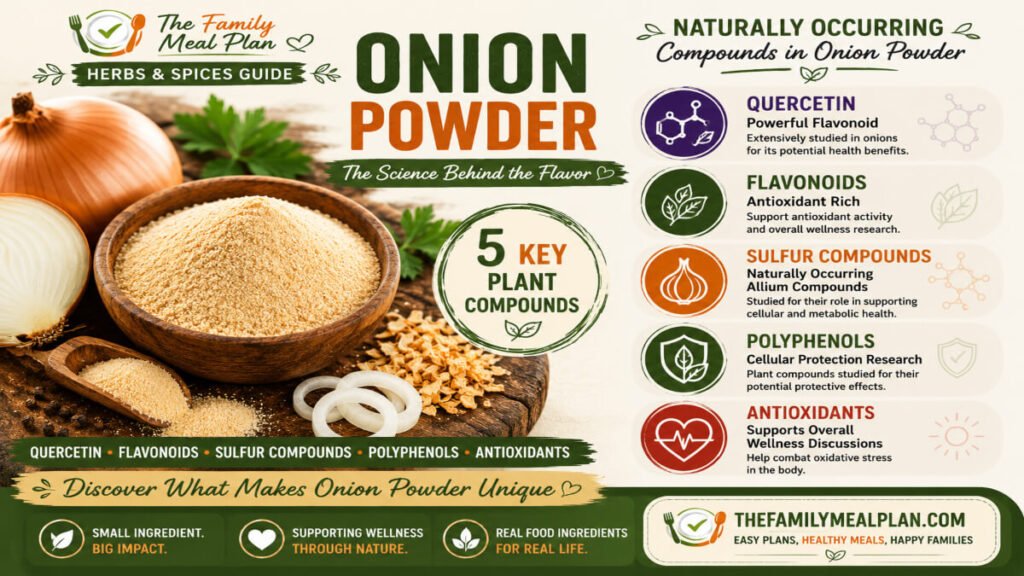
Naturally Occurring Compounds in Onion Powder
Much of onion powder’s reputation in both traditional food cultures and modern nutrition research comes from the naturally occurring compounds inherited from fresh onions.
Although onion powder is often viewed simply as a seasoning, researchers continue studying these compounds because of their potential influence on cardiovascular wellness, antioxidant activity, blood sugar regulation, immune support, healthy aging, and overall dietary quality.
Among the most recognized compounds found in onion powder are quercetin, flavonoids, sulfur-containing compounds, polyphenols, and various antioxidant-rich phytonutrients.
These compounds contribute both to onion powder’s nutritional interest and to the flavor characteristics that make onions such an important ingredient worldwide.
Quercetin
Quercetin is the most widely discussed plant compound associated with onions.
Researchers continue studying quercetin in relation to:
- Antioxidant activity
- Cellular protection
- Heart health
- Healthy inflammatory responses
- Immune support
- Healthy aging
Because onions are among the most recognized dietary sources of quercetin, this flavonoid remains one of the primary reasons onions attract ongoing scientific attention.
Flavonoids
Flavonoids are naturally occurring plant compounds commonly associated with antioxidant-rich foods.
They help contribute to onion powder’s overall antioxidant profile and play a significant role in the wellness-focused reputation of onions.
Researchers frequently study flavonoids because of their relationship to cellular protection and overall dietary quality.
Sulfur-Containing Compounds
Much of onion’s distinctive aroma and flavor originates from sulfur-containing compounds.
These compounds are found throughout the allium family, which includes:
- Onions
- Garlic
- Shallots
- Leeks
- Chives
Researchers continue exploring sulfur compounds in relation to cardiovascular wellness, immune support, antioxidant activity, and overall health.
Polyphenols
Polyphenols are another group of plant compounds frequently associated with antioxidant-rich foods.
Onion powder contains polyphenols that contribute to its nutritional profile and support its role in plant-forward eating patterns centered around fruits, vegetables, herbs, spices, legumes, and whole foods.
Antioxidant-Rich Phytonutrients
In addition to specific compounds like quercetin, onions contain a broad collection of phytonutrients that contribute to their antioxidant activity.
These compounds help explain why onions remain one of the most frequently discussed vegetables in wellness-focused nutrition.
💡 Quercetin is to onions what piperine is to black pepper—the compound most closely associated with the ingredient’s growing reputation in modern nutrition research.
Nutritional Profile of Onion Powder
Although onion powder is typically used in small amounts, it contains a variety of naturally occurring nutrients and plant compounds that contribute to its nutritional profile. While it is not consumed in the same quantities as vegetables, grains, or proteins, onion powder still provides trace minerals, dietary fiber, and naturally occurring compounds inherited from fresh onions.
| Onion Powder Nutrition Facts | ||
|---|---|---|
| Nutrient | Approximate Amount (Per 1 Tbsp / 7–8g) | Daily Value (%) |
| Calories | 24 | 1% |
| Carbohydrates | 5.6g | 2% |
| Dietary Fiber | 1.1g | 4% |
| Protein | 0.8g | 2% |
| Potassium | 115mg | 2–3% |
| Calcium | 18mg | 1–2% |
| Magnesium | 8mg | 2% |
| Iron | 0.2mg | 1% |
| Sodium | 2mg | <1% |
| Nutritional values are approximate and may vary by manufacturer. | Source: USDA Food Data Central | TheFamilyMealPlan.com |
Onion Powder Contains:
● Quercetin
● Flavonoids
● Polyphenols
● Sulfur-containing compounds
● Antioxidant-rich phytonutrients
● Small amounts of dietary fiber
● Potassium
● Calcium
● Magnesium
● Iron
● Trace amounts of B vitamins
● Naturally occurring plant compounds associated with wellness-focused nutrition
Because onion powder is consumed as a seasoning, it should not be viewed as a significant source of vitamins or minerals on its own. However, regular use may contribute to the overall nutritional quality of meals while encouraging the consumption of vegetables, legumes, lean proteins, soups, and other whole-food ingredients.
One of onion powder’s greatest nutritional advantages may simply be its ability to improve the flavor of nutrient-dense foods. Vegetables, beans, whole grains, soups, and homemade meals often become more enjoyable with proper seasoning, helping support long-term healthy eating habits.
💡 Onion powder’s nutritional value comes less from large amounts of vitamins and minerals and more from the naturally occurring plant compounds inherited from fresh onions.
Why Onion Powder Is Unique
Many pantry seasonings provide flavor.
Many herbs and spices contain antioxidants.
Many ingredients contribute aroma and complexity to recipes.
What makes onion powder unique is that it originates from one of the most widely consumed and extensively researched vegetables in the world.
Unlike black pepper, which is valued for piperine, or turmeric, which is known for curcumin, onion powder derives much of its nutritional interest from a combination of compounds including:
- Quercetin
- Flavonoids
- Sulfur compounds
- Polyphenols
- Antioxidant-rich phytonutrients
At the same time, onion powder occupies a unique culinary role.
Fresh onions contribute flavor, texture, moisture, and aroma.
Onion powder contributes concentrated onion flavor without changing texture or moisture levels.
This makes it especially valuable in:
- Dry rubs
- Seasoning blends
- Marinades
- Soups
- Sauces
- Ground meat recipes
- Roasted vegetables
- Meal prep recipes
Its shelf stability further distinguishes it from fresh onions.
While fresh onions eventually spoil, onion powder can remain useful for extended periods when stored properly, making it one of the most practical pantry ingredients available.
Researchers continue exploring onion-derived compounds because onions themselves remain associated with a wide range of wellness-focused discussions, including cardiovascular health, blood sugar regulation, antioxidant protection, healthy aging, and metabolic wellness.
This connection to both nutrition science and everyday cooking is what makes onion powder stand apart from many other common seasonings.
💡 While many seasonings simply enhance flavor, onion powder delivers concentrated onion flavor while maintaining a connection to the same plant compounds that have made onions one of the most researched vegetables in nutrition science.
How Onion Powder Is Made
Understanding how onion powder is produced helps explain both its concentrated flavor and its long shelf life.
Although the finished product appears simple, creating high-quality onion powder requires careful harvesting, dehydration, processing, and storage procedures designed to preserve flavor, maintain quality, and create the shelf-stable seasoning found in kitchens around the world.
From the farm field to the spice cabinet, each stage of the process plays an important role in developing the flavor, aroma, consistency, and storage stability that make onion powder one of the most widely used pantry ingredients today.
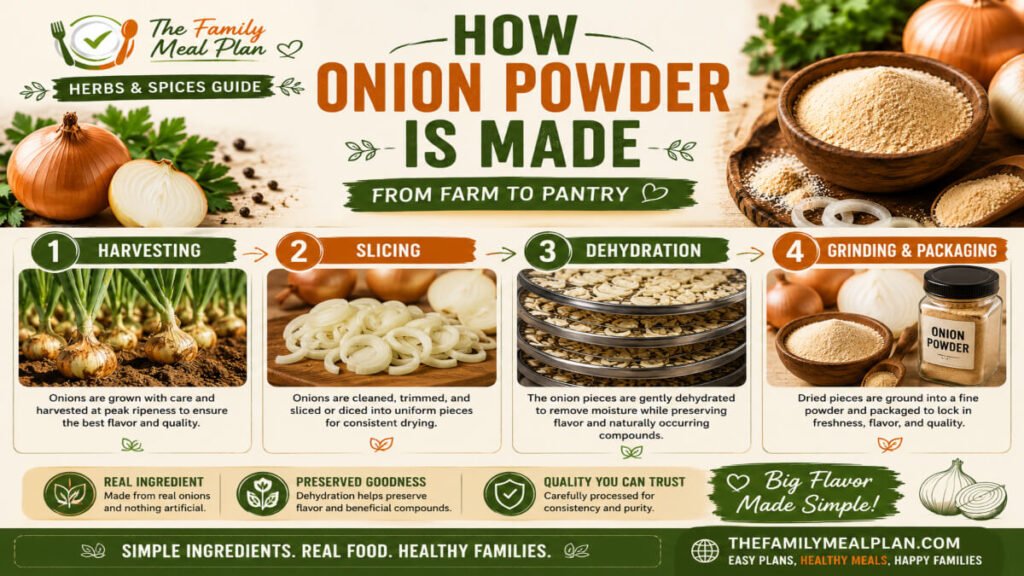
Harvesting
The process begins with mature onions harvested from commercial farms.
Farmers allow onions to reach full maturity before harvesting to maximize flavor development and storage quality.
Several onion varieties may be used depending on the desired flavor characteristics of the final product.
After harvest, onions undergo cleaning and sorting to remove damaged bulbs and prepare them for processing.
High-quality onions produce higher-quality onion powder.
Cleaning & Preparation
Before dehydration begins, onions are:
- Washed
- Peeled
- Trimmed
- Inspected
The onions are then sliced into uniform pieces.
Consistent sizing helps ensure even drying throughout the dehydration process.
This step is important because uneven drying can affect both flavor and storage stability.
Dehydration Process
Dehydration is the stage that transforms fresh onions into a shelf-stable ingredient.
During this process:
- Moisture is removed
- Flavor becomes concentrated
- Shelf life increases dramatically
- Weight decreases substantially
Commercial processors typically use carefully controlled drying systems designed to preserve flavor while reducing moisture content to safe storage levels.
As water leaves the onion, the savory flavor compounds become more concentrated.
This is one reason onion powder often tastes stronger than fresh onion when measured by volume.
Grinding & Processing
Once dehydration is complete, the dried onion pieces are processed into smaller forms.
Depending on the desired product, processors may create:
- Onion flakes
- Minced onion
- Granulated onion
- Onion powder
For onion powder, the dehydrated onions are finely ground into a smooth consistency.
This creates the familiar texture found in most spice cabinets.
The resulting powder disperses easily throughout recipes, providing even flavor distribution.
Quality Control
Manufacturers routinely inspect onion powder for:
- Moisture content
- Flavor quality
- Texture consistency
- Purity
- Color
Maintaining low moisture levels is particularly important because moisture can shorten shelf life and increase the risk of spoilage.
Storage Considerations
After processing, onion powder is packaged in airtight containers designed to protect it from:
- Moisture
- Heat
- Air exposure
- Direct sunlight
Proper storage helps preserve flavor and aroma while extending usable shelf life.
Because onion powder contains significantly less moisture than fresh onions, it can remain stable for long periods when stored correctly.
💡 The dehydration process is what makes onion powder unique. By removing water while concentrating flavor, manufacturers create a pantry ingredient that delivers onion flavor year-round without the storage challenges of fresh onions.
Fresh Onion vs Onion Powder
One of the most common questions surrounding onion powder is how it compares nutritionally and culinarily to fresh onions.
Both forms offer advantages, and understanding the differences helps determine when each is most appropriate.
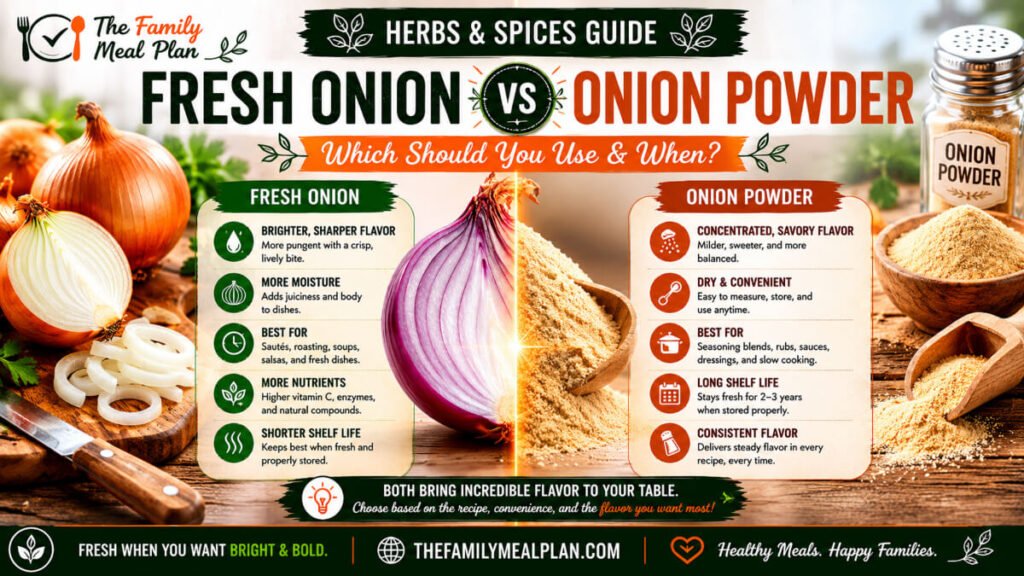
Fresh Onions
Fresh onions provide:
Advantages
● Natural moisture
● Texture
● Fiber
● Fresh flavor
● Greater food volume
● Culinary versatility
Fresh onions play an important role in:
- Soups
- Stews
- Stir fries
- Roasted dishes
- Salads
- Sandwiches
- Vegetable preparations
Because they contain water and fiber, fresh onions contribute both flavor and physical structure to recipes.
Limitations
● Require peeling and chopping
● Shorter shelf life
● Can spoil over time
● Less convenient for quick meal preparation
Onion Powder
Onion powder provides:
Advantages
● Concentrated flavor
● Long shelf life
● Easy storage
● Quick preparation
● Consistent seasoning
● Excellent flavor distribution
It works especially well in:
- Dry rubs
- Seasoning blends
- Marinades
- Sauces
- Ground meat mixtures
- Roasted vegetables
- Meal prep recipes
Limitations
● Does not provide texture
● Lower fiber contribution compared to fresh onions
● Cannot replace fresh onions in every recipe
Nutritional Differences
Fresh onions generally contain:
- More water
- More natural fiber
- Greater volume per serving
Onion powder generally provides:
- Concentrated flavor
- Concentrated plant compounds by weight
- Greater convenience
- Longer storage stability
Because dehydration removes water rather than flavor compounds, onion powder often delivers a stronger onion flavor than fresh onions when used in small amounts.
Which Is Better?
The answer depends entirely on the goal.
Choose fresh onions when:
- Texture matters
- Moisture is needed
- A recipe centers around onions
Choose onion powder when:
- Convenience matters
- Consistent flavor is desired
- Quick preparation is important
- Building seasoning blends
Many experienced cooks use both.
Fresh onions create foundational flavor and texture, while onion powder enhances depth and consistency throughout the dish.
💡 Fresh onions and onion powder should not be viewed as competitors. They are complementary ingredients that serve different purposes while sharing the same onion-based flavor foundation.
Flavor Profile of Onion Powder
Onion powder has earned a permanent place in kitchens around the world because it delivers remarkable flavor depth from a single ingredient. While many people simply describe onion powder as “savory,” its flavor profile is far more complex than most realize.
The dehydration process concentrates the naturally occurring flavor compounds found in fresh onions while removing much of the moisture. This creates a seasoning that delivers consistent onion flavor in a highly versatile form.
Unlike fresh onions, which can range from sharp and pungent to sweet and mild depending on preparation methods, onion powder offers a balanced onion character that blends easily into recipes without dominating other ingredients.
This versatility explains why onion powder appears in everything from homemade seasoning blends and roasted vegetables to soups, sauces, marinades, casseroles, meal prep recipes, and restaurant-quality spice rubs.
Common Flavor Notes Found in Onion Powder
● Savory
● Mildly sweet
● Earthy
● Umami-rich
● Slightly pungent
● Aromatic
● Warm
● Rounded
● Flavor-enhancing
● Balanced
One of onion powder’s greatest strengths is its ability to enhance the natural flavors of other ingredients rather than compete with them.
Many chefs view onion powder as a “foundation seasoning” because it helps build depth underneath the more noticeable flavors in a recipe.
This supporting role makes it one of the most versatile seasonings available.
Why Onion Powder Tastes Different Than Fresh Onions
Fresh onions contain significant moisture, natural sugars, sulfur compounds, and volatile aromatic compounds.
During dehydration:
- Water is removed
- Flavor becomes concentrated
- Sweetness becomes more noticeable
- Savory characteristics intensify
- Aroma becomes more focused
The result is a seasoning that often delivers more onion flavor per teaspoon than fresh onions can provide in certain recipes.
This concentrated flavor is one reason onion powder performs exceptionally well in spice blends and dry seasonings.
Why Chefs Use Onion Powder
Professional kitchens often use onion powder because it provides:
- Consistent flavor
- Even distribution
- No added moisture
- Reliable seasoning control
- Faster preparation
Rather than replacing fresh onions, onion powder frequently works alongside them.
Many chefs use fresh onions to create texture and foundational flavor while adding onion powder to reinforce and deepen the overall onion profile of the finished dish.
💡 Onion powder’s greatest culinary strength may be its ability to quietly improve almost any savory recipe while remaining nearly invisible as an individual ingredient.
Onion Powder Pairs Especially Well With
One reason onion powder remains a pantry staple is its extraordinary compatibility with a wide range of foods.
Few seasonings work across as many ingredient categories while maintaining balance and versatility.
Proteins
Onion powder naturally enhances:
● Chicken
● Turkey
● Beef
● Pork
● Seafood
● Shrimp
● Salmon
● Eggs
● Ground meat recipes
Its savory depth helps amplify the natural flavors of proteins without overpowering them.
This makes onion powder a common ingredient in:
- Marinades
- Dry rubs
- Burger mixtures
- Meatloaf
- Meatballs
- Chicken seasoning blends
Vegetables
Onion powder pairs exceptionally well with:
● Potatoes
● Sweet potatoes
● Broccoli
● Cauliflower
● Brussels sprouts
● Green beans
● Carrots
● Mushrooms
● Asparagus
● Zucchini
A simple combination of olive oil, onion powder, garlic, sea salt, and black pepper can dramatically improve roasted vegetables.
This pairing remains one of the easiest ways to build flavor naturally.
Soups & Stews
Onion powder contributes depth and complexity to:
● Chicken soup
● Vegetable soup
● Beef stew
● Chili
● Lentil soup
● Bean soup
● Broths
Because onion powder disperses evenly throughout liquid recipes, it provides consistent flavor from the first bite to the last.
Pasta & Sauces
Onion powder plays a valuable role in:
● Tomato sauces
● Cream sauces
● Alfredo sauce
● Garlic butter sauces
● Pan sauces
● Pasta bakes
Its concentrated flavor helps create depth without altering texture.
Rice, Grains & Legumes
Onion powder complements:
● Rice
● Quinoa
● Couscous
● Farro
● Lentils
● Chickpeas
● Black beans
● White beans
These pairings appear frequently throughout Mediterranean-inspired and plant-forward cooking.
Snack Foods & Homemade Seasonings
Onion powder is often considered essential for:
● Homemade spice blends
● Popcorn seasoning
● Roasted nuts
● Potato wedges
● Air fryer recipes
● Vegetable seasoning mixes
This versatility explains why onion powder is often one of the first ingredients listed in commercial seasoning blends.
💡 Onion powder works best when viewed as a foundational flavor builder. Rather than dominating a dish, it strengthens the flavors already present.
Best Herbs & Spices to Pair with Onion Powder
One reason onion powder appears in countless recipes is its ability to work harmoniously alongside other herbs and spices.
Some of the most effective combinations include:
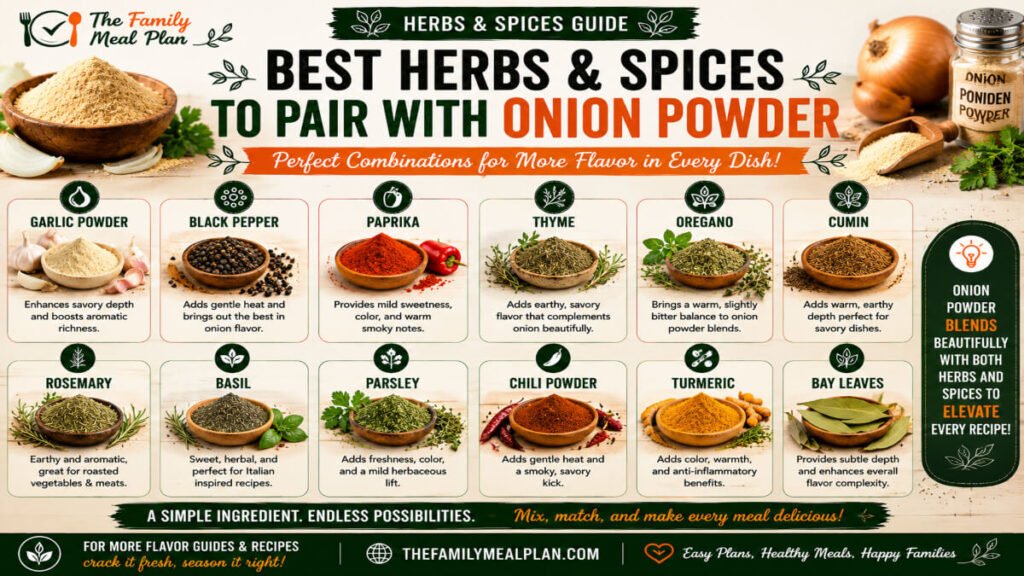
Garlic
Perhaps the most common pairing in the world.
Together they create:
● Savory depth
● Balanced seasoning
● Rich flavor
● Strong aromatic foundation
This combination appears throughout:
- Soups
- Sauces
- Vegetables
- Proteins
- Marinades
- Meal prep recipes
For many home cooks, garlic powder and onion powder function as a foundational seasoning duo.
Black Pepper
Much like garlic, black pepper pairs naturally with onion powder.
Together they provide:
● Warmth
● Depth
● Complexity
● Balanced savory flavor
This combination works especially well on proteins and roasted vegetables.
Paprika
Paprika adds:
● Color
● Mild sweetness
● Earthy warmth
When paired with onion powder, it creates a balanced seasoning profile ideal for:
- Chicken
- Potatoes
- Dry rubs
- Roasted vegetables
Smoked Paprika
The smoky character of smoked paprika combines beautifully with onion powder.
Popular applications include:
● Sheet pan dinners
● Grilled meats
● Roasted potatoes
● Vegetable recipes
Cumin
Cumin and onion powder frequently appear together in:
● Chili
● Taco seasoning
● Rice bowls
● Mexican-inspired recipes
The combination creates warmth and depth while maintaining balance.
Oregano
A classic Mediterranean pairing.
Excellent for:
● Tomato sauces
● Roasted vegetables
● Chicken dishes
● Greek-inspired meals
Thyme
Thyme adds subtle earthy notes that complement onion powder’s savory character.
Popular uses include:
● Poultry recipes
● Soups
● Vegetable dishes
● Roasted potatoes
Rosemary
Rosemary’s bold pine-like flavor pairs beautifully with onion powder in:
● Roasted meats
● Potatoes
● Mediterranean-inspired recipes
Parsley
Parsley provides brightness that balances onion powder’s deeper savory notes.
Together they work well in:
● Soups
● Vegetables
● Grain bowls
● Seafood recipes
Turmeric
For wellness-focused cooking, turmeric and onion powder often appear together.
This pairing is especially common in:
● Rice dishes
● Vegetable recipes
● Lentil soups
● Mediterranean-inspired meals
💡 Onion powder works best as a supporting seasoning that helps tie multiple herbs and spices together into a cohesive flavor profile.
How to Store Onion Powder
Proper storage helps preserve onion powder’s flavor, aroma, and overall quality.
Because onion powder contains very little moisture, it generally stores well when protected from environmental factors.
Best Storage Practices
Store onion powder in:
● Airtight containers
● Cool locations
● Dry environments
● Dark cabinets
● Pantry shelves away from heat sources
To help preserve freshness and flavor, avoid storing onion powder near:
● Stovetops
● Ovens
● Dishwashers
● Areas with high humidity
Why Moisture Is the Biggest Threat
Moisture is the primary factor that reduces onion powder quality.
Exposure can cause:
● Clumping
● Flavor loss
● Reduced shelf life
● Aroma deterioration
Keeping containers tightly sealed helps prevent these issues.
Signs Onion Powder Has Lost Quality
Onion powder may be losing potency if:
● Aroma becomes weak
● Flavor tastes flat
● Color fades noticeably
● Clumping becomes excessive
While older onion powder is generally safe to consume when stored properly, its flavor quality gradually declines over time.
Whole Pantry Rotation Matters
Many home cooks overlook seasoning freshness.
Replacing older seasonings periodically helps maintain recipe quality and ensures stronger flavor from every ingredient used.
💡 Onion powder’s long shelf life is one of its greatest advantages, but proper storage is what preserves the concentrated flavor that makes it so valuable.
Potential Cooking Benefits
Onion powder remains one of the most practical ingredients in healthy home cooking because it helps create flavor naturally without requiring extensive preparation.
Some of its most valuable culinary benefits include:
● Adds concentrated onion flavor quickly
● Enhances vegetables and proteins
● Helps build flavor without additional moisture
● Distributes evenly throughout recipes
● Works in both simple and complex dishes
● Supports ingredient-focused whole-food cooking
● Functions well in seasoning blends
● Helps reduce reliance on highly processed flavoring products
● Saves preparation time compared to fresh onions
● Supports consistent meal prep cooking
● Provides year-round pantry convenience
● Works across nearly every major cuisine
For many home cooks, onion powder serves as one of the foundational building blocks of flavorful home cooking.
Whether preparing a quick weeknight dinner, a large batch of meal prep, or a homemade seasoning blend, onion powder consistently provides reliable flavor and versatility.
💡 Onion powder’s greatest cooking benefit may be its ability to deliver the flavor foundation of onions in a form that is fast, consistent, shelf-stable, and incredibly versatile.
Recipes to Try with Onion Powder
One of onion powder’s greatest strengths is its ability to improve countless recipes without requiring additional preparation. Because it pairs naturally with proteins, vegetables, grains, soups, sauces, and homemade seasoning blends, onion powder appears throughout many of our most popular family-friendly recipes.
If you’re looking for practical ways to incorporate more onion powder into everyday cooking, these recipes are excellent places to start.
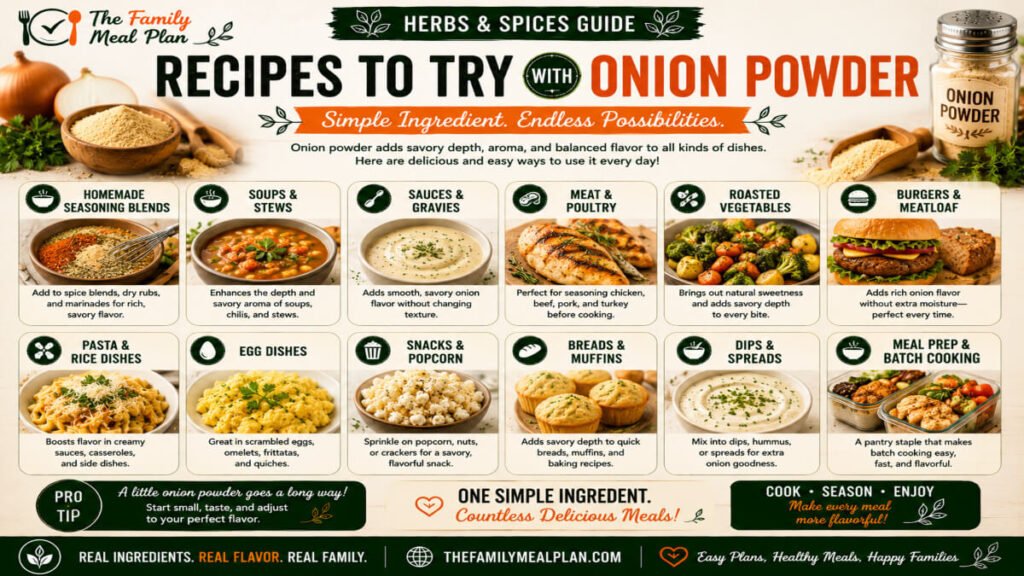
Garlic Butter Steak Bites with Potatoes
Onion powder helps create a savory seasoning foundation that complements the richness of butter, garlic, and perfectly seared steak bites.
Its concentrated flavor distributes evenly throughout the potatoes while helping build the classic steakhouse-style flavor profile that makes this recipe a family favorite.
Healthy Lemon Garlic Chicken
The bright citrus flavors in this recipe pair exceptionally well with onion powder’s savory depth.
Combined with garlic, herbs, and roasted vegetables, onion powder helps create a balanced seasoning profile without overwhelming the freshness of the lemon.
Teriyaki Beef Stir Fry
Onion powder enhances the sweet and savory flavors found throughout this quick stir fry recipe.
It works alongside garlic, soy sauce, vegetables, and beef to create layers of flavor while supporting the meal’s overall balance.
💡 Onion powder often works best behind the scenes. Rather than becoming the star ingredient, it quietly enhances nearly every other flavor in the recipe.
What foods pair best with onion powder?
Onion powder pairs exceptionally well with:
- Chicken
- Beef
- Seafood
- Potatoes
- Roasted vegetables
- Rice
- Soups
- Sauces
- Pasta dishes
- Homemade seasoning blends
Its versatility is one reason it remains a foundational pantry ingredient.
Frequently Asked Questions
Is onion powder healthy?
Onion powder contains naturally occurring compounds derived from onions, including quercetin, flavonoids, polyphenols, and sulfur-containing compounds that continue to be studied in nutrition research. It is best viewed as part of a balanced dietary pattern rather than a standalone health solution.
Does onion powder contain antioxidants?
Yes. Onion powder contains antioxidant-rich compounds inherited from fresh onions. Researchers continue studying these compounds for their potential role in supporting cellular protection and reducing oxidative stress.
Does onion powder contain quercetin?
Yes. Quercetin is one of the most recognized flavonoids naturally found in onions. While levels vary depending on onion variety and processing methods, onion powder may retain measurable amounts of quercetin.
Is onion powder as healthy as fresh onions?
Both have advantages.
Fresh onions provide:
- More moisture
- More fiber
- Greater volume
Onion powder provides:
- Concentrated flavor
- Convenience
- Long shelf life
- Concentrated plant compounds by weight
Many cooks benefit from using both forms depending on the recipe.
Does onion powder help with blood sugar regulation?
Researchers continue exploring how compounds found in onions may influence blood sugar regulation and metabolic wellness. While onion powder should not be viewed as a treatment, this remains one of the most frequently discussed areas of onion-related research.
Is onion powder anti-inflammatory?
Much of the research surrounding onions focuses on quercetin, flavonoids, and antioxidant compounds that may support healthy inflammatory responses. These discussions continue to attract significant scientific interest.
Does onion powder support heart health?
Onions are frequently studied in relation to cardiovascular wellness due to their antioxidants, flavonoids, and sulfur-containing compounds. Onion powder remains connected to these broader discussions because it originates directly from onions.
Can onion powder replace fresh onions?
Sometimes.
Onion powder can replace fresh onions when:
- Flavor is the primary goal
- Texture is not required
- Convenience matters
Fresh onions remain preferable when recipes rely on texture, moisture, or caramelization.
Why does onion powder taste stronger than fresh onions?
Removing water during dehydration concentrates flavor compounds.
As a result, onion powder often delivers more onion flavor per teaspoon than fresh onions.
How long does onion powder last?
When stored properly in an airtight container away from heat, moisture, and sunlight, onion powder can maintain good quality for an extended period.
Flavor strength gradually declines over time, making periodic replacement beneficial for optimal flavor.
Nutrition & Wellness Research
Modern research surrounding onions and onion-derived products primarily focuses on the naturally occurring compounds found within the onion itself.
Several areas continue attracting significant scientific interest.
Antioxidant Activity
Researchers continue studying onion-derived antioxidants because of their potential role in supporting cellular protection and reducing oxidative stress.
This remains one of the strongest areas of onion-related nutritional research.
Quercetin Research
Quercetin is among the most widely studied compounds found in onions.
Researchers continue exploring its relationship to:
- Cardiovascular wellness
- Healthy aging
- Immune function
- Healthy inflammatory responses
- Cellular protection
Its presence is one of the primary reasons onions continue attracting scientific attention.
Heart Health & Circulation
Numerous studies have explored potential relationships between onion compounds and cardiovascular wellness.
Areas of interest include:
- Healthy circulation
- Blood vessel function
- Antioxidant protection
- Heart-conscious dietary patterns
Researchers continue investigating these connections.
Blood Sugar Regulation
One of the most frequently discussed areas of onion research involves blood sugar metabolism.
Scientists continue exploring how compounds found in onions may influence:
- Glucose regulation
- Metabolic health
- Insulin sensitivity
- Energy utilization
Additional research continues to expand understanding in this area.
Healthy Inflammatory Responses
Researchers remain interested in the potential role onion-derived compounds may play in supporting healthy inflammatory balance throughout the body.
Much of this interest centers on:
- Quercetin
- Flavonoids
- Polyphenols
- Antioxidant activity
Immune Support
The antioxidants and phytonutrients found in onions continue to be studied for their potential relationship to immune function and wellness-focused nutrition.
Digestive Wellness
Researchers also continue exploring connections between onions, digestive health, gut wellness, and overall dietary quality.
While onion powder differs nutritionally from fresh onions, both remain part of broader discussions surrounding digestive wellness.
Healthy Aging
The combination of antioxidant-rich compounds and cellular protection research has helped make onions a recurring topic in healthy aging discussions.
Researchers continue investigating how these compounds may contribute to long-term wellness.
💡 The strongest current evidence surrounding onions centers on antioxidant activity, quercetin, flavonoids, sulfur compounds, cardiovascular wellness, and blood sugar regulation, while many additional areas remain active subjects of ongoing scientific study.
Continue Exploring Flavor & Seasoning Guides
Expand your knowledge of herbs, spices, seasonings, and wellness-focused cooking with our complete collection of Flavor & Seasoning Guides. Each guide explores health benefits, naturally occurring compounds, flavor profiles, cooking uses, storage recommendations, and practical ways to build healthier homemade meals.
Core Pantry Foundations
- Garlic: Health Benefits, Flavor Profile & Best Cooking Uses
- Onion Powder: Health Benefits, Flavor Profile & Best Cooking Uses
- Black Pepper: Health Benefits, Flavor Profile & Best Cooking Uses
- Sea Salt & Kosher Salt: Health Benefits, Flavor Profile & Best Cooking Uses
- Paprika: Health Benefits, Flavor Profile & Best Cooking Uses
- Smoked Paprika: Health Benefits, Flavor Profile & Best Cooking Uses
- Chili Powder: Health Benefits, Flavor Profile & Best Cooking Uses
- Cumin: Health Benefits, Flavor Profile & Best Cooking Uses
- Turmeric: Health Benefits, Flavor Profile & Best Cooking Uses
- Cinnamon: Health Benefits, Flavor Profile & Best Cooking Uses
Fresh & Dried Culinary Herbs
- Basil: Health Benefits, Flavor Profile & Best Cooking Uses
- Parsley: Health Benefits, Flavor Profile & Best Cooking Uses
- Oregano: Health Benefits, Flavor Profile & Best Cooking Uses
- Thyme: Health Benefits, Flavor Profile & Best Cooking Uses
- Rosemary: Health Benefits, Flavor Profile & Best Cooking Uses
- Bay Leaves: Health Benefits, Flavor Profile & Best Cooking Uses
Each guide explores health benefits, naturally occurring compounds, flavor profiles, cooking uses, storage recommendations, research highlights, and practical ways to build healthier, more flavorful homemade meals.
References & Further Reading
Modern research surrounding onions continues to explore antioxidant activity, quercetin, sulfur-containing compounds, cardiovascular wellness, blood sugar regulation, immune function, healthy aging, and overall dietary quality. For readers interested in exploring the science, nutrition, and culinary research further, the following evidence-based resources provide valuable information and additional perspectives.
Research & Nutrition Resources
- Healthline – Onion Benefits & Nutrition Guides
- Cleveland Clinic – Nutrition & Wellness Articles
- WebMD – Onion Health Benefits Resources
- Medical News Today – Onion Nutrition Articles
Scientific Literature
Agricultural & Food Science Resources
- United States Department of Agriculture (USDA) FoodData Central
- McCormick Science Institute Research Library
Medical & Nutrition Disclaimer
This article is intended for educational and informational purposes only and should not be considered medical advice. Nutritional needs vary between individuals. Always consult a qualified healthcare professional regarding specific dietary concerns, sodium restrictions, medical conditions, or treatment decisions. The Family Meal Plan does not provide medical diagnosis, treatment, or individualized nutrition counseling.
Cook Smarter with Herbs & Spices
Families cooking together makes home meals simpler, healthier, and more enjoyable.
Understanding how foundational ingredients like onion powder contribute flavor, nutrition, and versatility helps create meals that are both satisfying and practical for everyday life.
Whether you’re preparing quick weeknight dinners, building homemade seasoning blends, meal prepping for the week ahead, or exploring Mediterranean-inspired cooking, onion powder remains one of the most useful ingredients in a well-stocked pantry.
Join The Family Meal Plan
Simple, healthy meals don’t happen by accident—they happen with a plan.
Join The Family Meal Plan and receive easy family recipes, practical cooking tips, healthy meal ideas, and weekly meal plans designed to make dinner less stressful and more enjoyable.
Whether you’re building healthier habits, simplifying meal prep, or looking for new family dinner inspiration, we’re here to help you put flavorful, wholesome meals on the table with confidence.
Easy Plans, Healthy Meals, Happy Families.