
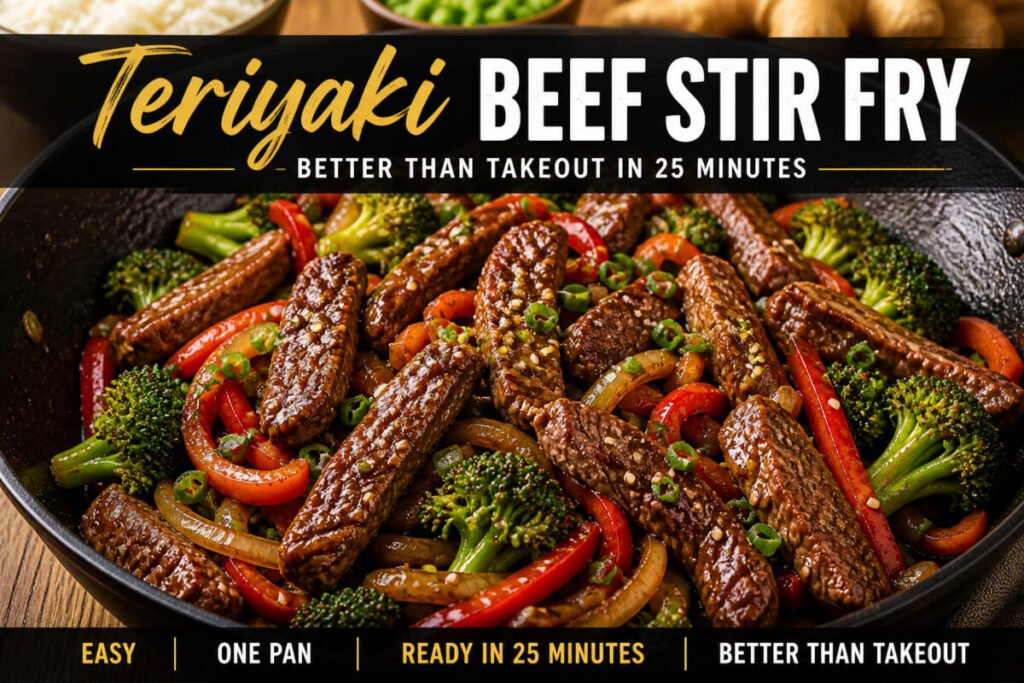
There’s a very specific moment that happens in almost every household during the week.
You’re tired.
You’re hungry.
And the question hits: “What are we doing for dinner?”
That’s usually the moment where takeout starts to feel like the easiest answer.
💡 The problem isn’t that people don’t want to cook—it’s that most meals don’t feel worth the effort at the end of a long day.
That’s exactly where this Teriyaki Beef Stir Fry changes things.
Because this isn’t just another quick dinner.
It’s a solution meal—the kind you rely on when you need something fast, satisfying, and dependable without sacrificing flavor.
The beef cooks hot and fast, staying tender and juicy.
The vegetables stay vibrant with just enough bite.
And the sauce—rich, glossy, perfectly balanced between savory and sweet—coats everything in a way that feels closer to restaurant-quality than anything rushed at home.
But what makes this recipe truly powerful isn’t just how it tastes.
It’s how it fits into real life.
- It’s fast enough for weeknights
- Flexible enough for whatever you have on hand
- Simple enough to repeat without thinking
- Reliable enough to build into your weekly system
And that last part is what matters most.
Because once you have meals like this, you stop asking “What’s for dinner?”
You already know.
💡 Before we get into the full recipe, it helps to understand where this meal fits into your overall cooking routine and why it works so well as a repeatable option.
This recipe fits naturally into a practical weekly routine, especially when you need something quick, balanced, and easy to repeat without overthinking dinner.
It’s the kind of meal that works on busy nights but still feels complete enough to serve as a reliable dinner option. With a mix of protein, vegetables, and bold flavor, it supports both everyday cooking and more intentional meal prep without adding complexity.
It works especially well as a:
- Quick weeknight option within your go-to 30-minute meals
- Balanced dinner that fits into your rotation of healthy recipes
- Reliable family dinners that never feel repetitive
- Takeout-style meal made at home with simple ingredients
- Flexible recipe that adapts to what you have on hand
- Practical choice for meal prep recipes and planning
- Cost-conscious option that supports your budget meals
But more importantly, it supports how you build a full week of meals.
A strong meal plan isn’t just about variety—it’s about having a mix of faster, reliable dinners alongside more traditional or slower-cooked options. Recipes like this give you that flexibility, helping you stay consistent without adding extra effort.
This is one of those dependable meals you can come back to anytime you need something fast, adaptable, and still worth sitting down for.
💡 Now that you can see how this recipe fits into your routine, let’s break down exactly why it works so well as a go-to dinner option.
Why You’ll Love This Recipe
There are a lot of stir fry recipes out there, but most fall into one of two problems:
they’re either too complicated for a weeknight… or too basic to feel satisfying.
This one avoids both.
It works because it delivers exactly what you need, exactly when you need it.
The entire meal comes together in about 25 minutes, which means it fits into even the busiest schedules without feeling rushed. You’re not juggling multiple pans or complicated steps—you’re building everything in a single flow, which keeps the process smooth and manageable from start to finish.
The flavor is what really sets it apart.
The sauce isn’t just sweet or salty—it’s balanced. The soy sauce brings depth, the honey adds just enough sweetness, the garlic and ginger create warmth, and everything comes together into that signature glossy coating that makes stir fry so satisfying.
And then there’s the flexibility.
You can swap the vegetables.
Adjust the sauce.
Change the protein.
It adapts to your kitchen instead of forcing you to follow it exactly.
That’s what turns a recipe into something you actually use—not just something you try once.
💡 If this sounds like the kind of meal that would make your week easier, it’s worth saving now so you always have a quick, dependable option ready when you need it.
Save this recipe for later!
Don’t lose this Teriyaki Beef Stir Fry—it’s the kind of fast, flavorful dinner you’ll want to come back to on busy nights.
Save it to your Quick Weeknight Dinners or Easy Dinner Recipes board so it’s always easy to find when you need it.
💡 Now that you’ve saved this recipe for later, let’s take a closer look at what makes it so effective. This isn’t just about cooking quickly—it’s about using a few simple techniques that consistently deliver great results.
Why This Recipe Works
What makes a stir fry truly great isn’t just the ingredients—it’s the technique behind it.
And once you understand that technique, you can apply it to dozens of different meals.
1. High Heat Is Everything
One of the biggest mistakes in home stir fry cooking is not using enough heat.
When the pan isn’t hot enough:
- The beef releases moisture instead of searing
- Vegetables steam instead of roast
- The final dish loses texture and depth
In this recipe, high heat creates that quick sear on the beef, locking in juices and building flavor in seconds instead of minutes.
2. Thin Slicing Changes the Outcome
Cutting the beef thinly—and against the grain—is what keeps it tender.
This isn’t just a detail.
It’s the difference between:
- Soft, juicy bites
- Tough, chewy strips
3. The Sauce Is Built for Balance
A proper teriyaki sauce isn’t just sweet.
It’s layered:
- Soy sauce provides salt and umami
- Honey balances with sweetness
- Vinegar adds brightness
- Garlic and ginger build depth
Together, they create a sauce that doesn’t overpower—it enhances.
4. Timing Creates Texture
Everything in stir fry is about timing.
The vegetables aren’t all added at once.
The sauce doesn’t go in too early.
The beef is cooked separately first.
Each step protects the texture of the final dish.
And that’s why it works every time.
💡 If you’re looking for simple, reliable dinners like this, having a plan in place each week makes everything easier.

Ingredients You’ll Need
One of the biggest advantages of this recipe is that it doesn’t rely on anything complicated or hard to find.
Every ingredient plays a clear role, and together they create something far greater than the sum of their parts.
The beef provides richness and protein.
The vegetables bring texture, color, and balance.
The sauce ties everything together into a cohesive, flavorful dish.
Beef
- 1 lb flank steak or sirloin, thinly sliced
Vegetables
- 1 cup broccoli florets
- 1 cup sliced carrots
- 1 bell pepper
- ½ onion
Teriyaki Sauce
- ¼ cup soy sauce
- 2 tablespoons honey or brown sugar
- 1 tablespoon rice vinegar
- 2 cloves garlic
- 1 teaspoon ginger
Thickening
- 1 tablespoon cornstarch + 2 tablespoons water
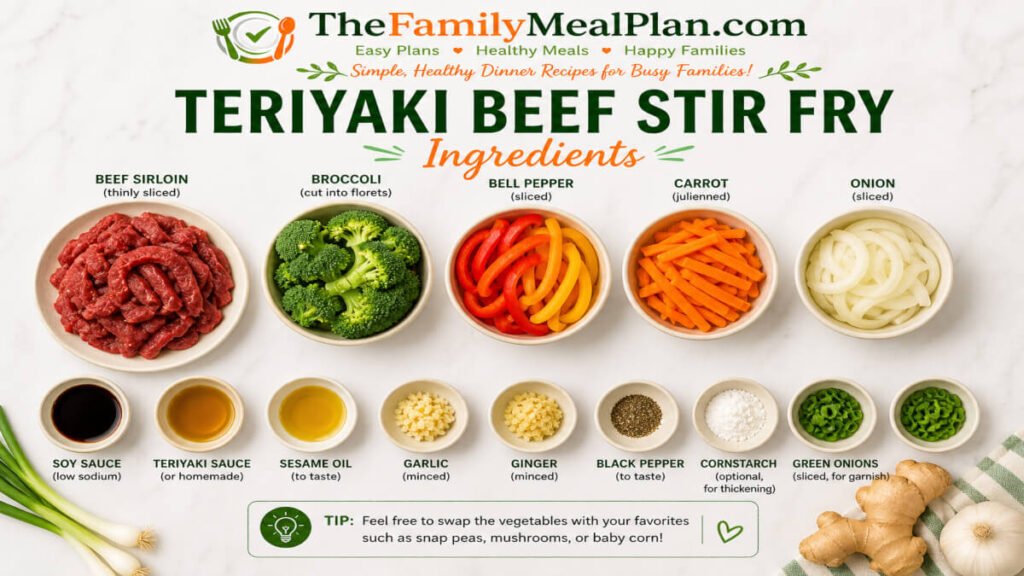
💡 With everything laid out, you can see how simple this recipe really is. Here are a few easy ways to adjust the ingredients while keeping the flavor and texture right
Ingredient Tips & Substitutions
One of the best things about this Teriyaki Beef Stir Fry is how flexible it is. Once you understand the basic structure—thin sliced beef, quick-cooking vegetables, and a balanced teriyaki sauce—you can adjust the recipe in several simple ways without losing what makes it work.
Best Beef Cuts
Flank steak: best overall for stir fry because it slices thinly and stays tender when cooked quickly.
Sirloin: great balance of cost, flavor, and tenderness.
Skirt steak: flavorful option, but slice very thinly against the grain for best texture.
Vegetable Options
Broccoli, carrots, bell pepper, and onion: classic combination for color, texture, and balance.
Snap peas: add sweetness and crunch.
Mushrooms: add deeper savory flavor.
Zucchini or green beans: easy swaps that cook quickly.
Baby corn: great for a more takeout-style feel.
Sauce Options
Low-sodium soy sauce: best for controlling salt level.
Honey: creates a smooth, balanced sweetness.
Brown sugar: gives the sauce a deeper, more classic takeout-style flavor.
Sesame oil: add a small drizzle at the end for extra richness and aroma.
Cooking Oil Options
Avocado oil: best for high-heat cooking.
Vegetable oil: reliable and affordable.
Canola oil: neutral flavor and works well for stir fry.
💡 With your ingredients prepped and ready, let’s walk through how everything comes together step by step.
How to Make Teriyaki Beef Stir Fry
This recipe comes together in a few simple steps: prep the beef and vegetables, sear the beef quickly, cook the vegetables, build the teriyaki sauce, then combine everything until glossy and coated. Because stir fry cooks fast, it’s best to have every ingredient sliced, measured, and ready before you turn on the pan.
Step-by-Step Instructions
1. Prepare the Beef
Slice the beef thinly against the grain so it cooks quickly and stays tender. Pat the beef dry with paper towels before seasoning or adding it to the pan. This helps it sear instead of steam.
2. Mix the Teriyaki Sauce
In a small bowl, whisk together the soy sauce, honey or brown sugar, rice vinegar, garlic, ginger, and cornstarch slurry until smooth. Set the sauce aside so it’s ready when the pan is hot.
3. Heat the Pan
Heat a large skillet or wok over medium-high heat. Add oil and let it heat until shimmering. A hot pan is important for getting good browning on the beef.
4. Sear the Beef
Add the beef in a single layer and cook for 2–3 minutes, stirring only as needed, until browned and mostly cooked through. Remove the beef from the pan and set it aside.
5. Cook the Vegetables
Add the broccoli, carrots, bell pepper, and onion to the same pan. Cook for 4–5 minutes, stirring often, until the vegetables are crisp-tender.
6. Add the Sauce
Pour the teriyaki sauce into the pan with the vegetables. Stir well and let it simmer for 1–2 minutes until it begins to thicken.
7. Return the Beef to the Pan
Add the cooked beef back into the skillet and toss everything together until the beef and vegetables are fully coated in the glossy teriyaki sauce.
8. Finish and Serve
Remove from heat and serve warm over rice, noodles, cauliflower rice, or your preferred side. Garnish with sesame seeds or sliced green onions if desired.
💡 Once you’ve made it once, this becomes one of those meals you can cook without thinking—fast, reliable, and always worth it.
Now that you’ve walked through the full process step by step, the recipe card below keeps everything in one place so you can cook confidently without needing to scroll back and forth.
Variations
One of the easiest ways to keep this recipe in your regular rotation is by making small adjustments to match your preferences or dietary needs. These variations build on the same simple method while giving you different flavor profiles and options.
Low-Carb Version
Swap the traditional base for cauliflower rice or sautéed zucchini to reduce carbohydrates while still keeping the meal satisfying.
👉 Keeps the dish lighter while maintaining flavor and texture balance.
Spicy Version
Add red pepper flakes, cayenne, or a drizzle of sriracha to the sauce for a noticeable kick of heat.
👉 Brings contrast to the sweet and savory teriyaki flavors.
Garlic Parmesan Version
Finish the dish with a light sprinkle of grated parmesan cheese just before serving.
👉 Adds a rich, savory layer that complements the sauce.
Air Fryer Option
Cook vegetables (or any crisp components) separately in the air fryer, then combine with the beef and sauce at the end.
👉 Helps maintain texture while keeping the cooking process flexible.
💡 No matter how you adjust the ingredients or sauce, a few key stir fry techniques will make the biggest difference in your final result. These simple tips will help you keep the beef tender, the vegetables crisp, and the sauce perfectly balanced every time.
Helpful Notes for This Recipe
These tips will help you get the best possible results with your Teriyaki Beef Stir Fry. While the recipe itself is simple, a few small adjustments in preparation, heat control, and timing can make a noticeable difference in both flavor and texture.
Choose the Right Cut of Beef
Flank steak is recommended for this recipe because it slices thinly and cooks quickly while staying tender when prepared correctly. It also absorbs the sauce well, which helps build flavor throughout the dish.
If you want to adjust or elevate the recipe, you can also use:
- Sirloin for a slightly more tender and accessible option
- Skirt steak for deeper flavor (slice very thinly)
Avoid tougher cuts unless they are properly sliced very thin or tenderized, as they can become chewy when cooked quickly at high heat.
Slice Thin and Against the Grain
How you cut the beef matters just as much as the cut you choose.
Slice the beef thinly (about ¼ inch thick) and always cut against the grain. This shortens the muscle fibers and makes each bite more tender.
If the beef is sliced too thick or with the grain, it can turn out tough even if cooked correctly.
Use High Heat for Proper Searing
A good stir fry depends on high heat.
For best results:
- Preheat your pan until it’s hot before adding oil
- Use medium-high to high heat throughout cooking
- Add the beef in a single layer
This allows the beef to sear quickly instead of releasing moisture and steaming.
Don’t Overcrowd the Pan
One of the most common mistakes in stir fry is adding too much to the pan at once.
If the pan is overcrowded:
- The temperature drops
- The beef releases liquid
- Browning is reduced
If needed, cook the beef in batches. This ensures better texture and deeper flavor.
Cook the Beef First, Then Remove
Cooking the beef separately before the vegetables is key.
This prevents:
- Overcooking
- Loss of tenderness
Once the beef is browned, remove it from the pan and set it aside. It will finish cooking when added back with the sauce.
Control Vegetable Texture
The goal is crisp-tender vegetables, not soft or mushy.
To achieve this:
- Start with firmer vegetables like carrots and broccoli
- Add softer vegetables like peppers and onions later
- Stir occasionally, not constantly
This keeps texture balanced and prevents overcooking.
Add Garlic and Ginger at the Right Time
Garlic and ginger cook quickly and can burn if added too early.
Add them after the vegetables have started to soften and cook for about 30–60 seconds until fragrant. This builds flavor without bitterness.
Add the Sauce at the End
The teriyaki sauce should be added after the beef and vegetables are mostly cooked.
This allows it to:
- Thicken properly
- Coat everything evenly
- Maintain a glossy texture
Adding it too early can cause it to reduce too much or burn.
Let the Sauce Thicken Naturally
Once the sauce is added, allow it to simmer briefly.
The cornstarch mixture will activate and thicken the sauce, creating that signature glossy coating. Stir gently until everything is evenly coated.
Finish Fresh for Best Flavor
A few simple finishing touches can elevate the final dish.
- Green onions add freshness and color
- Sesame seeds add texture and visual appeal
- A small drizzle of sesame oil enhances aroma
These additions are optional but highly recommended.
Use the Right Pan
A large skillet or wok works best for this recipe.
Cast iron or stainless steel pans retain heat well and help create a better sear. Nonstick pans can work, but they won’t develop the same level of browning.
Prep Everything Before You Start
Stir fry moves quickly once cooking begins.
Have everything:
- Sliced
- Measured
- Ready to go
This prevents overcooking and keeps the process smooth from start to finish.
Batch Cooking Tip for Larger Portions
If you double the recipe, cook the beef in batches rather than all at once.
This maintains high heat and ensures proper searing instead of steaming.
Final Takeaway
This recipe is simple, but it relies on a few key techniques:
- High heat for proper searing
- Thin slicing against the grain
- Cooking in stages for better texture
- Adding the sauce at the right time
Master these, and you’ll get consistent, takeout-quality results at home every time.
💡 Meals like this are not only fast—they’re one of the easiest ways to replace expensive takeout with something better at home.
Recipe Cost Breakdown
Understanding the cost of a recipe helps you keep meals both practical and budget-friendly without sacrificing flavor.
This Teriyaki Beef Stir Fry uses simple ingredients that stretch well across servings, making it an easy alternative to takeout.
To help with planning, here’s an estimated cost breakdown based on average U.S. grocery prices.
| Ingredient | Amount | Estimated Cost |
|---|---|---|
| Flank steak | 1 lb | $8.50 |
| Broccoli | 1 cup | $1.50 |
| Carrots | 1 cup | $1.00 |
| Bell pepper | 1 | $1.50 |
| Onion | ½ | $0.75 |
| Soy sauce | ¼ cup | $0.40 |
| Honey | 2 tbsp | $0.50 |
| Garlic & ginger | — | $0.50 |
Total Estimated Cost: $14.65
Cost Per Serving (4 servings): $3.65
This makes it significantly more affordable than takeout while still delivering similar flavor and satisfaction.
Nutrition
(Approximate per serving)
- Calories: 450 kcal
- Protein: 35g
- Fat: 18g
- Carbohydrates: 25g
- Fiber: 4g
💡 Beyond the basic nutrition breakdown, it also helps to understand how this meal fits into a balanced routine and how you can adjust it based on your needs.
Nutritional Notes
This Teriyaki Beef Stir Fry offers a well-balanced combination of protein, carbohydrates, and fats, making it a practical and satisfying option for busy weeknights. The beef provides a strong source of protein along with key nutrients like iron, while the vegetables add fiber, color, and freshness that help round out the meal.
The sauce brings everything together with a balanced sweet and savory profile, and when paired with a base like rice or noodles, the dish becomes a complete, energy-supporting dinner that works well for both families and meal prep.
If you’re looking to adjust the nutritional profile:
- Reduce the amount of sauce slightly to lower sugar and sodium
- Use low-sodium soy sauce for better control over salt levels
- Swap rice for cauliflower rice to lower overall carbohydrates
- Increase the vegetable portion to boost fiber and volume
- Use a leaner cut of beef like sirloin for a slightly lighter option
💡 With its balanced profile and flexibility, this is also a recipe that works well for leftovers—making it even more useful throughout the week.
How to Store & Reheat
Proper storage and reheating can make a big difference in maintaining both texture and flavor, especially with stir fry where the balance between tender beef, crisp vegetables, and sauce consistency matters.
Storage
- Store leftovers in an airtight container
- Refrigerate for up to 3–4 days
- Allow the stir fry to cool slightly before sealing to prevent excess moisture buildup
👉 Tip: Store in shallow containers for faster cooling and better food safety
👉 Tip: If possible, store rice or noodles separately to maintain the best texture when reheating
Freezing: What You Should Know
Freezing is not ideal for this recipe if you want the best texture, because:
- Vegetables can become soft after thawing
- The sauce may thin out or separate slightly
- Beef can lose some tenderness when reheated
However, if needed:
- Freeze in airtight containers for up to 2 months
- Thaw overnight in the refrigerator before reheating
Best Reheating Methods
1. Skillet – Best Method
This method restores the original texture and flavor most effectively.
- Heat a skillet over medium heat
- Add a small amount of oil or a splash of water
- Add the stir fry and cook for 4–6 minutes
- Stir occasionally until heated through
👉 This helps re-activate the sauce and keeps the beef tender while maintaining some texture in the vegetables
2. Microwave – Fastest Option
- Heat in 30-second intervals
- Stir between intervals
- Cover loosely to retain moisture
👉 Quick and convenient, but vegetables may soften slightly and the sauce may thicken unevenly
3. Air Fryer – Optional Texture Boost
- Preheat to 350°F
- Heat for 3–4 minutes
- Shake halfway through
👉 Best used for small portions if you want slightly crisp edges on the beef, though vegetables may dry slightly
Reheating Pro Tips
- Add a small splash of water or soy sauce before reheating to loosen the sauce
- Avoid overheating, as this can dry out the beef quickly
- Stir gently to keep vegetables intact
- If the sauce thickens too much, add a bit of liquid to restore consistency
Meal Prep Tip
If you’re planning this recipe ahead of time:
- Slightly undercook the beef during the initial cook
- Store the stir fry separately from rice or noodles
👉 This helps prevent overcooking and keeps the texture closer to fresh when reheated
💡 Once your stir fry is ready, pairing it with the right base or side can turn it into a complete, balanced meal that fits your family’s preferences and your weekly routine.
What to Serve with It

This Teriyaki Beef Stir Fry is flavorful and satisfying on its own, but pairing it with the right sides or base can help balance the meal and make it feel more complete—especially when serving it for different occasions throughout the week.
Fresh and Light Options
These help balance the richness of the sauce and keep the meal feeling lighter:
- Cucumber salad
- Steamed edamame
- Fresh fruit or sliced pineapple
- Simple green salad
👉 These are especially helpful if you’re aiming for a lighter, more balanced dinner.
Classic Stir Fry Pairings
For a more traditional takeout-style meal:
- White rice
- Brown rice
- Fried rice
- Lo mein or rice noodles
👉 These options absorb the sauce well and create a familiar, satisfying base.
Low-Carb and Lighter Options
If you’re looking to reduce carbohydrates or keep the meal lighter:
- Cauliflower rice
- Shredded cabbage
- Zucchini noodles
👉 These keep the meal balanced while still letting the stir fry shine.
Balanced Meal Pairings
To build a more complete plate:
- Add a vegetable side like roasted broccoli or green beans
- Pair with a light salad with vinaigrette
- Include a fresh element like fruit for contrast
This helps create a meal that feels both satisfying and well-rounded.
Weeknight Serving Ideas
Because this recipe is designed for quick, flexible dinners, here are a few easy ways to serve it:
Quick Dinner: Stir fry + white rice
Balanced Meal: Stir fry + brown rice + vegetable side
Light Option: Stir fry + cauliflower rice + cucumber salad
Meal Prep: Stir fry portioned with rice or vegetables
This flexibility is what makes the recipe especially useful—it adapts easily based on your schedule, preferences, and what you have on hand.
💡 Now that you have a few serving ideas, let’s answer some of the most common questions so you can make this recipe with confidence.
Frequently Asked Questions – FAQ
Can I make this stir fry ahead of time?
Yes—this recipe works very well for meal prep and can be made ahead for several days.
For best results, cook the stir fry as directed, allow it to cool slightly, and store it in airtight containers in the refrigerator. When reheated properly, the flavors continue to develop, making it just as enjoyable the next day.
If preparing in advance, consider storing the stir fry separately from rice or noodles to maintain the best texture when reheating.
Can I freeze Teriyaki Beef Stir Fry?
Freezing is possible, but not ideal if you want the best texture.
After freezing and thawing:
- Vegetables may soften
- The sauce may thin slightly
- Beef can lose some tenderness
If you do choose to freeze:
- Let the stir fry cool completely
- Store in airtight containers
- Freeze for up to 2 months
When ready to use:
- Thaw overnight in the refrigerator
- Reheat gently on the stovetop
👉 For best quality, this recipe is better suited for refrigeration rather than freezing.
Why is my beef tough or chewy?
This usually comes down to preparation and cooking method. A few small mistakes can make a big difference in texture.
Common causes:
- Slicing the beef with the grain instead of against it
- Cutting pieces too thick
- Overcooking the beef
- Cooking at too low of a temperature
How to fix it:
- Slice thinly against the grain
- Use high heat
- Cook quickly and remove from the pan early
These small adjustments make a significant difference in tenderness.
How do I get that glossy, takeout-style sauce?
That signature glossy coating comes from the combination of heat and proper thickening.
Key steps:
- Use a cornstarch slurry
- Add the sauce toward the end of cooking
- Let it simmer briefly to thicken
As the sauce heats, the cornstarch activates and creates a smooth, glossy coating that clings to the beef and vegetables.
Avoid adding the sauce too early, as it can reduce too much or become overly thick.
Can I use different vegetables?
Yes—this is one of the most flexible parts of the recipe.
You can easily swap in vegetables like:
- Snap peas
- Mushrooms
- Zucchini
- Green beans
- Baby corn
For best results, use a mix of firm and quick-cooking vegetables and add them in stages so everything cooks evenly.
Can I use chicken instead of beef?
Yes, this recipe adapts well to different proteins.
Chicken breast or thighs can be used as a substitute. Slice thinly and cook the same way as the beef, adjusting cook time slightly to ensure the chicken is fully cooked.
This is a great option if you’re looking for a lighter or more budget-friendly variation.
Can I make this recipe gluten-free?
Yes, with a simple substitution.
Replace soy sauce with:
- Gluten-free tamari
- Coconut aminos
Be sure to check all ingredient labels to ensure they meet your dietary needs.
What’s the best pan to use for stir fry?
A large skillet or wok works best.
Cast iron or stainless steel pans are ideal because they:
- Retain heat well
- Allow better searing
- Help develop more flavor
Nonstick pans can be used, but they won’t create the same level of browning.
How long does this last in the refrigerator?
Stored properly in an airtight container, this stir fry will last:
- 3–4 days in the refrigerator
It reheats well, making it a strong option for meal prep lunches or quick dinners throughout the week.
What’s the best way to reheat without drying it out?
The stovetop is the best method for maintaining both texture and flavor.
- Heat a skillet over medium heat
- Add a small splash of water or soy sauce
- Stir gently until heated through
For quicker reheating:
- Microwave in short intervals
- Cover loosely to retain moisture
Avoid overheating, as this can dry out the beef and over-soften the vegetables.
Can I double this recipe?
Yes—this recipe scales very well.
When doubling:
- Cook the beef in batches
- Avoid overcrowding the pan
This ensures you maintain high heat and proper searing, which is key to the final result.
💡 Now that you’ve got everything you need to make this recipe with confidence, here are a few more meals to help keep your weekly rotation simple, practical, and consistent.
You May Also Like
Garlic Butter Shrimp & Broccoli – Healthy 20-Minute Dinner – Coming Soon
Quick Ground Beef Taco Skillet – Easy 30-Minute family meal – Coming Soon
Shrimp Alfredo Pasta – Creamy 30 Minute Comfort Dinner
5 Easy Dinner Recipes for Busy Weeknights – Full weekly Meal Plan
💡 If you enjoyed this recipe and want more simple dinners like this, having a plan in place each week can make cooking feel a whole lot easier.

If you enjoyed this recipe and want more simple, healthy meals your family will actually love, this is exactly what we do every week.
We focus on practical, budget-friendly dinners that are easy to make, easy to repeat, and designed for real life—not complicated cooking.
Join our free weekly meal plan and get done-for-you dinner ideas, simple recipes, and time-saving tips delivered straight to your inbox.
It’s the easiest way to stay consistent, reduce stress, and always know what’s for dinner.
Sign Up for the Family Meal Plan Free Weekly Meal Plan