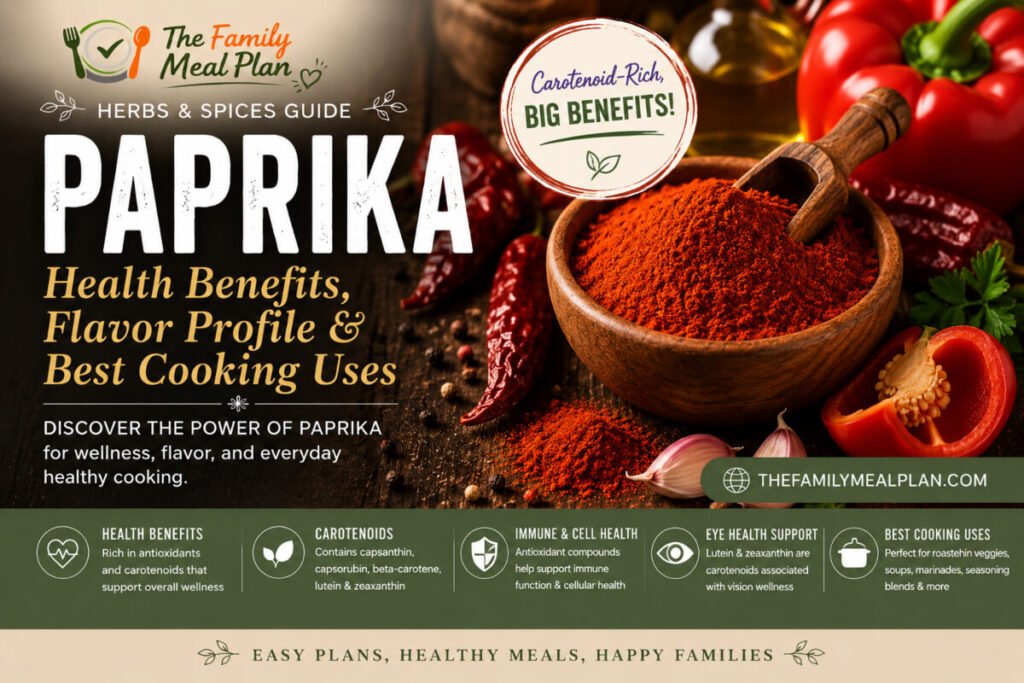
Paprika
Recognized for more than 10 commonly discussed areas of nutritional interest, paprika has emerged as one of the most fascinating spices in modern wellness-focused nutrition discussions. Naturally occurring compounds including capsanthin, capsorubin, beta-carotene, beta-cryptoxanthin, lutein, zeaxanthin, polyphenols, and antioxidant-rich carotenoids are commonly associated with cellular protection, eye-health-supportive nutrition, antioxidant activity, healthy aging, immune-supportive eating patterns, heart-conscious nutrition, skin health discussions, vitamin A-related wellness, and overall dietary quality.
Produced from carefully dried and ground peppers belonging primarily to the Capsicum annuum family, paprika develops its vibrant red-orange color from concentrated carotenoid pigments that continue attracting attention throughout nutrition research. Unlike many seasonings that are valued primarily for flavor, paprika’s growing reputation stems largely from these naturally occurring compounds and their relationship to antioxidant-rich dietary patterns centered around fruits, vegetables, herbs, spices, legumes, and whole foods.
Researchers continue exploring paprika’s carotenoids because of their potential role in supporting cellular wellness and helping protect against oxidative stress. Particular attention has focused on capsanthin, the signature carotenoid responsible for much of paprika’s characteristic color, along with lutein and zeaxanthin, compounds frequently discussed in relation to eye-health nutrition, healthy aging, and long-term wellness-focused eating habits.
Paprika is also commonly associated with vitamin A-related nutrition because several of its naturally occurring carotenoids can function as provitamin A compounds within the body. Additional research discussions often involve antioxidant protection, immune-supportive nutrition, healthy inflammatory responses, cardiovascular-conscious eating habits, skin wellness, and overall dietary quality.
While paprika should never be viewed as a medication or standalone health solution, it represents a practical way to incorporate antioxidant-rich plant compounds into everyday meals. Its ability to enhance vegetables, legumes, lean proteins, grain bowls, soups, and homemade meals may help support healthier eating habits by making nutrient-dense foods more enjoyable and flavorful.
This is one reason paprika appears throughout many of our most popular Healthy Recipes, Family Dinners, Flavor & Seasoning Guides, Meal Prep Recipes & Planning resources, Mediterranean-inspired meals, roasted vegetable recipes, homemade seasoning blends, soups, stews, sheet pan meals, and protein-focused dishes. Whether you’re preparing simple family dinners, building healthier meal plans, exploring Mediterranean-style cooking, or learning how herbs and spices contribute to overall wellness, understanding paprika can help you create more flavorful and nutrient-conscious homemade meals.
Throughout Hungarian, Spanish, Mediterranean, Eastern European, and global food traditions, paprika has long been valued not only for its rich flavor and vibrant color but also for its connection to wellness-focused cooking built around simple ingredients and balanced nutrition. Today, paprika remains one of the most widely used spices in healthy home cooking because it delivers both culinary versatility and one of the most impressive collections of naturally occurring carotenoid compounds found anywhere in the spice world.
💡 Before exploring paprika’s specific compounds and health benefits, it’s helpful to understand why this vibrant red spice has become one of the most studied carotenoid-rich seasonings in modern nutrition research.
Paprika: More Than Just a Colorful Spice
Walk into almost any kitchen and you will likely find paprika sitting beside garlic powder, onion powder, black pepper, and sea salt.
Because it is so familiar, many people rarely think beyond its bright red color.
Yet that vibrant color is precisely why researchers continue studying paprika.
The pigments responsible for paprika’s signature appearance belong to a group of naturally occurring plant compounds known as carotenoids. These compounds help plants protect themselves from environmental stress while also serving as the source of many of the bright yellow, orange, and red colors found throughout nature.
Paprika contains a remarkable collection of carotenoids, including:
- Capsanthin
- Capsorubin
- Beta-carotene
- Beta-cryptoxanthin
- Lutein
- Zeaxanthin
Among these compounds, capsanthin receives particularly significant attention because it serves as paprika’s primary red pigment and represents one of the spice’s most distinctive antioxidant compounds. Researchers continue exploring capsanthin’s potential relationship to cellular wellness, cardiovascular-conscious nutrition, and antioxidant activity as part of broader dietary patterns rich in colorful plant foods.
Beta-carotene and beta-cryptoxanthin are especially notable because they function as provitamin A carotenoids. Once consumed, the body can convert these compounds into forms of vitamin A needed to support normal vision, immune function, skin health, and overall wellness.
Lutein and zeaxanthin have also attracted substantial scientific interest. These carotenoids are frequently discussed in eye-health nutrition because they naturally accumulate within structures of the eye and continue to be studied for their role in supporting healthy vision throughout life.
In addition to carotenoids, paprika contains polyphenols, flavonoids, and other antioxidant-rich plant compounds commonly associated with cellular protection and healthy aging discussions.
Together, these compounds help explain why paprika continues attracting attention within nutrition science. Rather than functioning as a simple garnish, paprika represents a concentrated source of colorful plant compounds that contribute both visual appeal and nutritional interest.
Understanding paprika means understanding how naturally colorful foods contribute to overall dietary quality. Its vibrant appearance serves as a visible reminder of the carotenoid-rich compounds that have made paprika one of the most researched spices in wellness-focused nutrition discussions.
💡 The brighter paprika’s red-orange color appears, the more it reflects the carotenoid pigments that continue attracting scientific attention for their antioxidant activity, vitamin A-related nutrition, eye-health discussions, and overall contribution to plant-rich dietary patterns.
Why Paprika Matters in Healthy Cooking
Paprika sits at the intersection of nutrition, wellness-focused eating, and practical home cooking.
Unlike many seasonings that provide flavor alone, paprika contributes naturally occurring carotenoids, antioxidant-rich plant compounds, and nutritional interest while helping create more colorful and appealing meals.
Understanding paprika’s health benefits, carotenoid profile, nutritional value, harvesting methods, flavor varieties, storage recommendations, seasoning pairings, and cooking applications can help home cooks make more informed ingredient choices while creating healthier meals built around whole foods and simple pantry staples.
This is one reason paprika appears so frequently throughout our:
- Healthy Recipes
- Family Dinners
- Flavor & Seasoning Guides
- Meal Prep Recipes & Planning
- Mediterranean-inspired meals
- Vegetable-forward recipes
- Roasted vegetable dishes
- Homemade seasoning blends
- Sheet Pan Meals
- Practical family cooking guides
Whether your goal is increasing antioxidant-rich foods, supporting healthier eating habits, improving overall dietary quality, or simply becoming a more confident home cook, paprika remains one of the most valuable spices to understand and use regularly.
Quick Health Benefit Highlights
Paprika is commonly associated with:
- Rich in naturally occurring carotenoid pigments
- Contains capsanthin, paprika’s signature antioxidant compound
- Provides capsorubin, a carotenoid associated with antioxidant activity
- Contains beta-carotene and beta-cryptoxanthin that contribute to vitamin A-related nutrition
- Contains provitamin A carotenoids associated with vision, immune function, and overall wellness
- Frequently discussed in relation to eye-health-supportive compounds
- Contains lutein and zeaxanthin commonly associated with vision wellness discussions
- Supports antioxidant-rich dietary patterns
- Associated with cellular protection and healthy aging nutrition
- Commonly included in heart-conscious eating habits
- Frequently discussed in immune-supportive nutrition conversations
- Frequently discussed in relation to healthy inflammatory response support
- May contribute to skin-health-supportive dietary patterns
- Contains polyphenols and antioxidant-rich plant compounds
- Provides small amounts of vitamin E and iron
- Commonly included in wellness-focused Mediterranean-style eating patterns
- One of the most concentrated dietary sources of capsanthin among commonly used spices
- One of the most carotenoid-rich spices used in everyday cooking
💡 Much of paprika’s wellness-focused reputation comes from its remarkable concentration of carotenoids, particularly capsanthin, capsorubin, beta-carotene, lutein, and zeaxanthin—naturally occurring compounds commonly associated with antioxidant activity, eye-health nutrition, vitamin A-related wellness, and healthy aging discussions.
Save This Guide For Later
Before exploring paprika’s nutrition facts, carotenoid compounds, antioxidant research, health benefits, flavor profile, paprika varieties, storage recommendations, seasoning pairings, and complete cooking guide below, save this reference so you can quickly return to paprika wellness information, eye-health nutrition discussions, antioxidant-rich cooking ideas, vitamin A-related nutrition topics, and practical ways to use paprika in healthy homemade meals.
📌 Save Paprika: Health Benefits, Flavor Profile & Best Cooking Uses to Pinterest for later and revisit it whenever you need paprika health information, cooking inspiration, seasoning guidance, and wellness-focused meal-building ideas.
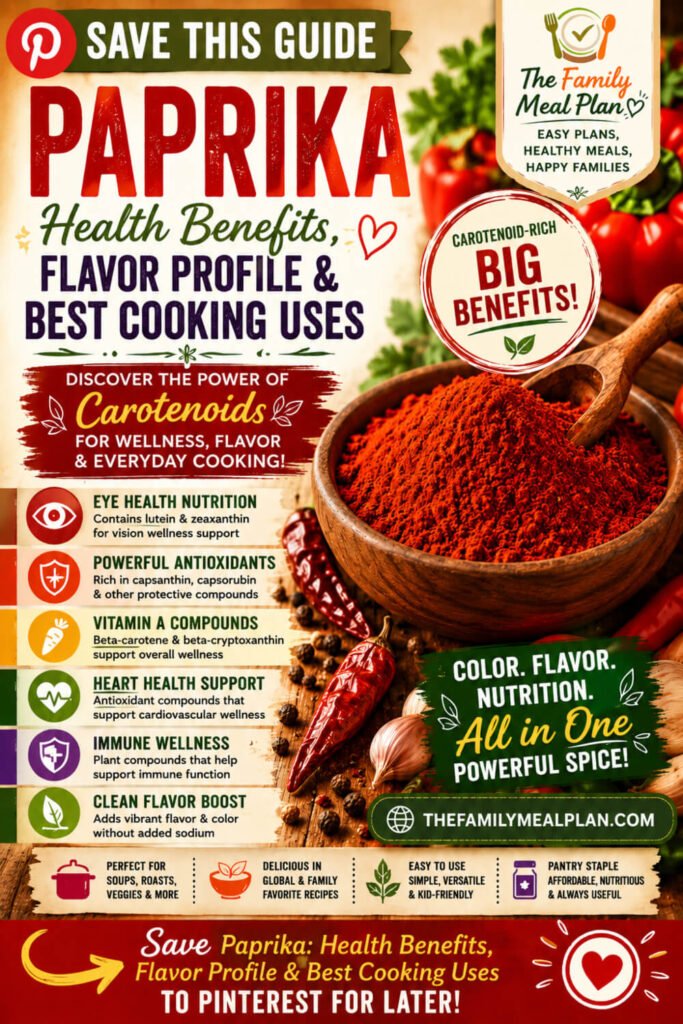
Paprika’s vibrant color is far more than a visual characteristic. Behind its deep red appearance lies one of the most impressive collections of naturally occurring carotenoids found in any commonly used culinary spice. Compounds such as capsanthin, capsorubin, beta-carotene, beta-cryptoxanthin, lutein, and zeaxanthin help explain why paprika continues attracting attention in discussions surrounding antioxidant activity, eye-health-supportive nutrition, healthy aging, immune wellness, and overall dietary quality.
To better understand paprika’s growing reputation among nutrition researchers and wellness-focused home cooks alike, it helps to begin with the compounds that make this colorful spice so unique.
💡 Beyond paprika’s vibrant color and culinary versatility lies a remarkable collection of carotenoids, antioxidants, and plant compounds that continue attracting scientific interest in discussions surrounding cellular protection, eye health, healthy aging, immune support, cardiovascular wellness, and overall dietary quality.
10+ Health Benefits Commonly Associated with Paprika
Paprika has become one of the most interesting spices in modern wellness-focused nutrition discussions because it contains an unusually diverse collection of naturally occurring carotenoids and antioxidant-rich plant compounds.
While paprika should always be viewed as part of an overall healthy dietary pattern rather than a standalone solution, researchers continue exploring how compounds such as capsanthin, capsorubin, beta-carotene, beta-cryptoxanthin, lutein, zeaxanthin, and polyphenols may contribute to overall wellness.
Much of the scientific interest surrounding paprika centers on its role as one of the richest dietary sources of carotenoid pigments among commonly used culinary spices. These compounds contribute both to paprika’s distinctive red color and to many of the wellness discussions associated with colorful plant foods.
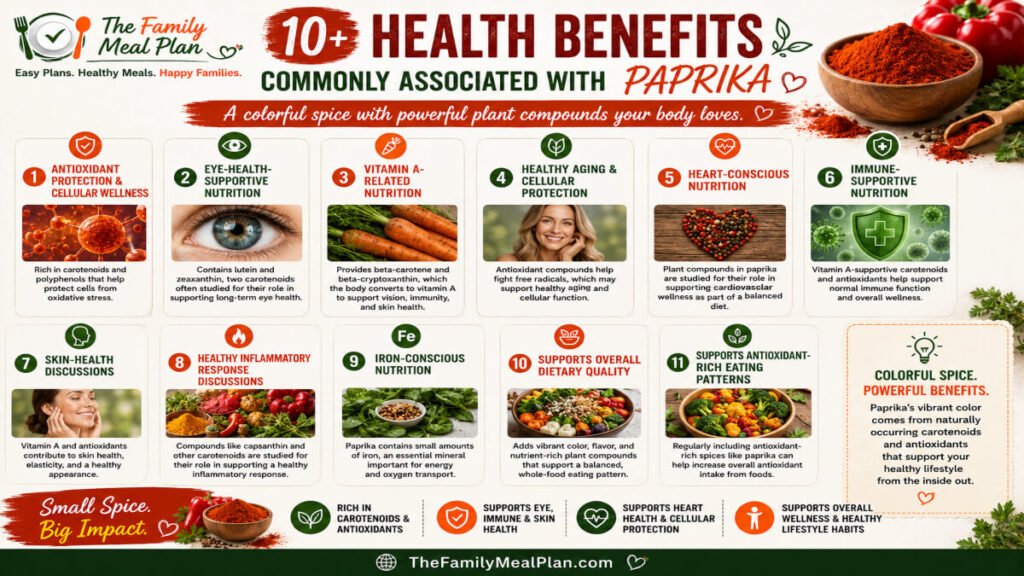
Some of the most commonly discussed health benefits associated with paprika include:
1. Antioxidant Protection & Cellular Wellness
One of the most frequently discussed aspects of paprika nutrition involves its antioxidant content.
Throughout normal metabolism, the body naturally produces unstable molecules known as free radicals. When these molecules accumulate in excess, researchers associate them with oxidative stress, a process commonly discussed in relation to cellular aging and long-term wellness.
Paprika contains numerous antioxidant-rich compounds including capsanthin, capsorubin, beta-carotene, lutein, zeaxanthin, and various polyphenols. These compounds help explain why paprika continues attracting scientific attention within antioxidant-focused nutrition research.
Because paprika contributes these compounds in a highly concentrated spice form, it remains one of the most antioxidant-rich seasonings commonly used in everyday cooking.
2. Eye-Health-Supportive Nutrition
Among paprika’s most discussed wellness associations is its relationship to eye-health nutrition.
Researchers continue studying carotenoids such as lutein and zeaxanthin because these compounds naturally accumulate within structures of the eye.
As part of a balanced dietary pattern rich in colorful fruits and vegetables, these carotenoids are frequently discussed in relation to maintaining healthy vision throughout life.
Paprika represents one of the many colorful plant foods that contribute these compounds to the diet.
3. Vitamin A-Related Nutrition
Paprika contains several carotenoids that function as provitamin A compounds.
Most notably, beta-carotene and beta-cryptoxanthin can be converted by the body into forms of vitamin A when needed.
Vitamin A plays an important role in:
• Vision
• Immune function
• Skin health
• Cellular growth
• Overall wellness
Although paprika is typically consumed in relatively small amounts, regular use can contribute to overall intake of vitamin A-supportive compounds as part of a balanced dietary pattern.
4. Healthy Aging & Cellular Protection
Healthy aging discussions frequently focus on minimizing oxidative stress and supporting cellular function over time.
Because paprika contains multiple antioxidant-rich carotenoids, researchers continue exploring how these compounds may contribute to broader healthy aging strategies.
While no single food determines long-term health outcomes, colorful plant foods rich in antioxidants remain a common theme throughout wellness-focused dietary recommendations.
Paprika fits naturally into this category.
5. Heart-Conscious Nutrition
Paprika frequently appears throughout heart-conscious eating patterns that emphasize vegetables, legumes, fruits, whole grains, healthy fats, herbs, and spices.
Researchers continue exploring carotenoids and antioxidant-rich foods in relation to cardiovascular wellness and overall dietary quality.
Because paprika enhances flavor naturally while contributing beneficial plant compounds, it remains a popular ingredient in many wellness-focused eating styles.
6. Immune-Supportive Nutrition
Vitamin A-related compounds and antioxidant-rich foods are frequently discussed in relation to normal immune function.
Paprika’s naturally occurring carotenoids help connect the spice to broader conversations surrounding immune-supportive nutrition.
While paprika should never be viewed as an immune treatment, it contributes compounds that commonly appear within discussions of overall dietary quality and wellness-focused eating habits.
7. Skin-Health Discussions
Colorful plant foods rich in carotenoids frequently appear in discussions surrounding skin health and appearance.
Researchers continue studying how antioxidant-rich dietary patterns may help support healthy skin through their relationship to cellular protection and oxidative balance.
Because paprika contains multiple carotenoid pigments, it is often included in these broader wellness conversations.
8. Healthy Inflammatory Response Discussions
Researchers continue exploring how nutrition may help support healthy inflammatory balance throughout the body.
Many antioxidant-rich foods, herbs, spices, fruits, and vegetables are frequently discussed in this area.
Paprika’s carotenoids and polyphenols contribute to its inclusion in these broader discussions surrounding wellness-focused dietary patterns.
Future research will continue expanding our understanding of these relationships.
9. Iron-Conscious Nutrition
Although paprika is consumed in small amounts, it contains naturally occurring iron.
Iron plays an important role in oxygen transport, energy production, and overall physiological function.
While paprika should not be viewed as a major iron source compared with larger food groups, its nutrient profile contributes additional nutritional interest beyond flavor alone.
10. Supports Overall Dietary Quality
One of paprika’s most practical benefits may simply be its ability to help build colorful, nutrient-conscious meals.
Nutrition experts consistently encourage greater consumption of colorful plant foods because color often reflects the presence of beneficial phytonutrients and plant compounds.
Paprika provides a simple way to incorporate additional carotenoid-rich ingredients into everyday cooking while encouraging meals centered around vegetables, legumes, lean proteins, and whole foods.
11. Supports Antioxidant-Rich Eating Patterns
Perhaps paprika’s greatest contribution to wellness-focused nutrition is its role within broader dietary patterns.
Rather than relying on any single food, long-term health is built through consistent consumption of nutrient-dense foods rich in vitamins, minerals, fiber, antioxidants, and beneficial plant compounds.
Paprika contributes to these patterns by supplying carotenoids, polyphenols, antioxidant compounds, and vibrant color that help support healthier eating habits built around whole foods and balanced nutrition.
💡 While paprika’s strongest wellness associations center on carotenoids, antioxidants, eye-health nutrition, and vitamin A-related compounds, researchers continue exploring how colorful plant foods may contribute to long-term health and overall dietary quality.
Naturally Occurring Compounds Found in Paprika
Paprika’s vibrant color is far more than a visual characteristic.
The same pigments responsible for its brilliant red-orange appearance are also responsible for much of the scientific interest surrounding the spice. Researchers continue studying these naturally occurring compounds because of their relationship to antioxidant activity, cellular protection, eye-health-supportive nutrition, healthy aging discussions, immune-supportive eating patterns, and overall dietary quality.
Unlike many common seasonings that are valued primarily for flavor, paprika contains a remarkable collection of carotenoids that are rarely found together in such concentrated amounts within a culinary spice. These compounds contribute not only to paprika’s nutritional profile but also to its reputation as one of the most carotenoid-rich seasonings used in everyday cooking.
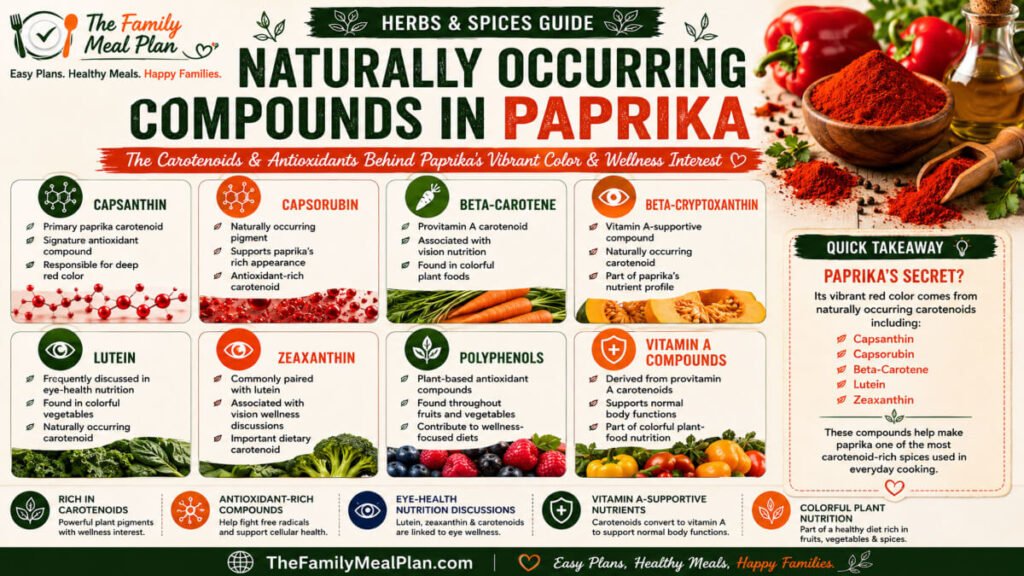
Among the most important naturally occurring compounds found in paprika are:
- Capsanthin
- Capsorubin
- Beta-Carotene
- Beta-Cryptoxanthin
- Lutein
- Zeaxanthin
- Polyphenols
- Vitamin A-supportive carotenoids
- Vitamin E
- Iron
Together, these compounds help explain why paprika remains one of the most nutritionally interesting spices used in healthy home cooking.
Capsanthin: Paprika’s Signature Compound
If paprika is known for one compound above all others, it is capsanthin.
Capsanthin is the primary carotenoid responsible for paprika’s deep red color and is widely recognized as one of the spice’s most distinctive antioxidant compounds. In fact, paprika is considered one of the most concentrated dietary sources of capsanthin among commonly used culinary spices.
Researchers continue studying capsanthin because of its relationship to antioxidant activity, cellular protection discussions, healthy aging research, and broader wellness-focused nutrition patterns. Because this compound is largely unique to red peppers and paprika, it serves as one of the major factors that differentiates paprika from many other herbs and spices.
Much of paprika’s nutritional identity is directly connected to capsanthin.
Capsorubin
Capsorubin is another important carotenoid pigment naturally present in paprika.
Working alongside capsanthin, capsorubin contributes to the rich red coloration associated with high-quality paprika. Researchers frequently study capsorubin together with other carotenoids because of its antioxidant properties and role within colorful plant foods.
Although less widely recognized than capsanthin, capsorubin remains one of paprika’s most significant naturally occurring compounds and contributes to many of the wellness discussions surrounding antioxidant-rich dietary patterns.
Beta-Carotene
Beta-carotene is one of the most recognizable carotenoids found throughout nature.
It contributes orange-red pigmentation to many fruits and vegetables, including carrots, sweet potatoes, pumpkins, and peppers. Beta-carotene receives substantial scientific attention because it functions as a provitamin A carotenoid.
Once consumed, the body can convert beta-carotene into forms of vitamin A needed to support normal vision, immune function, skin health, cellular growth, and overall wellness.
Paprika contributes beta-carotene as part of its broader carotenoid profile, further strengthening its nutritional value.
Beta-Cryptoxanthin
Beta-cryptoxanthin is another provitamin A carotenoid naturally present in paprika.
Like beta-carotene, it can contribute to vitamin A-related nutrition while also functioning as an antioxidant-rich plant compound. Researchers continue studying beta-cryptoxanthin because of its role within colorful fruits and vegetables commonly associated with healthy dietary patterns.
While it often receives less public attention than beta-carotene, it remains an important contributor to paprika’s overall nutritional profile.
Lutein
Lutein is among the most frequently discussed carotenoids in eye-health nutrition.
Researchers have long been interested in lutein because it naturally accumulates within structures of the eye and is commonly discussed in relation to maintaining healthy vision throughout life.
Paprika contributes lutein alongside several other important carotenoids, helping strengthen its connection to eye-health-supportive nutrition discussions and colorful plant-food dietary patterns.
Zeaxanthin
Zeaxanthin often appears alongside lutein throughout nutrition research.
These two carotenoids are commonly discussed together because of their relationship to vision wellness and eye-health-supportive nutrition. Because paprika naturally contains both compounds, it continues attracting interest among researchers studying carotenoid-rich foods.
Together, lutein and zeaxanthin represent two of the most recognized eye-health-supportive carotenoids found in nature.
Polyphenols
In addition to carotenoids, paprika contains naturally occurring polyphenols.
Polyphenols are plant compounds widely distributed throughout fruits, vegetables, herbs, spices, tea, cocoa, and other plant foods. Researchers continue studying polyphenols because of their antioxidant properties and their contribution to wellness-focused dietary patterns.
While carotenoids often receive most of the attention, paprika’s polyphenols contribute additional nutritional value and antioxidant potential.
Vitamin A-Supportive Carotenoids
One reason paprika continues appearing in wellness-focused nutrition discussions is its concentration of provitamin A carotenoids.
Beta-carotene and beta-cryptoxanthin can be converted by the body into usable forms of vitamin A.
Vitamin A plays important roles in:
- Vision
- Immune function
- Skin health
- Cellular growth
- Overall wellness
Although paprika is typically consumed in smaller quantities than vegetables, its carotenoid profile contributes additional nutritional interest.
Vitamin E & Iron
Paprika also contains small amounts of vitamin E and iron.
Vitamin E functions as an antioxidant nutrient that helps support cellular protection, while iron plays an important role in oxygen transport and energy production.
Although paprika should not be viewed as a primary source of either nutrient, their presence contributes additional value beyond flavor alone and further highlights the nutritional complexity of this colorful spice.
💡 Paprika’s vibrant color serves as a visual reminder of the carotenoids concentrated within the spice. These compounds help distinguish paprika from nearly every other common seasoning and form the foundation of many of its wellness-focused nutrition discussions.
How Paprika Is Harvested and Processed for Maximum Color, Flavor & Nutritional Value
Paprika’s nutritional profile begins long before the spice reaches the kitchen. The way paprika peppers are grown, harvested, ripened, dried, and processed can influence the concentration of naturally occurring carotenoids, antioxidant compounds, plant pigments, flavor compounds, and other beneficial nutrients found in the finished spice.
Researchers continue studying many of these naturally occurring compounds because they contribute not only to paprika’s vibrant color but also to its growing reputation within wellness-focused nutrition discussions.
Understanding how paprika is harvested and processed helps explain why this spice remains one of the most widely studied carotenoid-rich seasonings used throughout the world.
Ripening Plays an Important Role in Nutrient Development
Unlike many vegetables that are harvested before reaching full maturity, peppers grown for paprika are often allowed to remain on the plant until they develop their characteristic deep red color.
During ripening, peppers naturally accumulate greater concentrations of carotenoid pigments, including:
- Capsanthin
- Capsorubin
- Beta-carotene
- Beta-cryptoxanthin
- Lutein
- Zeaxanthin
These compounds are responsible for paprika’s vibrant appearance and are frequently discussed in nutrition research because of their antioxidant properties and potential relationship to eye health, cellular protection, healthy aging, and overall dietary quality.
Allowing peppers to reach full maturity helps maximize both color development and the concentration of many of these naturally occurring plant compounds.
Harvest Timing Influences Antioxidant Content
The timing of harvest can affect the nutritional characteristics of paprika peppers.
Fully ripened peppers generally contain higher levels of pigment-producing carotenoids compared to immature peppers. As peppers mature, they undergo natural biochemical changes that contribute to their color, sweetness, aroma, and antioxidant profile.
Because of this relationship, harvest timing remains one of the most important factors influencing the overall quality of paprika production.
Researchers continue exploring how maturity levels may affect concentrations of beneficial plant compounds found within various pepper varieties.
Drying Helps Concentrate Naturally Occurring Plant Compounds
After harvest, paprika peppers are carefully dried to remove moisture before grinding.
While drying primarily serves as a preservation method, it also helps concentrate many of the naturally occurring compounds present within the peppers.
This process contributes to:
- More concentrated color pigments
- Greater flavor intensity
- Longer shelf stability
- Improved preservation of plant compounds
- Consistent spice quality
Because paprika is produced from dried peppers, it represents a more concentrated source of carotenoids and antioxidant-rich compounds than fresh peppers on an equivalent weight basis.
Smoked Paprika Develops Additional Flavor Characteristics
For smoked paprika, harvested peppers undergo a traditional drying process over smoldering hardwood fires.
This method primarily influences flavor and aroma rather than dramatically altering the nutritional profile of the peppers.
The result is the distinctive smoky character that has made smoked paprika popular in Spanish cuisine, Mediterranean-inspired cooking, seasoning blends, roasted vegetables, and protein-based dishes.
While flavor remains the primary benefit of this process, smoked paprika continues to retain many of the carotenoids and naturally occurring plant compounds associated with traditional paprika.
Processing Helps Preserve Quality
Once peppers are fully dried, they are ground into the fine powder recognized as paprika.
Proper processing and storage help preserve:
- Color intensity
- Carotenoid pigments
- Flavor compounds
- Aroma
- Overall product quality
Because carotenoids are responsible for much of paprika’s color and nutritional interest, careful handling throughout production helps maintain the qualities that make paprika valuable in both culinary and wellness-focused discussions.
Why Harvesting and Processing Matter
The health-focused reputation of paprika begins with the pepper itself. Allowing peppers to fully ripen, carefully drying them, and preserving their naturally occurring carotenoids and antioxidant-rich compounds helps create a spice that contributes both vibrant color and nutritional interest to everyday meals.
For many home cooks, understanding this process provides greater appreciation for how simple agricultural practices influence the flavor, appearance, and naturally occurring plant nutrients found in one of the world’s most widely used spices.
💡 Paprika’s vibrant red color is more than a visual characteristic. It reflects the naturally occurring carotenoids that develop during ripening and are preserved through careful harvesting, drying, and processing methods that help make paprika one of the most carotenoid-rich spices commonly used in home cooking.
Nutritional Profile of Paprika
Paprika may be used in relatively small amounts during cooking, but it still contributes a variety of naturally occurring vitamins, minerals, carotenoids, and antioxidant-rich plant compounds. While paprika is not typically consumed in large quantities, its nutritional value comes primarily from the concentration of beneficial compounds naturally found within dried peppers.
Much of paprika’s growing reputation within wellness-focused nutrition discussions stems from its rich carotenoid content. Compounds such as capsanthin, capsorubin, beta-carotene, beta-cryptoxanthin, lutein, and zeaxanthin contribute both the spice’s vibrant red color and much of the scientific interest surrounding its antioxidant properties.
Paprika also provides small amounts of vitamin A precursors, vitamin E, iron, potassium, and additional plant compounds that help support its reputation as one of the most nutrient-dense spices commonly used in everyday cooking.
Approximate Nutritional Profile of Paprika
(Per 1 Tablespoon / Approximately 7 grams)
| Nutrient | Approximate Amount | Potential Role |
|---|---|---|
| Calories | 19 | Energy production |
| Carbohydrates | 4 g | Primary energy source |
| Fiber | 2 g | Digestive support |
| Protein | 1 g | Tissue maintenance |
| Vitamin A Activity | High | Vision and immune support |
| Vitamin E | Small Amount | Antioxidant activity |
| Iron | Small Amount | Oxygen transport |
| Potassium | Small Amount | Fluid balance |
| Capsanthin | Naturally Present | Antioxidant carotenoid |
| Capsorubin | Naturally Present | Antioxidant carotenoid |
| Beta-Carotene | Naturally Present | Vitamin A precursor |
| Beta-Cryptoxanthin | Naturally Present | Carotenoid antioxidant |
| Lutein | Naturally Present | Eye-health discussions |
| Zeaxanthin | Naturally Present | Vision-related nutrition |
Values vary depending on pepper variety, growing conditions, processing methods, and whether the paprika is sweet, hot, or smoked.
💡 Although paprika is used primarily as a seasoning, its concentration of carotenoids, antioxidant compounds, and vitamin A-related nutrients helps distinguish it from many other common pantry spices.
Paprika’s nutritional value extends beyond basic vitamins and minerals. Researchers continue exploring the role of carotenoids and antioxidant-rich plant compounds because of their potential relationship to cellular protection, healthy aging, cardiovascular wellness, vision health, immune function, and overall dietary quality.
For many home cooks, paprika offers a simple way to add both flavor and naturally occurring plant nutrients to vegetables, soups, proteins, grain dishes, homemade seasoning blends, and Mediterranean-inspired meals.
Paprika’s nutritional profile helps explain much of its wellness-focused reputation, but its lasting popularity stems equally from its distinctive flavor, culinary versatility, and ability to enhance a wide variety of foods across global cooking traditions
Flavor Profile & Best Uses of Paprika
Paprika is one of the most versatile spices found in home kitchens around the world. While much of the recent interest surrounding paprika focuses on its carotenoid content, antioxidant compounds, and wellness-related discussions, its enduring popularity ultimately stems from its ability to add color, aroma, depth, and balanced flavor to a wide variety of foods.
Unlike some spices that contribute intense heat or dominant flavors, paprika often provides a more approachable flavor profile. Depending on the variety, paprika may offer mild sweetness, subtle fruitiness, earthy undertones, gentle warmth, smoky complexity, or moderate heat. This versatility allows paprika to complement vegetables, proteins, grains, soups, sauces, and seasoning blends without overwhelming other ingredients.
Because paprika is produced from dried and ground peppers, flavor characteristics can vary significantly depending on the pepper varieties used, growing conditions, harvesting methods, and production techniques. Sweet paprika, hot paprika, and smoked paprika each deliver unique culinary experiences while still providing the vibrant red color that makes paprika instantly recognizable.
💡 Paprika’s ability to enhance both flavor and visual appeal has helped make it one of the most widely used spices in Mediterranean, Eastern European, Spanish, Middle Eastern, and global cooking traditions.
What Does Paprika Taste Like?
The flavor of paprika depends largely on the specific variety being used.
Sweet Paprika typically provides:
● Mild pepper flavor
● Gentle sweetness
● Fruity undertones
● Earthy complexity
● Minimal heat
Hot Paprika often delivers:
● Stronger pepper flavor
● Noticeable warmth
● Mild to moderate heat
● Rich earthy notes
● Deeper savory character
Smoked Paprika commonly offers:
● Smoky aroma
● Wood-fired flavor notes
● Rich savory depth
● Mild sweetness
● Distinctive barbecue-like character
These differences allow paprika to serve many roles in cooking, ranging from subtle background seasoning to a more prominent flavor component.
Why Paprika Is Popular in Healthy Home Cooking
One reason paprika remains so popular is its ability to add substantial flavor without relying heavily on added fats, sugars, or highly processed flavor enhancers.
Paprika can help improve the taste and visual appeal of:
● Roasted vegetables
● Lean proteins
● Bean dishes
● Grain bowls
● Soups and stews
● Homemade sauces
● Mediterranean-inspired meals
● Meal prep recipes
● Healthy family dinners
Its bright color also helps create meals that appear more visually appealing, which may encourage greater enjoyment of nutrient-dense foods and vegetable-forward recipes.
Common Culinary Uses for Paprika
Paprika works exceptionally well in both simple everyday cooking and more complex recipes.
Popular uses include:
Dry Rubs for Chicken, Beef, Pork & Seafood
Paprika is commonly used in dry rubs because it adds color, mild pepper flavor, and depth without overpowering the natural taste of proteins. It pairs especially well with Garlic, Onion Powder, Black Pepper, and Sea Salt in homemade seasoning blends.
Homemade Seasoning Blends
Many spice blends rely on paprika as a foundational ingredient. Its balanced flavor helps connect stronger seasonings while contributing vibrant color and mild warmth to custom spice mixes.
Roasted Vegetables
Paprika enhances roasted vegetables by adding earthy flavor, appealing color, and subtle complexity. It works particularly well with potatoes, sweet potatoes, cauliflower, carrots, Brussels sprouts, and squash.
Soups & Stews
Paprika contributes depth and richness to soups, stews, and slow-cooked meals. It is commonly added early in the cooking process to help develop flavor throughout the dish.
Rice Dishes
Paprika helps season rice while adding color and visual appeal. It is frequently used in Mediterranean-inspired, Spanish-inspired, and vegetable-forward rice recipes.
Egg Recipes
A light sprinkle of paprika can enhance scrambled eggs, omelets, deviled eggs, breakfast bowls, and egg casseroles by providing color and mild savory flavor.
Bean-Based Meals
Paprika pairs naturally with beans, lentils, and legumes because its earthy flavor complements plant-based proteins without overwhelming the dish. It is often used in soups, chilis, and grain bowls.
Mediterranean-Inspired Cooking
Paprika frequently appears in Mediterranean-inspired recipes featuring vegetables, legumes, seafood, poultry, olive oil, and fresh herbs. It helps create balanced flavor while supporting ingredient-focused cooking.
Spanish-Inspired Dishes
Paprika has deep roots in Spanish cooking and is commonly used in rice dishes, seafood recipes, vegetable preparations, sauces, and traditional regional recipes where color and flavor are equally important.
Hungarian-Style Recipes
Hungarian cuisine is famous for its use of paprika. The spice often serves as a primary flavor component in stews, soups, meat dishes, and traditional comfort foods.
Marinades & Sauces
Paprika helps build flavor in marinades and sauces by contributing color, aroma, and mild pepper notes. It works particularly well alongside Garlic, Onion Powder, Black Pepper, and fresh herbs.
Healthy Meal Prep Recipes
Because paprika is versatile and easy to use, it is a popular choice for meal prep. It works well in proteins, vegetables, grain bowls, soups, and batch-cooked meals that benefit from balanced seasoning and consistent flavor.
Because paprika is relatively mild compared to many other spices, it often serves as a foundational ingredient that helps support and balance additional seasonings.
Paprika in Global Food Traditions
Paprika plays an important role throughout numerous culinary traditions worldwide.
It is especially associated with:
Spanish Cooking
Paprika is deeply connected to Spanish cuisine, particularly smoked paprika varieties that contribute rich color and savory depth. It is commonly used in rice dishes, seafood preparations, roasted vegetables, soups, sauces, and traditional regional recipes where both flavor and appearance are important.
Hungarian Cuisine
Hungarian cooking is perhaps most famous for its use of paprika. In many traditional Hungarian recipes, paprika serves as a primary flavor ingredient rather than a simple seasoning. It is frequently used in stews, soups, meat dishes, vegetable preparations, and comfort foods where its distinctive color and flavor help define the dish.
Mediterranean-Inspired Meals
Paprika appears throughout Mediterranean-inspired cooking where it complements vegetables, legumes, seafood, poultry, olive oil, and fresh herbs. Its mild flavor and vibrant color make it a natural fit for ingredient-focused meals centered around wholesome, minimally processed foods.
Eastern European Recipes
Many Eastern European food traditions incorporate paprika into soups, stews, roasted meats, vegetable dishes, and homemade seasoning blends. The spice helps create rich savory flavor while contributing the deep color often associated with traditional regional cooking.
Balkan Food Traditions
Throughout the Balkans, paprika is commonly used in grilled meats, roasted vegetables, bean dishes, sauces, and family-style meals. Both sweet and smoked varieties play important roles in creating the robust flavors associated with many regional recipes.
Middle Eastern Cooking
Paprika frequently appears in Middle Eastern spice blends, marinades, roasted vegetables, grain dishes, and protein-based meals. Its balanced flavor helps support more aromatic spices while contributing color and subtle depth to traditional recipes.
Latin American-Inspired Seasoning Blends
Paprika is often incorporated into Latin American-inspired seasoning blends because it provides color, mild warmth, and flavor complexity. It works particularly well alongside Garlic, Onion Powder, Cumin, Chili Powder, and Black Pepper in recipes featuring beans, rice, vegetables, poultry, and grilled meats.
Paprika’s widespread use across so many culinary traditions demonstrates its remarkable versatility. Few spices have successfully crossed as many cultural boundaries while remaining equally valuable in both traditional recipes and modern healthy home cooking.
Across these traditions, paprika is valued not only for flavor but also for the vibrant color and depth it contributes to everyday meals.
Best Foods to Season with Paprika
Paprika’s balanced flavor profile makes it one of the most versatile spices in everyday cooking. Its mild warmth, vibrant color, and ability to complement both proteins and vegetables allow it to work across a wide variety of cuisines and meal types.
Paprika pairs exceptionally well with:
Chicken
Paprika is commonly used with chicken because it adds color, depth, and savory flavor without overwhelming the meat. It works especially well in roasted chicken, grilled chicken, sheet pan meals, soups, and meal prep recipes.
Turkey
Turkey benefits from paprika’s ability to enhance flavor while maintaining balance. Paprika is frequently used in turkey burgers, roasted turkey, ground turkey skillets, and Mediterranean-inspired meals.
Salmon
Paprika pairs naturally with salmon because it complements the fish’s rich flavor while adding color and subtle complexity. It works particularly well alongside Garlic, Black Pepper, lemon, and fresh herbs.
Shrimp
Paprika helps season shrimp without masking its delicate flavor. Both sweet paprika and smoked paprika are commonly used in shrimp skillets, seafood bowls, pasta dishes, and grilled seafood recipes.
Beef
Paprika contributes warmth and savory depth to beef dishes. It is commonly used in stews, stir fries, grilled beef recipes, homemade seasoning blends, and traditional Hungarian-inspired meals.
Potatoes
Potatoes and paprika form one of the most classic seasoning combinations. Paprika helps create flavorful roasted potatoes, breakfast potatoes, sheet pan vegetables, and crispy oven-baked side dishes.
Sweet Potatoes
The mild sweetness of sweet potatoes pairs naturally with paprika’s earthy pepper flavor. This combination is frequently used in roasted vegetable recipes and healthy meal prep dishes.
Cauliflower
Paprika helps transform cauliflower by adding color and flavor while supporting simple vegetable-forward cooking. It is commonly used in roasted cauliflower, sheet pan meals, and grain bowls.
Chickpeas
Chickpeas absorb paprika exceptionally well, making them a popular ingredient in Mediterranean-inspired meals, roasted snacks, salads, and protein-rich plant-based recipes.
Lentils
Paprika complements lentils by adding depth and warmth without overpowering their natural earthy flavor. The combination works particularly well in soups, stews, and grain-based meals.
Rice
Paprika enhances rice dishes by contributing both color and flavor. It is frequently used in Spanish-inspired rice recipes, Mediterranean-style dishes, grain bowls, and meal prep recipes.
Eggs
A simple sprinkle of paprika can elevate scrambled eggs, omelets, breakfast casseroles, deviled eggs, and breakfast bowls by adding visual appeal and subtle savory flavor.
Beans
Beans pair naturally with paprika because the spice helps add complexity and richness to plant-based meals. It is commonly used in chili, soups, stews, and bean-based side dishes.
Roasted Vegetables
Paprika works exceptionally well with roasted vegetables because heat helps develop its flavor while enhancing color and aroma. It pairs particularly well with carrots, Brussels sprouts, broccoli, squash, cauliflower, and root vegetables.
Paprika’s versatility across proteins, vegetables, legumes, grains, and seafood helps explain why it remains one of the most widely used spices in healthy home cooking throughout the world.
Its mild versatility makes it one of the easiest spices for home cooks to incorporate into healthy meals throughout the week.
💡 While paprika works well on its own, many of its best culinary applications come from combining it with complementary herbs and spices that help build deeper, more balanced flavor profiles.
Best Herbs & Spices to Pair with Paprika
Paprika’s balanced flavor profile makes it one of the easiest spices to combine with other herbs and seasonings. Whether you’re preparing roasted vegetables, homemade seasoning blends, soups, sauces, Mediterranean-inspired meals, grilled proteins, or healthy family dinners, paprika often serves as a foundational spice that helps unify flavors while contributing color, depth, and subtle complexity.
One reason paprika remains so versatile is that it can complement both mild herbs and more assertive spices. Sweet paprika helps soften stronger seasonings, while smoked paprika adds depth and complexity that enhances savory dishes. These characteristics allow paprika to work effectively across a wide variety of cuisines and cooking styles.
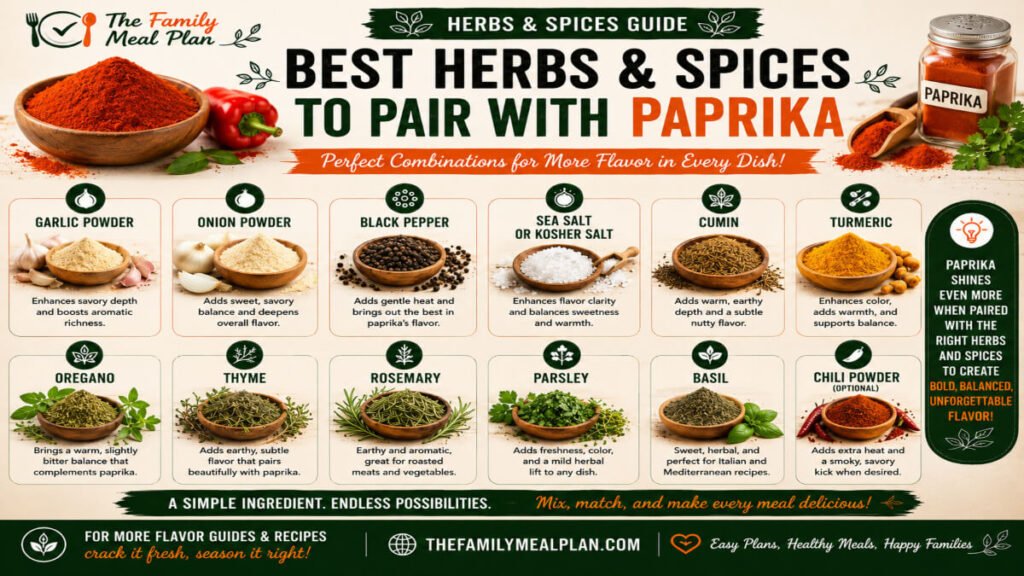
💡 Paprika rarely works alone in traditional cooking. Many of its most successful culinary applications come from combining it with complementary herbs and spices that create balanced layers of flavor.
Garlic
Garlic contributes aromatic sulfur compounds and savory depth that help amplify paprika’s earthy pepper notes and subtle sweetness. Together they create layered flavor without overwhelming other ingredients, which helps explain why the pairing appears so frequently across global cooking traditions.
Onion Powder
Onion powder contributes mild sweetness and umami-like depth that softens paprika’s earthy character while helping create a more balanced flavor foundation.
Black Pepper
Black Pepper contributes warmth and aromatic complexity that balances paprika’s mild sweetness and earthy character.
Together, they create a more complete seasoning profile by combining paprika’s color and subtle pepper flavor with black pepper’s distinctive bite and aroma. This pairing is commonly used in protein seasoning blends, soups, stews, vegetable dishes, Mediterranean-inspired recipes, and practical everyday meal preparation.
Sea Salt & Kosher Salt
Sea Salt and Kosher Salt help enhance paprika’s flavor while improving overall seasoning balance.
Proper seasoning allows paprika’s natural pepper notes, subtle sweetness, and earthy complexity to become more noticeable. Together, they form a foundational flavor combination used in roasted vegetables, protein-based meals, homemade spice blends, healthy cooking, and meal preparation.
Cumin
Cumin pairs exceptionally well with paprika because both spices contribute earthy warmth while offering distinctly different flavor characteristics.
Paprika provides color, mild sweetness, and balanced pepper flavor, while cumin contributes deeper earthy notes and aromatic complexity. Together they form the foundation of many bean dishes, chili recipes, taco seasoning blends, Mediterranean-inspired meals, Middle Eastern cooking, and Latin American-inspired recipes.
This remains one of the most widely used spice combinations in global cooking because it delivers depth, balance, and versatility across a wide variety of recipes.
Turmeric
Turmeric and paprika work together to create vibrant color, layered flavor, and additional nutritional interest through their naturally occurring plant compounds.
Turmeric contributes earthy bitterness and distinctive golden color, while paprika adds warmth, sweetness, and rich red tones. Together they are commonly used in rice dishes, grain bowls, vegetable-forward meals, wellness-focused recipes, and Mediterranean-inspired cooking where both flavor and visual appeal are important.
Oregano
Oregano contributes herbal brightness that balances paprika’s earthy character.
This combination is especially common throughout Mediterranean-inspired cooking, where oregano’s aromatic herbal notes help lighten paprika’s warmth and richness. Together they work particularly well in tomato-based dishes, roasted vegetables, chicken recipes, homemade sauces, and vegetable-forward meals.
Thyme
Thyme offers subtle earthy and savory notes that blend naturally with paprika.
The pairing helps create depth without becoming overwhelming, making it ideal for roasted vegetables, poultry dishes, soups, stews, slow-cooked meals, and sheet pan recipes. Thyme’s gentle herbal character complements paprika’s warmth while helping build a more rounded flavor profile.
Rosemary
Rosemary provides bold herbal aroma that complements paprika’s warmth and complexity.
Together they create a savory flavor combination commonly associated with rustic Mediterranean-inspired cooking. This pairing is particularly effective with roasted potatoes, chicken, turkey, beef, and root vegetables where rosemary’s fragrant oils help balance paprika’s earthy richness.
Parsley
Parsley helps brighten dishes seasoned with paprika by adding freshness, color contrast, and a lighter herbal finish.
This combination is frequently used in grain bowls, roasted vegetables, soups, seafood dishes, and healthy family meals. Fresh parsley can also help balance the richness of smoked paprika, creating a cleaner and more vibrant overall flavor profile.
Building Balanced Flavor with Paprika
One reason paprika remains such a valuable pantry ingredient is its ability to work harmoniously with a wide range of herbs and spices. Rather than dominating a dish, paprika often helps connect flavors together while contributing color, warmth, and depth.
For many home cooks, combining paprika with Garlic, Onion Powder, Black Pepper, Sea Salt, Kosher Salt, Cumin, Turmeric, Oregano, Thyme, Rosemary, and Parsley creates countless opportunities for building healthier, more flavorful homemade meals using simple pantry ingredients.
💡 Understanding which herbs and spices work well together is one of the easiest ways to improve cooking confidence, create more balanced meals, and develop deeper flavor naturally.
Recipes to Try with Paprika
Paprika’s versatility makes it one of the easiest spices to incorporate into everyday cooking. Whether used in roasted vegetables, seasoning blends, soups, rice dishes, protein-based meals, or Mediterranean-inspired recipes, paprika helps create balanced flavor while contributing vibrant color and subtle complexity.
Because paprika works well with so many ingredients, it can serve as either a supporting seasoning or a primary flavor component. Sweet paprika adds mild warmth and depth, while smoked paprika contributes rich savory character that transforms simple recipes into more flavorful meals.

💡 One of the best ways to appreciate paprika’s versatility is to experience how it enhances real meals. From roasted vegetables to protein-rich family dinners, paprika helps create balanced flavor using simple pantry ingredients.
Creamy Garlic Chicken Pasta
Paprika helps add warmth, color, and subtle depth to creamy sauces while complementing the savory flavors of Garlic, Black Pepper, and Onion Powder.
Why it works:
● Adds visual appeal to creamy sauces
● Enhances savory flavor development
● Complements chicken and pasta dishes
● Works well alongside herbs and spices
This recipe demonstrates how paprika can elevate comfort food while maintaining balanced flavor.
Easy Baked Lemon Herb Salmon with Vegetables
Paprika pairs naturally with seafood, vegetables, and fresh herbs.
In this recipe, paprika contributes:
● Mild pepper flavor
● Enhanced color
● Balanced seasoning
● Additional depth without overpowering delicate ingredients
The combination of paprika, lemon, and herbs creates a flavorful Mediterranean-inspired meal.
Healthy Lemon Garlic Chicken
Paprika helps build a more complete seasoning profile alongside Garlic, lemon, and herbs.
Benefits of using paprika here include:
● Improved flavor complexity
● Better visual presentation
● Enhanced roasted color
● Balanced savory notes
This recipe showcases paprika’s ability to support lighter, wellness-focused meals.
One Pan Honey Garlic Chicken and Rice
Paprika works exceptionally well in one-pan meals because it distributes evenly throughout sauces, proteins, vegetables, and grains.
In this recipe paprika contributes:
● Rich color
● Mild savory warmth
● Improved seasoning balance
● Greater overall flavor depth
The result is a practical family dinner with broad appeal.
Teriyaki Beef Stir Fry
Although often associated with Mediterranean and European cooking, paprika can also enhance Asian-inspired dishes.
Paprika helps:
● Add subtle background depth
● Complement beef and vegetables
● Improve color development
● Balance sweet and savory flavors
This demonstrates paprika’s flexibility across different cuisines.
Why Paprika Works in So Many Recipes
Unlike highly specialized spices, paprika adapts to a remarkably wide range of cooking styles, ingredients, and cuisines.
Its balanced flavor profile allows it to enhance dishes without overwhelming other ingredients. Depending on the variety used, paprika can contribute mild sweetness, earthy warmth, subtle pepper notes, smoky depth, vibrant color, or gentle complexity. This versatility helps explain why paprika remains one of the most widely used spices in healthy home cooking throughout the world.
Chicken Recipes
Paprika pairs naturally with chicken because it enhances flavor while helping create appealing color during roasting, grilling, baking, and skillet cooking. It works particularly well alongside Garlic, Onion Powder, Black Pepper, and fresh herbs in both simple weeknight dinners and more elaborate meals.
Seafood Dishes
Paprika complements seafood by adding flavor without overpowering delicate proteins. It is commonly used with salmon, shrimp, white fish, and seafood-based rice dishes where balanced seasoning is important.
Beef Meals
Beef benefits from paprika’s ability to contribute warmth, depth, and savory complexity. The spice is frequently used in stews, stir fries, grilled beef recipes, seasoning blends, and traditional Eastern European and Hungarian-inspired dishes.
Roasted Vegetables
Paprika is especially popular with roasted vegetables because heat helps develop its flavor while enhancing aroma and color. It works particularly well with potatoes, sweet potatoes, cauliflower, carrots, Brussels sprouts, squash, and other vegetable-forward meals.
Rice Dishes
Rice readily absorbs paprika’s color and flavor, making it a popular ingredient in Mediterranean-inspired, Spanish-inspired, and grain-based recipes. Even small amounts can help transform simple rice dishes into more visually appealing meals.
Soups & Stews
Paprika contributes richness and depth to soups and stews while helping build layered flavor throughout the cooking process. It is often added early in preparation so its flavor can fully integrate with other ingredients.
Bean-Based Meals
Beans and legumes pair exceptionally well with paprika because its earthy warmth complements their natural flavor. Paprika is commonly used in lentil dishes, bean soups, chili recipes, grain bowls, and plant-forward meals.
Mediterranean-Inspired Cooking
Paprika frequently appears in Mediterranean-inspired meals built around vegetables, legumes, olive oil, seafood, poultry, and fresh herbs. Its balanced flavor profile supports ingredient-focused cooking while helping create satisfying meals using simple pantry staples.
Meal Prep Recipes
Because paprika maintains its flavor well after cooking, it is commonly used in meal prep recipes. Proteins, vegetables, grain bowls, soups, and batch-cooked meals often benefit from paprika’s ability to provide consistent flavor throughout the week.
Healthy Family Dinners
One reason paprika remains a pantry staple is its broad family appeal. Its mild flavor makes it approachable for children and adults alike while helping create healthier homemade meals that feel both flavorful and satisfying.
For many families, paprika becomes a foundational ingredient because it provides color, flavor, versatility, and culinary flexibility across countless recipes throughout the week.
💡 The true strength of paprika lies in its ability to improve everyday meals. A small amount can add color, depth, warmth, and complexity while supporting healthier homemade cooking built around simple ingredients.
Frequently Asked Questions About Paprika
Is Paprika Healthy?
Paprika is commonly included in health-conscious eating patterns because it contains naturally occurring carotenoids, antioxidant-rich plant compounds, and small amounts of vitamins and minerals. Researchers continue studying compounds such as capsanthin, capsorubin, beta-carotene, beta-cryptoxanthin, lutein, and zeaxanthin because of their potential relationship to antioxidant activity, eye health, cardiovascular wellness, cellular protection, and healthy aging discussions.
While paprika is typically consumed in relatively small amounts, it can still contribute beneficial plant compounds as part of a balanced diet centered around whole foods and nutrient-dense ingredients.
What Is the Difference Between Sweet Paprika, Hot Paprika, and Smoked Paprika?
The primary differences involve flavor, heat level, and production methods. While all three varieties come from peppers used to produce paprika, each offers a distinct culinary experience and works best in different types of recipes.
Sweet Paprika
Sweet paprika is the most commonly used variety and is known for its balanced, approachable flavor profile.
It generally offers:
● Mild flavor
● Gentle sweetness
● Minimal heat
● Bright red color
Because of its versatility, sweet paprika is commonly used in roasted vegetables, soups, sauces, seasoning blends, rice dishes, and everyday family meals where color and flavor are desired without significant heat.
Hot Paprika
Hot paprika provides a more assertive flavor profile while still maintaining many of the characteristics associated with traditional paprika.
It typically provides:
● More noticeable heat
● Stronger pepper flavor
● Greater intensity
Hot paprika works particularly well in recipes where a little extra warmth helps balance rich proteins, stews, sauces, and spice-forward dishes.
Smoked Paprika
Smoked paprika develops its distinctive character through a smoking process used during drying.
It commonly features:
● Rich smoky aroma
● Wood-fired flavor notes
● Deep savory complexity
Smoked paprika is frequently used in Mediterranean-inspired cooking, roasted vegetables, grilled proteins, soups, stews, and recipes where additional depth and smoky flavor are desired.
Each variety offers unique strengths, allowing home cooks to select the paprika that best matches their preferred flavor profile and cooking style.
Does Paprika Contain Capsaicin?
Paprika may contain small amounts of capsaicin depending on the pepper varieties used during production.
Sweet paprika generally contains very little capsaicin and produces minimal heat.
Hot paprika varieties contain greater concentrations and therefore deliver a spicier flavor.
Capsaicin continues to attract scientific interest because of its relationship to metabolism, circulation, and sensory response research.
Is Paprika Good for Eye Health?
Paprika contains naturally occurring carotenoids including lutein, zeaxanthin, beta-carotene, capsanthin, and beta-cryptoxanthin.
Many of these compounds are frequently discussed in nutrition research related to vision wellness and eye-health-supportive dietary patterns.
Because carotenoids function as antioxidants, researchers continue exploring their role within broader discussions surrounding healthy aging and long-term eye health.
How Should Paprika Be Stored?
Proper storage helps preserve paprika’s flavor, color, aroma, and overall quality over time.
For best results, paprika should be stored in a cool, dry location away from heat, moisture, and direct sunlight.
Proper storage helps preserve:
● Flavor quality
● Color intensity
● Aroma
● Freshness
● Antioxidant-rich compounds
Keeping paprika in an airtight container can help reduce exposure to air and humidity, both of which may gradually diminish flavor and color quality.
Because paprika’s vibrant color is closely linked to its naturally occurring carotenoids, proper storage also helps maintain many of the characteristics that make the spice nutritionally and visually appealing.
Can Paprika Be Used Every Day?
For most people, paprika can be incorporated into everyday cooking as part of a balanced dietary pattern.
Because paprika adds flavor, color, and culinary versatility without significant calories, many home cooks use it regularly in:
● Vegetables
● Lean proteins
● Grain dishes
● Soups
● Homemade seasoning blends
● Mediterranean-inspired meals
Its mild flavor makes it especially easy to incorporate into healthy homemade recipes throughout the week.
For many families, paprika becomes a staple pantry ingredient because it helps improve flavor while supporting meals built around vegetables, legumes, lean proteins, and other nutrient-dense foods.
What Foods Pair Best with Paprika?
Paprika’s balanced flavor profile allows it to complement a remarkably wide variety of foods.
Popular pairings include:
● Chicken
● Turkey
● Salmon
● Shrimp
● Beef
● Potatoes
● Sweet potatoes
● Rice
● Beans
● Lentils
● Eggs
● Roasted vegetables
Paprika also pairs exceptionally well with Garlic, Onion Powder, Black Pepper, Sea Salt, Kosher Salt, Cumin, Turmeric, Oregano, Thyme, Rosemary, and Parsley.
Its ability to enhance both proteins and vegetables helps explain why paprika remains one of the most widely used spices in healthy home cooking throughout the world.
Is Paprika the Same as Chili Powder?
No. Although both spices are produced from dried peppers, they are distinctly different ingredients and are not typically interchangeable in recipes.
Paprika is generally produced from ground sweet or mild peppers and is often valued for:
● Color
● Mild flavor
● Subtle sweetness
● Balanced seasoning
Chili powder, on the other hand, is usually a seasoning blend that may contain:
● Ground chili peppers
● Cumin
● Oregano
● Additional seasonings
As a result, chili powder generally delivers a more complex and often spicier flavor profile than traditional paprika.
Understanding this distinction can help home cooks choose the right ingredient when following recipes or creating homemade seasoning blends.
💡 Understanding how paprika is produced, stored, and used can help home cooks get the most flavor, color, and versatility from one of the world’s most popular spices.
Paprika’s combination of culinary flexibility, naturally occurring carotenoids, antioxidant-rich compounds, and global culinary significance continues to make it one of the most valuable pantry staples for both health-conscious cooking and everyday meal preparation.
Nutrition & Wellness Research
Paprika continues attracting scientific interest because of its unique concentration of naturally occurring carotenoids, antioxidant-rich plant compounds, and vitamin A-related nutrients. While paprika is most commonly recognized as a culinary spice, researchers have spent decades studying the compounds responsible for its vibrant red color and growing reputation within wellness-focused nutrition discussions.
Much of this interest centers on carotenoids such as capsanthin, capsorubin, beta-carotene, beta-cryptoxanthin, lutein, and zeaxanthin. These naturally occurring compounds function as antioxidants and continue attracting attention for their potential relationship to cardiovascular wellness, eye health, cellular protection, healthy aging, immune function, and overall dietary quality.
Because paprika is produced from dried peppers, it represents a concentrated source of many of these plant compounds. Although paprika is typically consumed in smaller quantities than fruits and vegetables, researchers continue studying its contribution to antioxidant-rich dietary patterns and wellness-focused eating habits.
Researchers continue exploring paprika and its naturally occurring carotenoid compounds in relation to several areas of nutrition and wellness research, including:
● Antioxidant activity and cellular protection
● Carotenoid-rich nutrition
● Vision and eye-health discussions
● Healthy aging research
● Cardiovascular wellness
● Immune-supportive nutrition
● Inflammation-related research
● Plant-based antioxidant intake
● Polyphenol activity
● Dietary quality and nutrient density
One reason paprika continues attracting scientific interest is that many of its most studied compounds belong to the carotenoid family. Unlike some spices that derive much of their wellness-focused reputation from essential oils or aromatic compounds, paprika’s research profile is closely connected to the pigments responsible for its vibrant red color.
Researchers continue exploring compounds such as capsanthin, capsorubin, beta-carotene, beta-cryptoxanthin, lutein, and zeaxanthin because of their potential relationship to antioxidant activity and overall dietary quality. These naturally occurring plant compounds are frequently discussed within broader nutrition conversations focused on healthy aging, cellular protection, cardiovascular wellness, vision-supportive nutrition, and balanced dietary patterns.
Scientific interest in paprika also reflects a growing appreciation for how herbs, spices, fruits, and vegetables contribute beneficial plant compounds to everyday diets. Rather than focusing exclusively on isolated nutrients, many modern nutrition discussions examine how whole foods and plant-based ingredients work together within overall eating patterns to support long-term health and wellness.
Because paprika is commonly used alongside vegetables, legumes, whole grains, seafood, poultry, and other nutrient-dense foods, it is often included in discussions surrounding Mediterranean-inspired eating habits and wellness-focused meal preparation. While paprika itself is typically consumed in smaller amounts than fruits and vegetables, researchers continue studying how regularly incorporating antioxidant-rich herbs and spices may contribute to broader dietary quality over time.
As scientific understanding continues evolving, paprika remains an excellent example of how simple pantry ingredients can provide both culinary value and nutritional interest. Its combination of naturally occurring carotenoids, antioxidant-rich plant compounds, vibrant color, and culinary versatility continues to make it one of the most widely discussed spices in modern nutrition research.
The growing body of paprika research highlights how naturally occurring carotenoids and antioxidant-rich plant compounds continue attracting scientific interest within broader discussions surrounding nutrition, wellness, and long-term dietary quality.
Carotenoids Remain the Primary Focus of Paprika Research
The majority of scientific interest surrounding paprika centers on its carotenoid content.
Carotenoids are naturally occurring plant pigments responsible for many of the red, orange, and yellow colors found throughout fruits, vegetables, and spices. Paprika contains particularly high concentrations of carotenoid compounds compared with many commonly used seasonings.
Researchers continue studying:
● Capsanthin
● Capsorubin
● Beta-carotene
● Beta-cryptoxanthin
● Lutein
● Zeaxanthin
because of their relationship to antioxidant activity and long-term wellness discussions.
These compounds are also largely responsible for paprika’s distinctive appearance and much of its nutritional reputation.
Antioxidant Activity & Cellular Protection
One of the most frequently discussed areas of paprika research involves antioxidant activity.
Throughout normal metabolism, the body naturally produces unstable molecules commonly known as free radicals. When excessive amounts accumulate, researchers associate them with oxidative stress and cellular damage.
Antioxidants help neutralize these unstable molecules and contribute to the body’s natural defense systems.
Because paprika contains numerous antioxidant-rich carotenoids and polyphenols, researchers continue exploring its role within antioxidant-focused nutrition discussions involving:
● Cellular protection
● Healthy aging
● Cardiovascular wellness
● Overall dietary quality
● Wellness-focused eating habits
This remains one of the strongest areas of scientific interest surrounding paprika.
Eye Health & Vision-Related Nutrition
Paprika is frequently discussed in relation to eye-health-supportive nutrition because it contains several carotenoids commonly associated with vision wellness.
Particular attention is often given to:
● Lutein
● Zeaxanthin
● Beta-carotene
These compounds naturally occur in many colorful fruits and vegetables and continue attracting attention within broader discussions surrounding healthy aging and vision-supportive dietary patterns.
Because paprika provides these compounds in concentrated form, researchers frequently include it in conversations surrounding carotenoid-rich nutrition.
Cardiovascular Wellness Discussions
Paprika also appears in ongoing discussions surrounding heart-conscious nutrition and cardiovascular wellness.
Researchers continue exploring how antioxidant-rich dietary patterns may contribute to long-term cardiovascular health. Because paprika contains antioxidant carotenoids and polyphenol compounds, it is frequently included within these broader areas of study.
Paprika commonly appears within dietary approaches emphasizing:
● Vegetables
● Fruits
● Herbs and spices
● Whole grains
● Legumes
● Mediterranean-style eating habits
These eating patterns continue attracting interest for their relationship to overall health and wellness.
Healthy Aging & Wellness-Focused Nutrition
Healthy aging remains another area of growing research interest.
Many wellness-focused dietary recommendations encourage regular consumption of colorful plant foods because they naturally provide antioxidants, carotenoids, polyphenols, vitamins, and minerals.
Paprika’s vibrant color reflects the concentration of these naturally occurring compounds and helps explain its popularity within healthy aging discussions.
Researchers continue studying how carotenoid-rich foods may contribute to broader conversations involving:
● Cellular wellness
● Antioxidant protection
● Long-term dietary quality
● Vision health
● Overall healthy aging strategies
Paprika’s Role in Nutrient-Dense Eating Patterns
One of paprika’s most practical contributions may simply be its ability to encourage healthier eating habits through improved flavor and meal enjoyment.
Paprika is commonly used to season:
● Vegetables
● Legumes
● Lean proteins
● Grain dishes
● Soups
● Homemade meals
Because flavorful meals are often easier to maintain long term, spices like paprika can help support wellness-focused eating patterns built around nutrient-dense foods.
For many families, improving flavor naturally is one of the simplest ways to make healthy eating more enjoyable and sustainable.
💡 Current research continues exploring paprika’s carotenoids, antioxidant activity, polyphenol compounds, and potential relationship to healthy aging, cardiovascular wellness, eye health, and overall dietary quality. As with most foods, paprika works best as part of a balanced diet centered around a variety of nutrient-dense whole foods.
Continue Exploring Flavor & Seasoning Guides
Expand your knowledge of herbs, spices, seasonings, and wellness-focused cooking with our complete collection of Flavor & Seasoning Guides. Each guide explores health benefits, naturally occurring compounds, flavor profiles, cooking uses, storage recommendations, research highlights, and practical ways to build healthier, more flavorful homemade meals.
Core Pantry Foundations
● Garlic: Health Benefits, Flavor Profile & Best Cooking Uses
● Onion Powder: Health Benefits, Flavor Profile & Best Cooking Uses
● Black Pepper: Health Benefits, Flavor Profile & Best Cooking Uses
● Sea Salt & Kosher Salt: Health Benefits, Flavor Profile & Best Cooking Uses
● Paprika: Health Benefits, Flavor Profile & Best Cooking Uses (Current Guide)
● Smoked Paprika: Health Benefits, Flavor Profile & Best Cooking Uses
● Chili Powder: Health Benefits, Flavor Profile & Best Cooking Uses
● Cumin: Health Benefits, Flavor Profile & Best Cooking Uses
● Turmeric: Health Benefits, Flavor Profile & Best Cooking Uses
● Cinnamon: Health Benefits, Flavor Profile & Best Cooking Uses
Fresh & Dried Culinary Herbs
● Basil: Health Benefits, Flavor Profile & Best Cooking Uses
● Parsley: Health Benefits, Flavor Profile & Best Cooking Uses
● Oregano: Health Benefits, Flavor Profile & Best Cooking Uses
● Thyme: Health Benefits, Flavor Profile & Best Cooking Uses
● Rosemary: Health Benefits, Flavor Profile & Best Cooking Uses
● Bay Leaves: Health Benefits, Flavor Profile & Best Cooking Uses
Each guide explores health benefits, naturally occurring compounds, flavor profiles, cooking uses, storage recommendations, research highlights, and practical ways to build healthier, more flavorful homemade meals.
References & Further Reading
For readers interested in learning more about paprika, carotenoids, antioxidant-rich nutrition, naturally occurring plant compounds, and wellness-focused dietary patterns, the following resources provide additional educational information and research summaries:
● National Institutes of Health (NIH)
● United States Department of Agriculture (USDA Food Data Central)
● Cleveland Clinic Nutrition Resources
● Harvard T.H. Chan School of Public Health
● Medical News Today Nutrition Library
● Healthline Nutrition Resources
● Linus Pauling Institute Micronutrient Information Center
💡 Scientific understanding of food compounds continues evolving. Exploring multiple reputable sources helps provide a broader understanding of nutrition, wellness, and healthy eating patterns.
Medical & Nutrition Disclaimer
This article is intended for educational and informational purposes only and should not be considered medical advice. Nutritional needs vary between individuals. Always consult a qualified healthcare professional regarding specific dietary concerns, medical conditions, allergies, medications, or treatment decisions. The Family Meal Plan does not provide medical diagnosis, treatment, or individualized nutrition counseling.
💡 Learning how foundational ingredients work is one of the easiest ways to build healthier, more flavorful meals. Paprika remains one of the most versatile spices in healthy home cooking because it combines vibrant color, naturally occurring carotenoids, antioxidant-rich plant compounds, and exceptional culinary flexibility.
For generations, paprika has helped home cooks create flavorful meals while contributing naturally occurring compounds that continue attracting scientific interest. From Mediterranean-inspired dishes and vegetable-forward meals to soups, proteins, grain bowls, and homemade seasoning blends, paprika remains one of the most practical spices found in kitchens around the world.
Its unique combination of flavor, color, versatility, and wellness-focused nutrition helps explain why paprika continues to be valued by both home cooks and researchers alike.
Whether you’re exploring healthier eating habits, expanding your spice knowledge, or building greater confidence in the kitchen, understanding how to use paprika effectively can help transform simple ingredients into satisfying, flavorful meals.
Cook Smarter with Herbs & Spices
Families cooking together makes home meals simpler, healthier, and more enjoyable.
Understanding how paprika contributes naturally occurring carotenoids, antioxidant-rich plant compounds, vibrant color, balanced flavor development, and practical home cooking can help create meals that support both wellness-focused eating habits and greater confidence in the kitchen.
Whether you’re preparing quick weeknight dinners, seasoning proteins and vegetables, building homemade spice blends, meal prepping for the week ahead, or exploring Mediterranean-inspired cooking traditions, paprika remains one of the most versatile ingredients for both flavorful home cooking and health-conscious meal planning.
Join The Family Meal Plan
Simple, healthy meals don’t happen by accident—they happen with a plan.
Join The Family Meal Plan and receive easy family recipes, practical cooking tips, healthy meal ideas, flavor-focused cooking guidance, and weekly meal plans designed to make dinner less stressful and more enjoyable.
Whether you’re building healthier habits, simplifying meal prep, improving your seasoning skills, or looking for new family dinner inspiration, we’re here to help you put flavorful, wholesome meals on the table with confidence.
Easy Plans, Healthy Meals, Happy Families.