
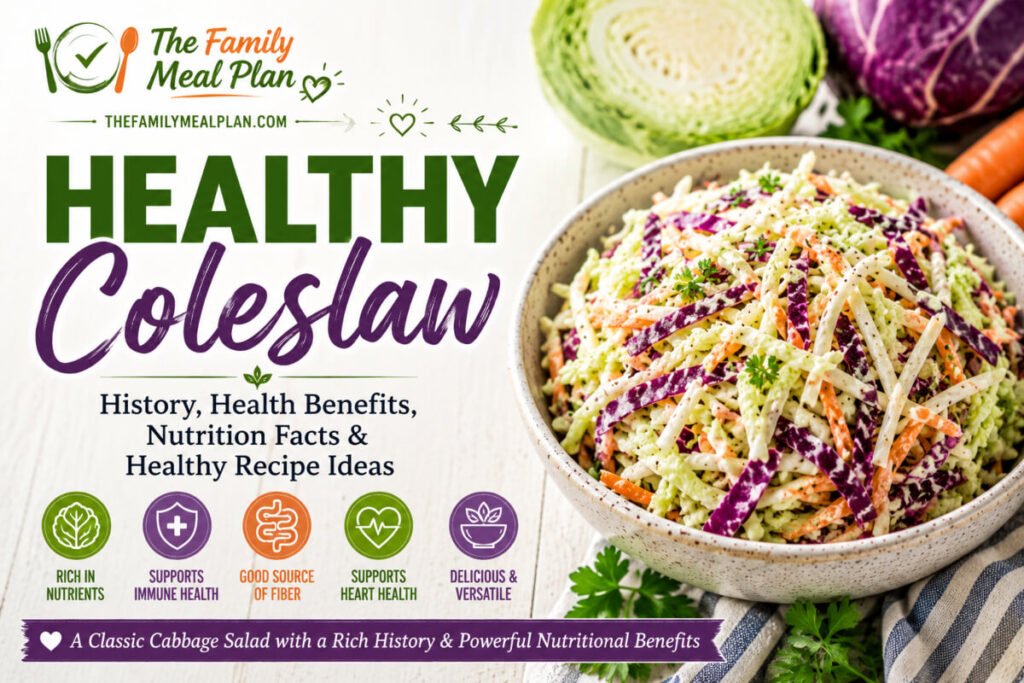
Healthy coleslaw is one of the most recognizable side dishes in the world, yet few people realize that its story stretches back centuries and begins with one of the most researched vegetable families in modern nutrition science.
At first glance, coleslaw may appear to be a simple bowl of shredded cabbage and dressing. However, beneath its crisp texture and refreshing flavor lies a fascinating history connected to European food traditions, global agriculture, food preservation, nutrition research, and the enduring popularity of cabbage as a foundational food.
Today, healthy coleslaw has evolved far beyond the mayonnaise-heavy versions often associated with picnics and restaurant side dishes. Modern recipes frequently feature nutrient-dense ingredients such as green cabbage, red cabbage, carrots, Greek yogurt, olive oil, apple cider vinegar, herbs, and other wholesome additions that help transform this classic cabbage salad into a colorful and satisfying component of a balanced diet.
Much of the growing interest surrounding healthy coleslaw centers on cabbage itself. As a member of the cruciferous vegetable family, cabbage contains naturally occurring fiber, vitamins, minerals, antioxidants, and plant compounds that continue attracting scientific attention in discussions surrounding overall wellness, digestive health, heart-conscious eating patterns, healthy aging, and nutrient-dense dietary habits.
For generations, cabbage-based salads have appeared throughout European, American, Mediterranean, and global food cultures because they provide an economical, versatile, and flavorful way to enjoy vegetables. Long before modern nutrition research existed, people recognized cabbage as a dependable staple that could be grown, stored, transported, and enjoyed throughout much of the year.
Today, healthy coleslaw remains popular because it combines everything many home cooks are looking for in a side dish:
- Fresh flavor
- Crunchy texture
- Colorful ingredients
- Nutritional value
- Budget-friendly preparation
- Easy meal pairing
- Year-round versatility
Whether served alongside grilled chicken, barbecue, seafood, sandwiches, roasted vegetables, Mediterranean-inspired meals, or family dinners, healthy coleslaw continues to prove that simple ingredients often create the most enduring recipes.
Understanding healthy coleslaw means understanding far more than a recipe. It means exploring the history of cabbage, the evolution of one of the world’s most beloved salads, the nutritional significance of cruciferous vegetables, and the many ways this humble dish continues supporting flavorful, vegetable-forward eating today.
💡 Healthy coleslaw’s story begins long before modern recipes. To understand why this simple cabbage salad remains popular around the world, it helps to first explore how cabbage became one of humanity’s most important vegetables and how coleslaw evolved from a practical food into a globally recognized dish.
Healthy Coleslaw: More Than Just a Side Dish
Walk into almost any backyard barbecue, family gathering, picnic, restaurant, or summer celebration and you’re likely to find coleslaw somewhere on the menu.
Because it is so common, most people rarely stop to think about its origins.
Yet healthy coleslaw represents something much larger than a simple side dish.
It tells the story of agriculture, preservation, nutrition, migration, culinary innovation, and humanity’s long relationship with one of the most dependable vegetables ever cultivated.
Unlike highly processed side dishes that rely heavily on refined ingredients, healthy coleslaw begins with vegetables. At its foundation sits cabbage—a vegetable that has nourished populations for centuries and continues attracting attention from researchers because of its unique nutritional profile.
Modern healthy coleslaw also demonstrates an important principle found throughout many of the world’s healthiest eating patterns:
Simple ingredients often provide remarkable value.
Fresh vegetables, flavorful dressings, natural textures, and colorful plant foods combine to create a dish that feels both comforting and nutritious.
This is one reason healthy coleslaw appears so frequently throughout our:
- Healthy Recipes
- Family Dinners
- Meal Prep Recipes & Planning
- Summer Recipes
- Mediterranean-Inspired Meals
- Vegetable-Focused Recipes
- Healthy Side Dish Collections
- Budget-Friendly Meal Plans
- Backyard Barbecue Menus
- Practical Family Cooking Guides
Whether your goal is increasing vegetable intake, exploring healthier side dishes, building more colorful meals, or simply learning the fascinating story behind a beloved classic, healthy coleslaw remains one of the most interesting dishes to understand.
Save This Guide for Later
Before exploring healthy coleslaw’s fascinating history, cabbage research, nutrition facts, health benefits, ingredient comparisons, healthy recipe ideas, and complete wellness guide below, save this reference so you can quickly return to information about cruciferous vegetables, cabbage nutrition, healthy coleslaw ingredients, balanced eating habits, and practical ways to enjoy this classic salad as part of healthy homemade meals.
📌 Save Healthy Coleslaw: History, Health Benefits, Nutrition Facts & Healthy Recipe Ideas to Pinterest for later and revisit it whenever you need healthy side dish inspiration, cabbage nutrition information, wellness-focused cooking ideas, and fresh family-friendly recipe suggestions.
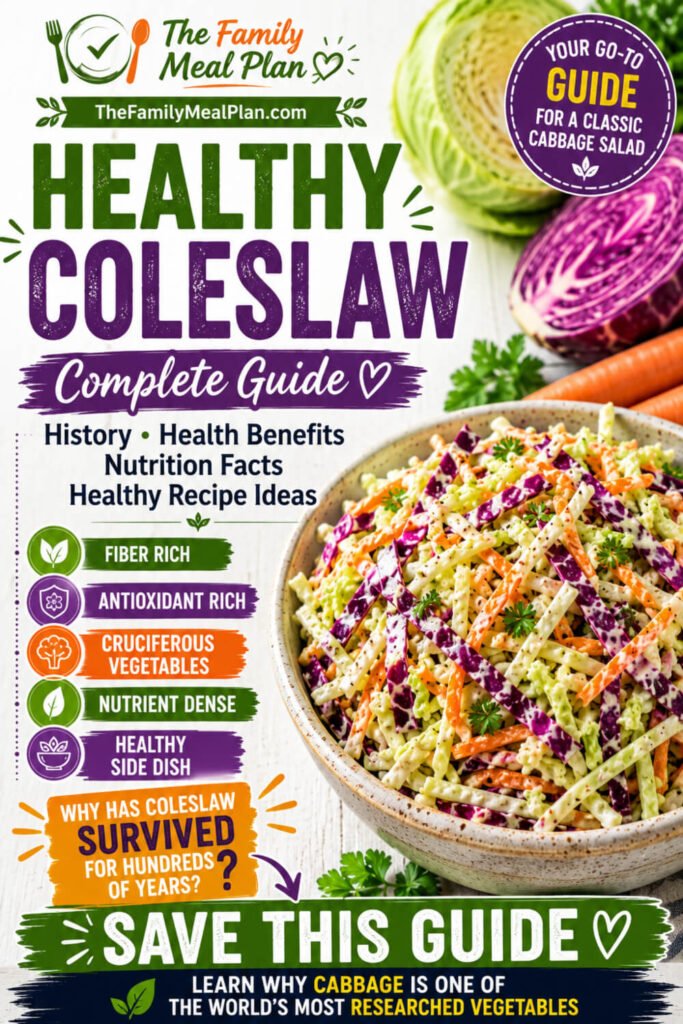
💡 Behind every bowl of coleslaw is a surprisingly rich story. The dish we know today developed over centuries of agricultural traditions, cultural exchanges, and evolving food practices that transformed a simple cabbage salad into a worldwide favorite.
The Origins of Coleslaw
The history of coleslaw begins with cabbage.
Long before modern kitchens, refrigeration, or prepared foods existed, cabbage served as one of the most important vegetables available to communities throughout Europe.
Its popularity was easy to understand.
Cabbage was:
- Easy to grow
- Productive in cooler climates
- Affordable
- Nutrient-dense
- Easy to store
- Available throughout much of the year
These qualities made cabbage a valuable food source for generations.
The word “coleslaw” itself traces its roots to the Dutch term koolsla.
“Kool” means cabbage.
“Sla” means salad.
Literally translated, the name simply means:
Cabbage Salad
Historical records suggest cabbage salads were enjoyed throughout Europe long before the modern word coleslaw became common.
Ancient Romans reportedly consumed cabbage preparations mixed with vinegar and seasonings. Over time, variations appeared throughout different regions, each adapting cabbage to local ingredients and culinary traditions.
By the Middle Ages, cabbage had become deeply integrated into European agriculture and everyday cooking. Families relied on cabbage because it stored well through colder seasons and provided a dependable source of food when fresh produce was limited.
Dutch communities became particularly known for cabbage salads dressed with oil and vinegar.
When Dutch settlers arrived in North America, they brought many of these culinary traditions with them.
Among them was koolsla.
Over time, the name gradually evolved into the word we recognize today:
Coleslaw
What began as a simple cabbage salad eventually became one of the most recognizable vegetable dishes in American and international cuisine.
💡 The original versions of coleslaw looked very different from many modern recipes. Early cabbage salads relied heavily on simple ingredients such as cabbage, vinegar, herbs, and oil rather than creamy dressings.
How Coleslaw Evolved Over Time
As trade expanded and food cultures blended, coleslaw evolved alongside them.
The earliest cabbage salads were generally simple and practical.
Most featured combinations of:
- Cabbage
- Vinegar
- Salt
- Herbs
- Oils
These ingredients were inexpensive, widely available, and effective at preserving freshness and flavor.
Over time, new ingredients became more accessible.
Carrots were added for sweetness and color.
Additional vegetables created texture and variety.
Regional herbs and seasonings introduced unique flavor profiles.
As refrigeration became common and food preparation methods changed, creamy dressings gained popularity. Mayonnaise-based versions emerged and eventually became the standard coleslaw many people recognize today.
Yet the story did not stop there.
In recent decades, growing interest in nutrition, wellness, and whole-food cooking has sparked another evolution.
Healthy coleslaw has emerged as a modern adaptation that returns many recipes closer to their vegetable-focused roots.
Today’s healthier versions often feature:
- More vegetables
- Less added sugar
- Greek yogurt dressings
- Olive oil vinaigrettes
- Apple cider vinegar
- Fresh herbs
- Reduced-calorie ingredients
- Mediterranean-inspired influences
This shift reflects broader changes in how people think about food.
Rather than focusing solely on taste, many home cooks now seek recipes that deliver flavor, nutrition, freshness, and versatility simultaneously.
Healthy coleslaw fits perfectly within that philosophy.
It remains affordable.
It remains simple.
It remains delicious.
Yet modern versions also align with contemporary interest in vegetables, plant-forward eating, fiber-rich foods, and colorful ingredients.
More than three centuries after Dutch settlers helped introduce koolsla to North America, coleslaw continues evolving while remaining true to its original purpose:
Transforming humble cabbage into a flavorful dish that people genuinely enjoy eating.
💡 The enduring popularity of coleslaw comes from its remarkable adaptability. From traditional vinegar-based recipes to modern healthy variations featuring Greek yogurt, olive oil, and colorful vegetables, coleslaw continues finding new ways to fit changing tastes while preserving its historical roots.
Why Cabbage Became the Foundation of Coleslaw
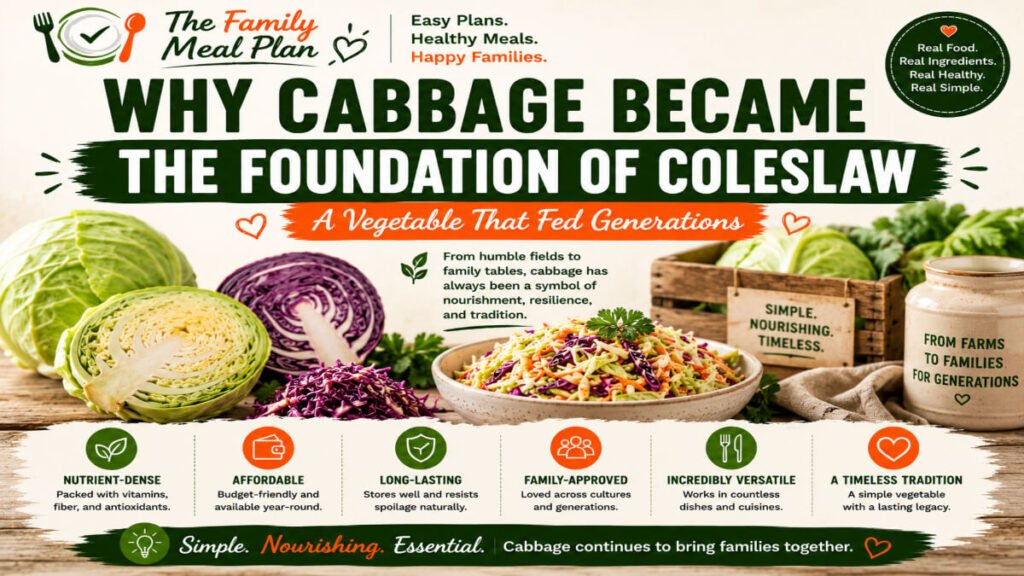
💡 Long before coleslaw became a beloved side dish, cabbage was already feeding communities around the world. Its affordability, versatility, storage life, and nutritional value helped transform it into one of history’s most important vegetables—and eventually the foundation of the dish we now know as coleslaw.
One of the biggest reasons coleslaw has endured for centuries is the remarkable vegetable at its center: cabbage.
While food trends often come and go, cabbage has maintained its place in kitchens, farms, and family meals for thousands of years. Historians believe cabbage has been cultivated since ancient times, making it one of humanity’s oldest continuously consumed vegetables.
Unlike many delicate vegetables that spoil quickly, cabbage offered something incredibly valuable to early civilizations: reliability.
It grew well across a wide range of climates.
It produced large harvests.
It stored for long periods.
It could be eaten raw, cooked, fermented, preserved, or incorporated into countless recipes.
For generations, these qualities made cabbage one of the most practical foods available.
Before refrigeration existed, families depended heavily on vegetables that could survive storage. Cabbage excelled in this role. When stored properly, whole heads could remain usable for weeks or even months, providing nourishment long after harvest season ended.
Throughout Europe, cabbage became deeply integrated into daily life.
It appeared in:
- Fresh salads
- Soups
- Stews
- Fermented foods
- Pickled vegetables
- Cooked side dishes
- Winter food stores
Its affordability also contributed to its popularity. Cabbage provided a significant amount of food for relatively little cost, making it accessible across social and economic classes.
Over time, cabbage became more than just a vegetable.
It became a staple.
As Dutch communities developed cabbage salad recipes that eventually evolved into coleslaw, cabbage naturally remained the centerpiece ingredient. Its crisp texture, mild flavor, and ability to absorb dressings made it ideal for fresh salads.
Even today, cabbage continues serving as the foundation of healthy coleslaw because it provides:
- Exceptional crunch
- Mild sweetness
- Fresh flavor
- Year-round availability
- Excellent value
- Nutritional density
- Culinary versatility
Modern nutrition research has only strengthened cabbage’s reputation.
Researchers continue studying cabbage because it contains naturally occurring fiber, vitamins, minerals, antioxidants, and plant compounds that contribute to its nutritional profile.
This unique combination of history, practicality, affordability, and nutrition helps explain why cabbage remains at the heart of coleslaw centuries after the first cabbage salads appeared.
Why Cruciferous Vegetables Receive So Much Research Attention
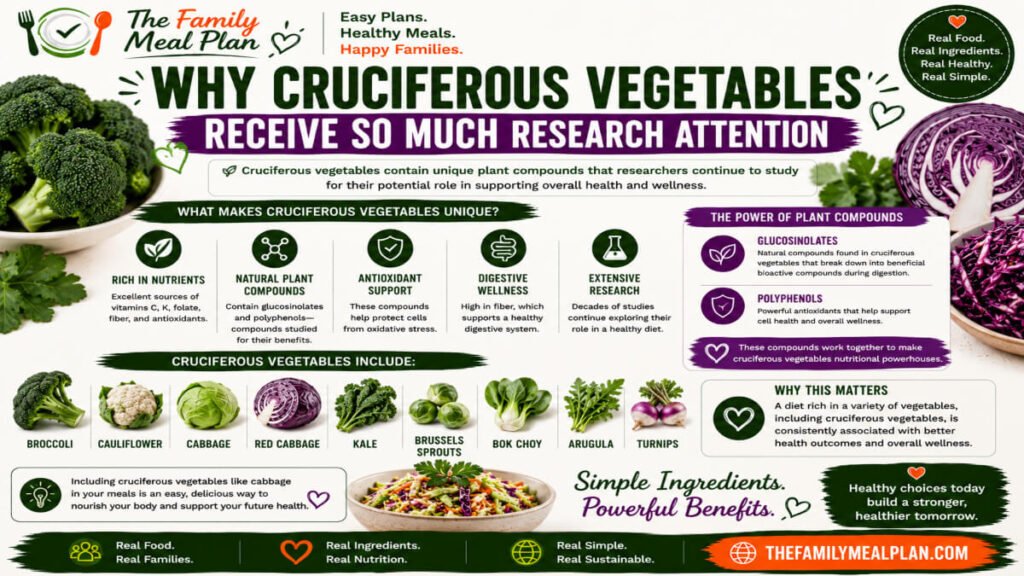
💡 To understand healthy coleslaw’s nutritional significance, it helps to understand the vegetable family cabbage belongs to. Cabbage is part of a group known as cruciferous vegetables—one of the most frequently discussed vegetable categories in modern nutrition research.
Many people know cabbage simply as the primary ingredient in coleslaw.
What many don’t realize is that cabbage belongs to one of the most nutrient-dense and heavily researched vegetable families in the world.
This family is known as cruciferous vegetables.
Other well-known members include:
- Broccoli
- Cauliflower
- Kale
- Brussels sprouts
- Bok choy
- Arugula
- Collard greens
- Turnips
- Mustard greens
These vegetables share several nutritional characteristics that continue attracting scientific interest.
Many provide:
- Dietary fiber
- Vitamin C
- Vitamin K
- Folate
- Potassium
- Antioxidants
- Plant compounds
- Phytonutrients
Researchers have long been interested in cruciferous vegetables because they contain naturally occurring compounds called glucosinolates.
When vegetables such as cabbage are chopped, shredded, chewed, or cooked, glucosinolates break down into additional plant compounds that continue attracting attention in nutrition research.
Scientists continue studying cruciferous vegetables in discussions surrounding:
- Overall dietary quality
- Vegetable intake
- Digestive wellness
- Heart-conscious nutrition
- Healthy aging
- Antioxidant-rich diets
- Plant-forward eating patterns
One reason healthy coleslaw stands out among side dishes is that it often combines multiple nutrient-dense ingredients into a single serving.
A typical healthy coleslaw recipe may include:
- Green cabbage
- Red cabbage
- Carrots
- Herbs
- Vinegar
- Olive oil
- Greek yogurt
Together, these ingredients provide a colorful variety of vitamins, minerals, fiber, and naturally occurring plant compounds.
Researchers consistently encourage increasing vegetable consumption as part of balanced dietary patterns.
Healthy coleslaw offers a practical, flavorful, and affordable way to do exactly that.
Its popularity may be rooted in history, but its nutritional relevance continues making it a valuable addition to modern meals.
10+ Health Benefits Commonly Associated With Healthy Coleslaw
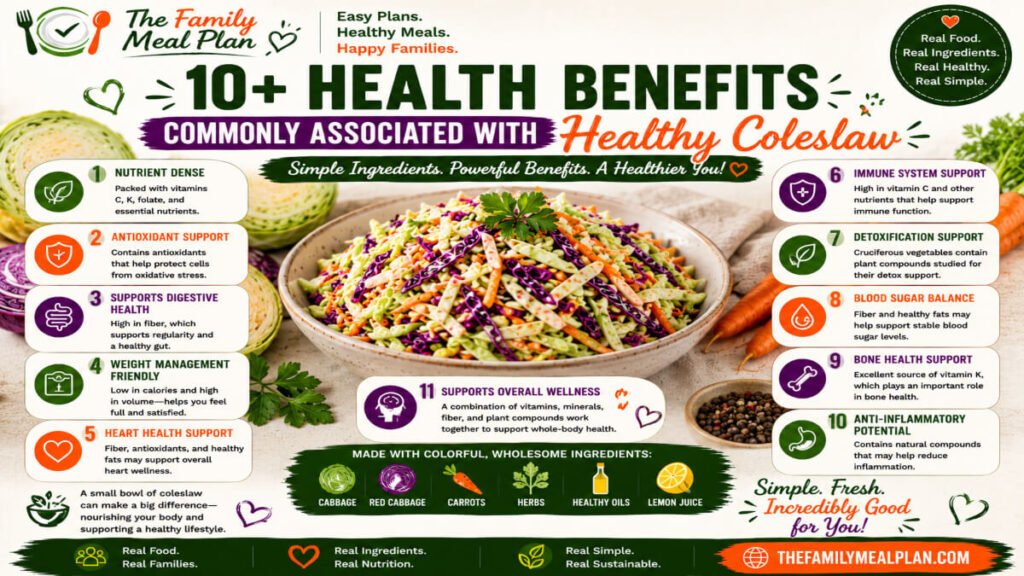
Healthy coleslaw should never be viewed as a miracle food or medical treatment. However, many of the vegetables and ingredients commonly found in healthy coleslaw contain nutrients and plant compounds that continue attracting attention from nutrition researchers.
Because healthy coleslaw often combines cabbage, red cabbage, carrots, and lighter dressings, it can contribute to overall dietary quality while providing a delicious way to increase vegetable intake.
Some of the most commonly discussed health benefits associated with healthy coleslaw include:
1. Supports Vegetable Intake
One of the simplest benefits of healthy coleslaw is that it helps people consume more vegetables.
Many dietary guidelines encourage increasing vegetable consumption, yet large portions of the population still struggle to meet recommended intake levels.
Healthy coleslaw provides an enjoyable way to incorporate multiple vegetables into everyday meals.
2. Provides Dietary Fiber
Cabbage and carrots naturally contain dietary fiber.
Fiber plays an important role in digestive wellness and contributes to feelings of fullness after meals.
Many nutrition experts encourage increasing fiber-rich foods as part of balanced eating patterns.
3. Rich in Vitamin C
Cabbage is a notable source of vitamin C.
Vitamin C contributes to numerous normal functions throughout the body and remains one of the most recognized vitamins in human nutrition.
Fresh vegetables often help support daily vitamin C intake.
4. Provides Vitamin K
Cabbage naturally contains vitamin K.
Vitamin K plays an important role in normal blood clotting and bone health functions.
Many cruciferous vegetables are recognized for providing this important nutrient.
5. Contains Antioxidant-Rich Plant Compounds
Both green and red cabbage contain naturally occurring antioxidants.
Researchers continue exploring how antioxidant-rich foods may contribute to overall wellness and healthy aging.
Colorful vegetables often contain a wide variety of these compounds.
6. Supports Digestive Wellness
Healthy coleslaw’s fiber content may help support digestive health as part of a balanced diet.
Vegetables and fiber-rich foods frequently appear in discussions surrounding digestive wellness.
7. Encourages Plant-Forward Eating
Many of today’s healthiest dietary patterns emphasize plant foods.
Healthy coleslaw aligns naturally with these eating approaches because it centers around vegetables rather than highly processed ingredients.
8. May Support Heart-Conscious Meal Planning
Researchers consistently encourage diets rich in vegetables, fruits, legumes, whole grains, and minimally processed foods.
Healthy coleslaw fits comfortably within these broader dietary patterns.
9. Provides Naturally Occurring Phytonutrients
Cabbage and carrots contain numerous plant compounds that contribute to their color, flavor, and nutritional profile.
Researchers continue studying these compounds in relation to overall wellness.
10. Supports Satiety and Fullness
Fiber-rich foods often help create feelings of fullness.
Healthy coleslaw can add volume, texture, and satisfaction to meals without requiring excessive calories.
11. Often Lower in Calories Than Many Traditional Side Dishes
When prepared with lighter dressings and wholesome ingredients, healthy coleslaw can provide a satisfying side dish option that emphasizes vegetables rather than highly processed ingredients.
12. Helps Increase Consumption of Cruciferous Vegetables
Many people rarely consume cruciferous vegetables regularly.
Healthy coleslaw offers a practical and enjoyable way to include cabbage more frequently throughout the year.
💡 Perhaps the greatest benefit of healthy coleslaw is its ability to make vegetables enjoyable. When nutritious ingredients are flavorful, colorful, affordable, and easy to serve, people are often more likely to include them regularly as part of a balanced lifestyle.
Nutrient-Dense Ingredients Commonly Found in Healthy Coleslaw
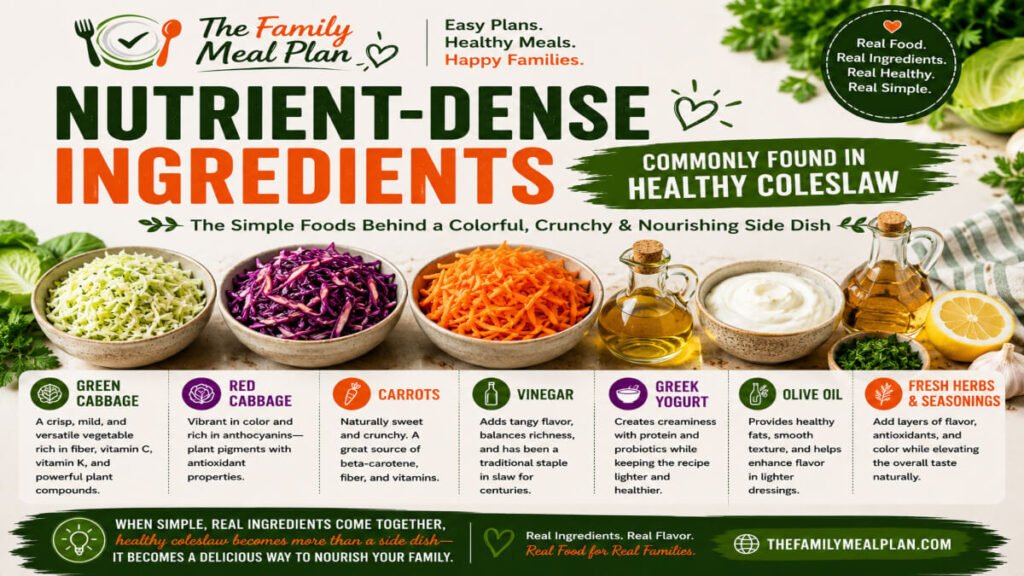
💡 One reason healthy coleslaw continues attracting attention from nutrition-conscious home cooks is that it combines several nutrient-dense ingredients into a single colorful dish. While no individual ingredient should be viewed as a miracle food, together they create a flavorful combination of vegetables, healthy fats, fiber, vitamins, minerals, and plant compounds.
The nutritional value of healthy coleslaw comes from the ingredients that make up the dish.
Unlike highly processed side dishes, healthy coleslaw is built around vegetables and simple pantry staples. The combination of cabbage, carrots, vinegar, herbs, and lighter dressing options creates a side dish that delivers both flavor and nutritional value.
Understanding the role each ingredient plays helps explain why healthy coleslaw remains popular among home cooks seeking practical ways to increase vegetable intake while creating balanced meals.
Green Cabbage
Green cabbage serves as the foundation of most coleslaw recipes.
Its mild flavor, crisp texture, affordability, and year-round availability have helped make it one of the most widely consumed vegetables in the world.
Nutritionally, green cabbage provides:
- Dietary fiber
- Vitamin C
- Vitamin K
- Folate
- Potassium
- Antioxidants
- Naturally occurring plant compounds
Because cabbage is relatively low in calories while providing volume and crunch, it remains a favorite ingredient in vegetable-forward eating patterns.
Its ability to absorb dressings while maintaining texture also makes it ideal for salads and slaws.
For centuries, cabbage has provided nourishment across cultures because it delivers a remarkable balance of affordability, versatility, and nutritional value.
Red Cabbage
Red cabbage adds far more than color.
The vibrant purple-red hues found in red cabbage come from naturally occurring compounds known as anthocyanins.
Anthocyanins are plant pigments responsible for many of the red, blue, and purple colors found throughout nature.
These compounds continue attracting attention in nutrition research because colorful fruits and vegetables often contain unique antioxidant-rich plant compounds.
Compared to green cabbage, red cabbage typically provides:
- More vibrant color
- Additional anthocyanin pigments
- Similar fiber content
- Similar vitamin content
- Enhanced visual appeal
Combining green and red cabbage creates a coleslaw that is both visually appealing and nutritionally diverse.
Many modern healthy coleslaw recipes intentionally use both varieties to maximize color, texture, and flavor.
Carrots
Carrots contribute sweetness, color, and additional nutritional value.
For many people, the bright orange strands of carrot are one of the most recognizable characteristics of traditional coleslaw.
Carrots are particularly known for containing:
- Beta-carotene
- Fiber
- Vitamin A-supportive compounds
- Potassium
- Antioxidants
Beta-carotene serves as a precursor to vitamin A and contributes to the carrot’s distinctive orange color.
In healthy coleslaw, carrots help balance the mild flavor of cabbage while introducing natural sweetness and additional texture.
Their bright appearance also helps create a more visually attractive dish.
Vinegar
Before mayonnaise-based versions became popular, many early cabbage salads relied heavily on vinegar.
Vinegar remains one of the oldest ingredients associated with traditional slaw preparations.
Its popularity stems from several characteristics:
- Bright flavor
- Natural acidity
- Preservation qualities
- Ability to balance rich foods
- Low-calorie flavor enhancement
Today, many healthy coleslaw recipes continue using:
- Apple cider vinegar
- White wine vinegar
- Red wine vinegar
- Rice vinegar
These ingredients help create lighter dressings while maintaining the fresh, tangy flavor that makes coleslaw so appealing.
Greek Yogurt
Greek yogurt has become one of the most popular ingredients in modern healthy coleslaw recipes.
Many home cooks use Greek yogurt as a partial or complete replacement for mayonnaise.
Greek yogurt contributes:
- Creaminess
- Protein
- Tangy flavor
- Smooth texture
This allows healthy coleslaw to maintain the creamy consistency many people enjoy while reducing reliance on heavier dressings.
Greek yogurt also pairs exceptionally well with cabbage and carrots, creating a balanced flavor profile that complements a wide variety of meals.
Olive Oil
Olive oil frequently appears in healthy coleslaw recipes influenced by Mediterranean-style cooking.
For generations, olive oil has been valued for both flavor and culinary versatility.
In coleslaw, olive oil helps:
- Create smooth vinaigrettes
- Improve mouthfeel
- Balance acidity
- Enhance flavor
- Carry herbs and seasonings
When combined with vinegar, olive oil creates a lighter dressing option that allows the vegetables themselves to remain the star of the dish.
💡 Healthy coleslaw’s strength comes from simplicity. Rather than relying on highly processed ingredients, it combines vegetables, healthy fats, and flavorful dressings into a colorful side dish that has remained popular for generations.
How Healthy Coleslaw Is Made
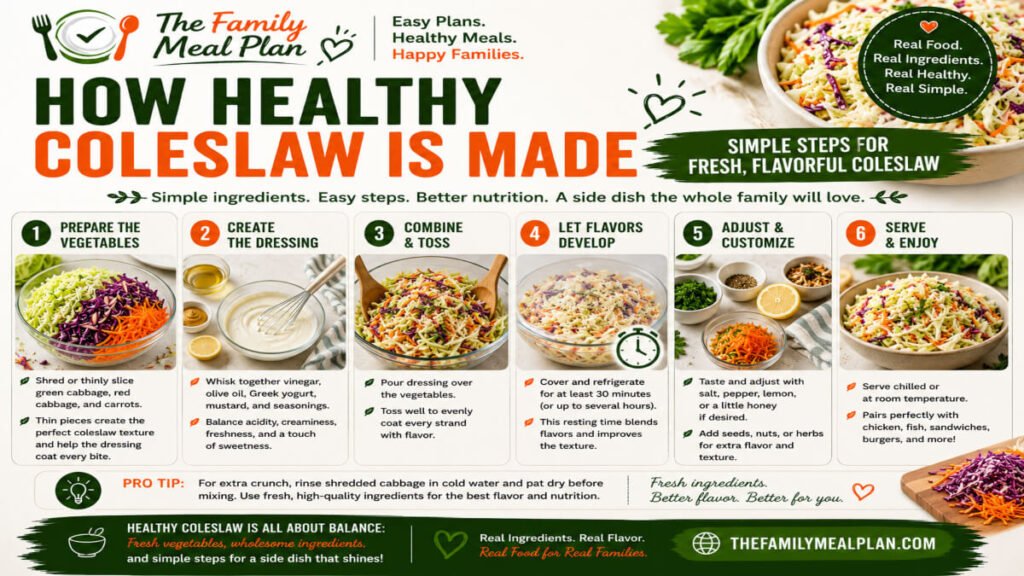
The beauty of healthy coleslaw lies in its simplicity.
While countless variations exist around the world, most recipes follow the same basic process that has been used for generations.
At its core, coleslaw transforms fresh vegetables into a flavorful salad through careful preparation and balanced dressing.
Step 1: Prepare the Vegetables
The first step involves shredding or slicing the vegetables.
Most healthy coleslaw recipes begin with:
- Green cabbage
- Red cabbage
- Carrots
Thin slicing creates the characteristic texture associated with coleslaw while allowing the dressing to coat each ingredient evenly.
Step 2: Create the Dressing
Healthy dressings often feature combinations of:
- Vinegar
- Olive oil
- Greek yogurt
- Mustard
- Lemon juice
- Herbs
- Seasonings
The goal is to create a balance between:
- Acidity
- Creaminess
- Freshness
- Sweetness
- Texture
Step 3: Combine and Toss
The vegetables and dressing are combined and mixed thoroughly.
This helps distribute flavors evenly throughout the salad.
As the vegetables sit, they begin absorbing the dressing while releasing some of their natural moisture.
Step 4: Allow the Flavors to Develop
One of the most important yet overlooked steps is allowing the coleslaw to rest.
Many recipes improve after sitting for:
- 15 minutes
- 30 minutes
- Several hours
This resting period allows flavors to blend and textures to soften slightly while maintaining crunch.
Step 5: Serve and Enjoy
Healthy coleslaw can be served immediately or prepared in advance.
Its versatility makes it suitable for:
- Family dinners
- Meal prep
- Summer cookouts
- Holiday meals
- Barbecues
- Picnics
- Weeknight dinners
Its ability to pair with a wide range of foods remains one reason it has endured for centuries.
💡 Few side dishes offer the same combination of freshness, simplicity, affordability, and versatility as healthy coleslaw. With just a handful of ingredients, home cooks can create a dish that complements everything from grilled chicken to seafood, sandwiches, and Mediterranean-inspired meals.
Coleslaw Nutrition Facts: Understanding Healthy Coleslaw Nutrition
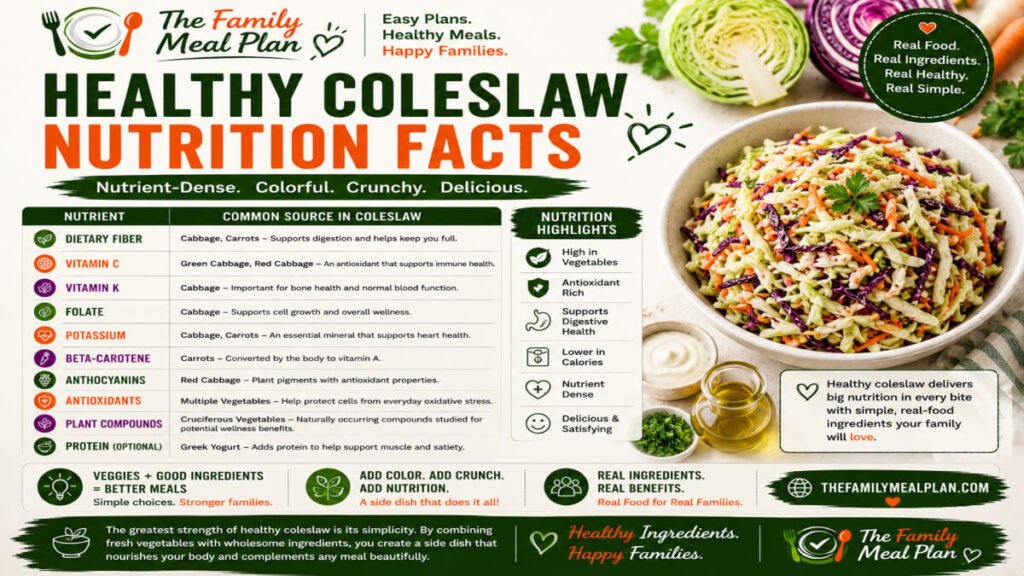
Because recipes vary widely, Coleslaw Nutrition Facts can vary depending on the ingredients used, serving size, and dressing preparation.
However, healthy coleslaw typically derives most of its nutritional value from its vegetables.
Understanding Coleslaw Nutrition Facts begins with examining the vegetables and ingredients that make healthy coleslaw such a nutrient-dense side dish.
Common Nutrients Found in Healthy Coleslaw
| Nutrient | Common Source |
|---|---|
| Dietary Fiber | Cabbage, Carrots |
| Vitamin C | Green Cabbage, Red Cabbage |
| Vitamin K | Cabbage |
| Folate | Cabbage |
| Potassium | Cabbage, Carrots |
| Beta-Carotene | Carrots |
| Anthocyanins | Red Cabbage |
| Antioxidants | Multiple Vegetables |
| Plant Compounds | Cruciferous Vegetables |
| Protein (Optional) | Greek Yogurt |
While exact Coleslaw Nutrition Facts vary by recipe, most healthy versions provide fiber, vitamins, antioxidants, and colorful vegetables.
Healthy coleslaw also tends to provide:
- High volume
- Fresh vegetables
- Crunchy texture
- Colorful ingredients
- Moderate calories
- Nutrient density
These qualities help explain why healthy coleslaw continues appearing in balanced meal plans and vegetable-forward eating patterns.
💡 The greatest nutritional strength of healthy coleslaw may be its ability to make vegetables enjoyable. When nutritious ingredients are flavorful, colorful, and easy to serve, people are often more likely to include them regularly in everyday meals.
Healthy Coleslaw vs Traditional Coleslaw
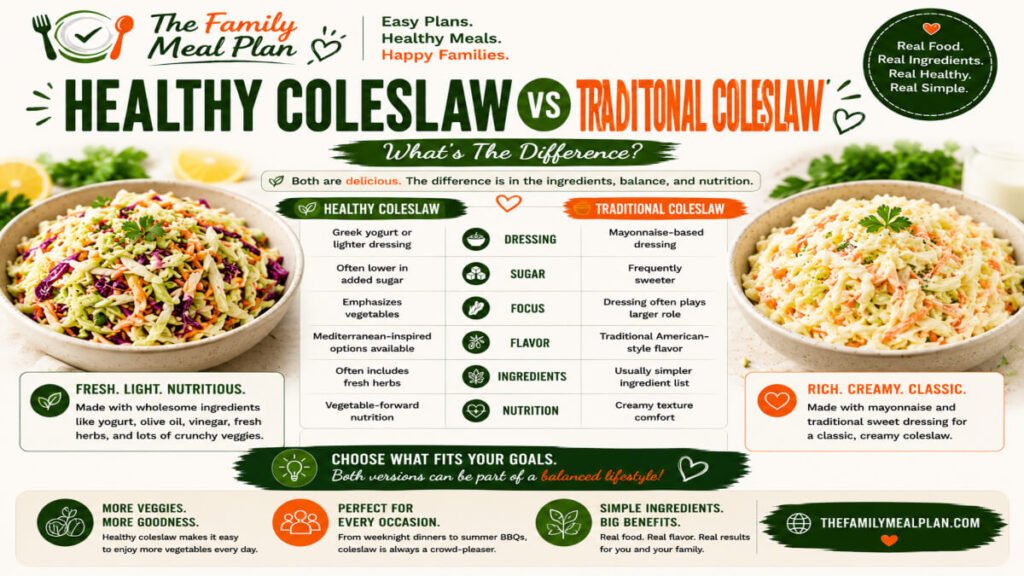
💡 Not all coleslaw recipes are created equal. While both traditional and healthy coleslaw share cabbage as their foundation, modern recipes often emphasize lighter ingredients, more vegetables, and balanced nutrition while preserving the flavor and texture that made coleslaw popular in the first place.
For many people, the word coleslaw immediately brings to mind a creamy side dish served at picnics, barbecue restaurants, family gatherings, and summer cookouts.
Traditional coleslaw remains popular because of its rich texture and familiar flavor.
However, modern healthy coleslaw recipes have evolved to reflect changing nutritional preferences and growing interest in vegetable-forward cooking.
The biggest differences often come down to the dressing.
Traditional recipes frequently rely on:
- Mayonnaise
- Added sugar
- Heavy creamy dressings
- Larger amounts of fat
Healthy versions often emphasize:
- Greek yogurt
- Olive oil vinaigrettes
- Apple cider vinegar
- Reduced sugar
- Fresh herbs
- Additional vegetables
Neither approach is inherently right or wrong.
Instead, they represent different culinary goals.
Traditional coleslaw prioritizes richness and comfort.
Healthy coleslaw often focuses on freshness, vegetable intake, and balanced nutrition.
Comparison Chart
| Healthy Coleslaw | Traditional Coleslaw |
|---|---|
| Greek yogurt or lighter dressing | Mayonnaise-based dressing |
| Often lower in added sugar | Frequently sweeter |
| Emphasizes vegetables | Dressing often plays larger role |
| Mediterranean-inspired options available | Traditional American-style flavor |
| Often includes fresh herbs | Usually simpler ingredient list |
| Vegetable-forward focus | Creamy texture focus |
The good news is that both versions can be enjoyed as part of a balanced lifestyle.
Many home cooks now create recipes that blend elements of both approaches, combining the creaminess of traditional coleslaw with the lighter ingredients found in modern healthy versions.
Green Cabbage vs Red Cabbage
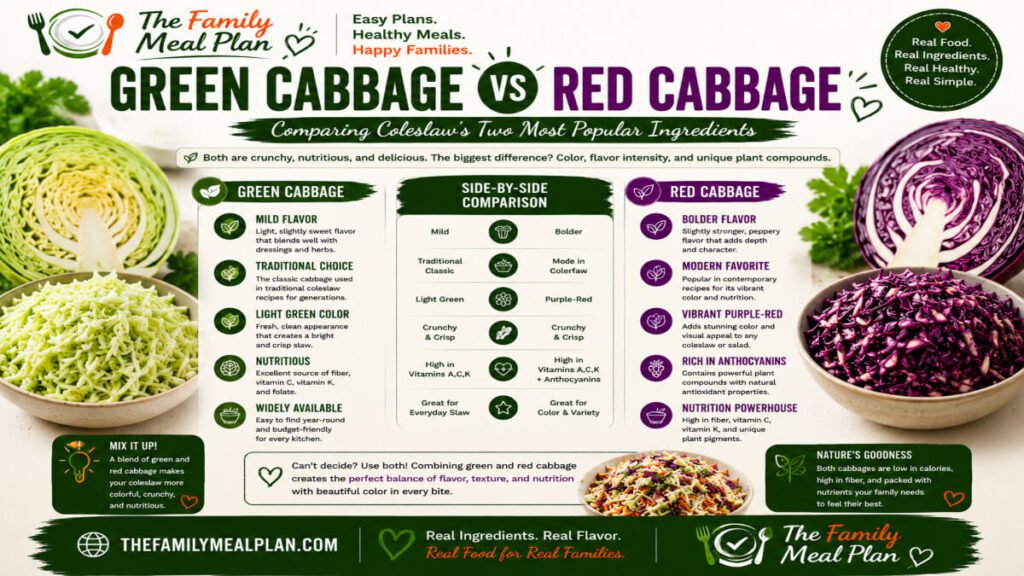
💡 One of the easiest ways to upgrade healthy coleslaw is simply by adding color. While green cabbage remains the traditional choice, red cabbage introduces additional visual appeal and naturally occurring plant compounds that make the dish even more vibrant.
Many coleslaw recipes rely exclusively on green cabbage.
Others combine green and red cabbage for greater color, texture, and visual appeal.
Both varieties belong to the same cruciferous vegetable family and share many nutritional similarities.
However, there are a few noteworthy differences.
Green Cabbage
Green cabbage is:
- Mild in flavor
- Crisp in texture
- Affordable
- Widely available
- Traditional for coleslaw
Its subtle flavor allows dressings and seasonings to shine while still providing crunch and freshness.
Red Cabbage
Red cabbage is:
- More colorful
- Slightly bolder in flavor
- Rich in anthocyanin pigments
- Highly visual
- Popular in modern slaw recipes
Anthocyanins are naturally occurring plant pigments responsible for many red, blue, and purple colors found in fruits and vegetables.
These compounds continue attracting scientific interest because colorful plant foods frequently contain unique antioxidant-rich compounds.
Side-by-Side Comparison
| Green Cabbage | Red Cabbage |
|---|---|
| Mild flavor | Slightly stronger flavor |
| Traditional coleslaw choice | Modern colorful addition |
| Light green color | Purple-red color |
| Rich in fiber and vitamins | Rich in fiber, vitamins, and anthocyanins |
| Common in classic recipes | Popular in contemporary recipes |
For many home cooks, the ideal solution is simple:
Use both.
Combining green and red cabbage creates a colorful, attractive coleslaw that balances flavor, texture, and visual appeal.
Best Foods to Serve with Healthy Coleslaw

💡 Healthy coleslaw’s greatest strength may be its versatility. Its fresh flavor, crunchy texture, and vegetable-forward profile allow it to pair beautifully with everything from grilled proteins to sandwiches and seafood.
One reason coleslaw remains so popular is its ability to complement a wide range of meals.
The crisp texture helps balance richer foods, while its bright flavor provides contrast that makes entire meals feel fresher and more complete.
Grilled Chicken
Healthy coleslaw pairs exceptionally well with grilled chicken.
The freshness of the vegetables contrasts beautifully with smoky grilled flavors.
Baked Salmon
The bright, crisp nature of coleslaw complements the richness of salmon while adding additional vegetables to the meal.
Garlic Shrimp
Shrimp and coleslaw create a light, satisfying combination that works particularly well during warmer months.
Pulled Chicken Sandwiches
Healthy coleslaw adds crunch and freshness that balances savory shredded chicken.
Burgers
Whether served alongside burgers or directly on top, coleslaw provides texture and contrast that enhance the overall meal.
BBQ Favorites
Coleslaw has long been associated with barbecue because its cool, crunchy texture helps balance smoky and savory flavors.
Popular pairings include:
- Grilled chicken
- Pulled pork
- Smoked turkey
- BBQ beef
- Grilled vegetables
Mediterranean-Inspired Meals
Healthy coleslaw prepared with olive oil and herbs fits naturally into Mediterranean-style meals featuring:
- Grilled fish
- Chicken
- Vegetables
- Whole grains
- Legumes
Family Dinner Favorites
Healthy coleslaw works beautifully with many Family Meal Plan recipes including:
- Sheet pan dinners
- Seafood recipes
- Chicken recipes
- Beef recipes
- Vegetable-forward meals
- Summer cookout menus
Its versatility remains one of the biggest reasons it has remained popular for centuries.
Healthy Coleslaw Variations Around the World
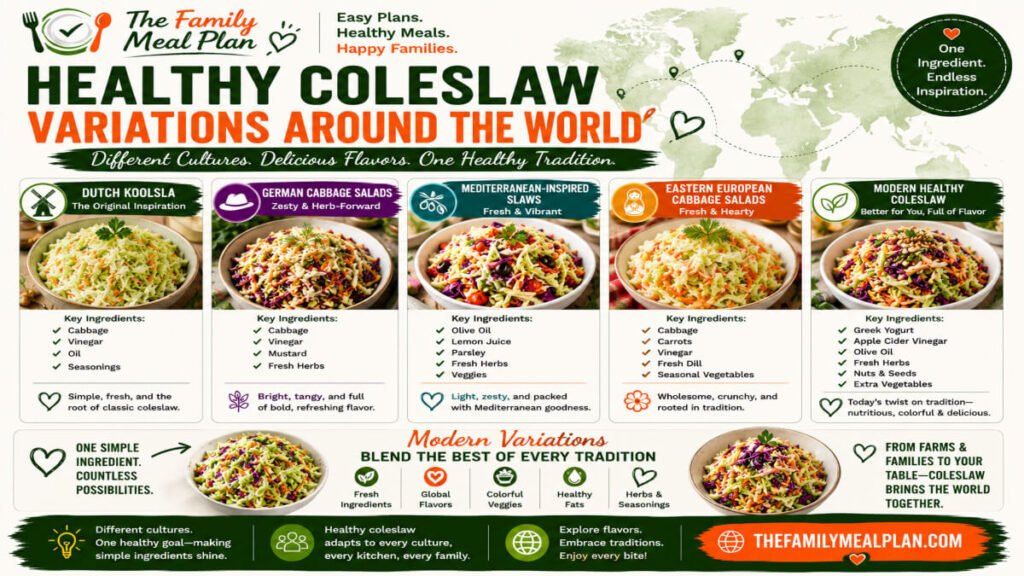
💡 While many people associate coleslaw with American barbecue, cabbage salads appear throughout cultures around the world. Each region brings unique ingredients, flavors, and traditions while preserving the same core idea: transforming cabbage into a flavorful, enjoyable dish.
Dutch Koolsla
The original inspiration behind modern coleslaw.
Traditionally featured:
- Cabbage
- Vinegar
- Oil
- Seasonings
German Cabbage Salads
Often emphasize:
- Vinegar
- Mustard
- Fresh herbs
- Light dressings
Mediterranean-Inspired Slaws
Common ingredients include:
- Olive oil
- Lemon juice
- Parsley
- Fresh herbs
- Vegetables
Eastern European Cabbage Salads
Frequently feature:
- Cabbage
- Carrots
- Vinegar
- Fresh dill
- Seasonal vegetables
Modern Healthy Coleslaw
Today’s healthy recipes often blend ideas from multiple culinary traditions.
Popular additions include:
- Greek yogurt
- Apple cider vinegar
- Olive oil
- Fresh herbs
- Nuts and seeds
- Additional vegetables
This evolution demonstrates one of coleslaw’s greatest strengths:
Adaptability.
From Dutch farms centuries ago to modern family kitchens, coleslaw continues evolving while remaining true to its vegetable-centered roots.
💡 The worldwide popularity of cabbage salads proves that simple ingredients often create the most enduring recipes. Across cultures and generations, people continue finding new ways to enjoy this humble vegetable while preserving traditions that stretch back hundreds of years.
Recipes to Try with Healthy Coleslaw
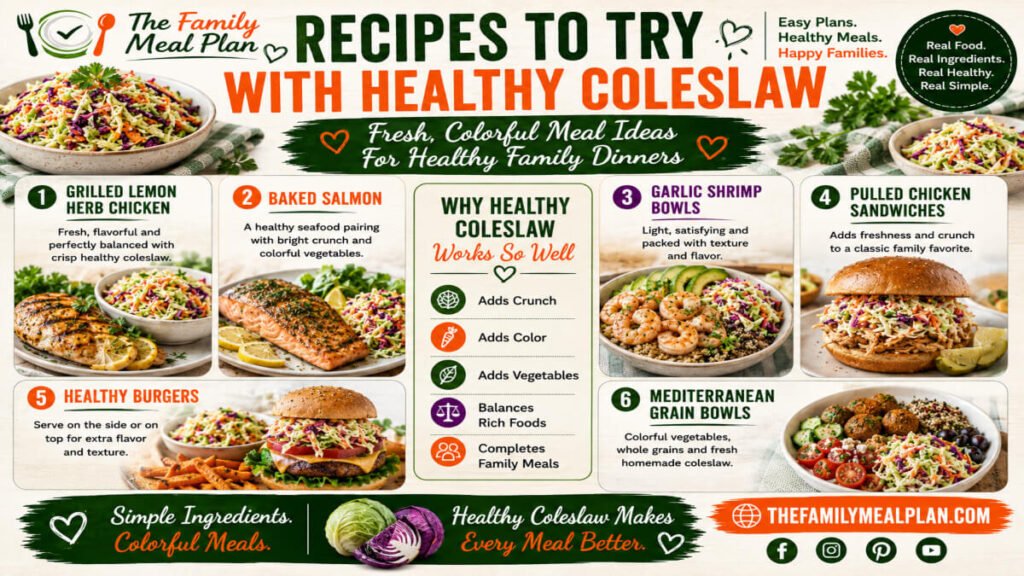
💡 Healthy coleslaw is far more than a side dish. Its crisp texture, bright flavor, and colorful vegetables make it a versatile addition to countless meals. Whether served alongside grilled proteins, layered onto sandwiches, or incorporated into meal-prep lunches, healthy coleslaw helps bring freshness and balance to the table.
If you’re looking for delicious ways to enjoy healthy coleslaw, these family-friendly meal ideas are excellent places to start.
Grilled Lemon Herb Chicken with Healthy Coleslaw
The bright flavors of grilled chicken pair naturally with the crunch and freshness of coleslaw.
The combination creates a balanced meal that feels both satisfying and light.
Why it works:
- Lean protein
- Fresh vegetables
- Colorful presentation
- Easy weeknight dinner
Easy Baked Lemon Herb Salmon with Healthy Coleslaw
Healthy coleslaw provides a refreshing contrast to the rich texture of baked salmon.
The cabbage and carrots help add color, crunch, and additional vegetables to the plate.
Why it works:
- Seafood and fresh vegetables pair beautifully
- Excellent for Mediterranean-inspired meals
- Colorful and nutrient-dense
Garlic Shrimp and Healthy Coleslaw Bowls
Garlic shrimp paired with healthy coleslaw creates a light meal packed with flavor and texture.
Serve over brown rice, quinoa, or mixed greens for a complete bowl meal.
Why it works:
- Quick preparation
- High flavor
- Excellent texture contrast
Pulled Chicken Sandwiches with Coleslaw
One of the most classic pairings.
Healthy coleslaw provides crunch, freshness, and balance that complements savory shredded chicken perfectly.
Why it works:
- Crowd favorite
- Great for meal prep
- Family-friendly
Healthy Burger Night
Whether served on top of burgers or on the side, healthy coleslaw remains one of the best burger companions ever created.
Why it works:
- Adds vegetables
- Balances richer foods
- Enhances texture
💡 The best meals often combine contrast. Healthy coleslaw brings freshness, crunch, and color that help balance proteins, sandwiches, seafood, and grilled foods while increasing vegetable intake in a simple and delicious way.
Frequently Asked Questions About Healthy Coleslaw
Is healthy coleslaw actually healthy?
Healthy coleslaw can be a nutritious side dish when prepared with vegetables and balanced ingredients.
Recipes that emphasize cabbage, carrots, vinegar, olive oil, Greek yogurt, and fresh herbs typically provide more nutritional value than versions heavily reliant on added sugars and large amounts of dressing.
Are Coleslaw Nutrition Facts Different Between Recipes?
Yes. Coleslaw Nutrition Facts can vary significantly depending on:
- Dressing type
- Added sugar
- Portion size
- Vegetable ratios
- Additional ingredients
Is cabbage good for you?
Cabbage is widely recognized as a nutrient-dense vegetable.
It provides fiber, vitamin C, vitamin K, folate, antioxidants, and naturally occurring plant compounds while remaining relatively low in calories.
Which is better for coleslaw: green cabbage or red cabbage?
Both varieties work well.
Green cabbage offers a mild traditional flavor while red cabbage contributes vibrant color and anthocyanin pigments.
Many home cooks prefer combining both.
How long does healthy coleslaw last?
Most healthy coleslaw recipes remain fresh for approximately 3 to 5 days when stored in an airtight container in the refrigerator.
The exact shelf life depends on the ingredients used.
Can healthy coleslaw be made ahead of time?
Yes.
Many recipes actually improve after resting for several hours because the vegetables absorb the dressing and the flavors blend together.
What dressing is healthiest for coleslaw?
There is no single healthiest option.
Many nutrition-conscious recipes use combinations of:
- Greek yogurt
- Olive oil
- Vinegar
- Lemon juice
- Herbs
These ingredients often provide flavor while allowing the vegetables to remain the focus.
Why is cabbage considered a cruciferous vegetable?
Cabbage belongs to the Brassica family of vegetables, commonly known as cruciferous vegetables.
Other members include broccoli, cauliflower, kale, and Brussels sprouts.
This vegetable family continues attracting significant attention in nutrition research.
Is healthy coleslaw good for meal prep?
Absolutely.
Healthy coleslaw is one of the most meal-prep-friendly vegetable dishes because it stores well and pairs with numerous proteins, sandwiches, grain bowls, and family dinners.
Can Healthy Coleslaw Be Frozen?
Freezing is generally not recommended because cabbage releases moisture as it thaws, which can affect texture. Healthy coleslaw is best enjoyed fresh or refrigerated for several days.
Nutrition & Wellness Research
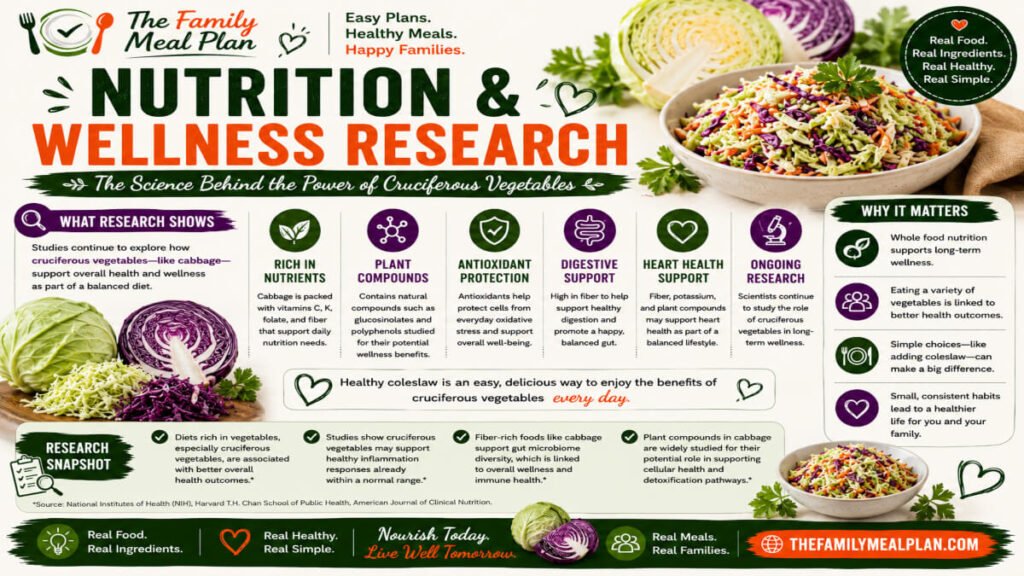
💡 One reason cabbage continues attracting scientific attention is its unique combination of nutrients and naturally occurring plant compounds. While healthy coleslaw itself is a recipe rather than a single food, many of its ingredients have been studied for decades within broader discussions surrounding nutrition and dietary patterns.
Many discussions surrounding Coleslaw Nutrition Facts focus on cabbage, cruciferous vegetables, and overall dietary quality.
Researchers continue studying cabbage and other cruciferous vegetables because they contain:
- Fiber
- Vitamin C
- Vitamin K
- Folate
- Antioxidants
- Glucosinolates
- Anthocyanins (red cabbage)
- Other naturally occurring phytonutrients
Many studies examining dietary patterns consistently find that diets rich in vegetables are associated with improved overall dietary quality.
Because healthy coleslaw is built around vegetables, it can serve as a practical way to increase vegetable consumption throughout the week.
Researchers frequently encourage:
- Greater vegetable intake
- More colorful plant foods
- Higher fiber consumption
- Diverse dietary patterns
- Minimally processed foods
Healthy coleslaw aligns naturally with many of these recommendations.
It is important to remember that no single food determines health outcomes.
Rather, overall dietary patterns, lifestyle habits, physical activity, sleep quality, and numerous other factors contribute to long-term wellness.
Healthy coleslaw works best when viewed as part of a balanced lifestyle that emphasizes variety, moderation, and nutrient-dense foods.
Healthy Coleslaw: A Simple Dish with an Extraordinary Story
Healthy coleslaw began with a simple idea.
Take one of the world’s most dependable vegetables and transform it into something fresh, flavorful, and enjoyable.
Centuries later, that simple idea continues thriving.
What started as humble cabbage salads in Europe eventually traveled across oceans, adapted to new cultures, incorporated new ingredients, and evolved into one of the most recognizable side dishes in the world.
Along the way, cabbage remained at the center of the story.
Generations relied on it because it was practical.
Farmers valued it because it was productive.
Families appreciated it because it was affordable.
Modern home cooks continue enjoying it because it remains versatile, nutritious, and delicious.
Perhaps that is why healthy coleslaw continues resonating with so many people today.
It represents something increasingly valuable in modern life:
Simple ingredients prepared well.
A bowl of healthy coleslaw may contain nothing more than cabbage, carrots, herbs, and a balanced dressing.
Yet together those ingredients create something far greater than the sum of their parts.
They create flavor.
They create color.
They create tradition.
They create connection.
And they remind us that some of the world’s most enduring foods are often the simplest.
Whether served alongside grilled chicken, salmon, sandwiches, burgers, barbecue favorites, or family dinners, healthy coleslaw continues proving that vegetables can be both nourishing and genuinely enjoyable.
Its story stretches back hundreds of years.
Its popularity spans cultures and continents.
And its future remains as bright as ever.
💡 Healthy coleslaw is more than a recipe—it is a reminder that simple, wholesome ingredients can create meals that nourish families, bring people together, and stand the test of time.
References & Further Reading
The following organizations and resources provide additional information regarding vegetables, nutrition, dietary patterns, and healthy eating principles.
Government & Research Sources
- USDA FoodData Central
- National Institutes of Health (NIH) Office of Dietary Supplements
- Centers for Disease Control and Prevention (CDC) Nutrition Resources
- Dietary Guidelines for Americans
Educational Resources
- Harvard T.H. Chan School of Public Health – Vegetables and Fruits
- Mayo Clinic Healthy Lifestyle Resources
- Cleveland Clinic Nutrition Resources
- Academy of Nutrition and Dietetics
Vegetable & Nutrition Information
Medical & Nutrition Disclaimer
This article is intended for educational and informational purposes only and should not be considered medical advice. Nutritional needs vary between individuals. Always consult a qualified healthcare professional regarding specific dietary concerns, medical conditions, allergies, medications, or treatment decisions. The Family Meal Plan does not provide medical diagnosis, treatment, or individualized nutrition counseling.
💡 Learning how simple, wholesome ingredients work together is one of the easiest ways to build healthier, more flavorful meals. Healthy coleslaw remains one of the most practical vegetable-based side dishes because it combines nutrient-dense ingredients, vibrant colors, satisfying texture, and exceptional versatility in a single recipe.
For generations, cabbage-based salads have appeared on family tables around the world because they provide an affordable, flavorful, and enjoyable way to incorporate more vegetables into everyday meals. Today, healthy coleslaw continues evolving as home cooks embrace lighter dressings, colorful ingredients, fresh herbs, and balanced approaches to family-friendly cooking.
Its unique combination of cabbage, carrots, cruciferous vegetables, fiber-rich ingredients, and fresh flavors helps explain why healthy coleslaw remains one of the most enduring side dishes in culinary history. From backyard cookouts and family dinners to meal prep lunches and Mediterranean-inspired meals, healthy coleslaw continues proving that simple foods often deliver remarkable value.
Whether you’re exploring healthier eating habits, looking for new ways to enjoy vegetables, building more balanced meals, or simply learning the fascinating story behind this classic cabbage salad, healthy coleslaw demonstrates how a handful of simple ingredients can create something both nourishing and delicious.
Fresh. Colorful. Versatile. Timeless.
Healthy coleslaw remains a reminder that some of the best foods are often the simplest.
Cook Smarter with Healthy Side Dishes
Fresh vegetables, balanced ingredients, and simple recipes can transform everyday meals into something truly memorable.
If you enjoy learning about healthy foods, practical nutrition, meal planning, and family-friendly recipes, join The Family Meal Plan and discover new ways to build delicious meals around wholesome ingredients.
Join The Family Meal Plan

Get:
✅ Healthy family recipes
✅ Meal planning inspiration
✅ Healthy side dish ideas
✅ Cooking tips and guides
✅ Seasonal recipe collections
✅ Easy dinner solutions for busy families
Easy Plans. Healthy Meals. Happy Families.