
Cooking pasta might seem like one of the simplest kitchen tasks—but getting it perfect every single time is what transforms an average meal into something truly satisfying.
If your pasta has ever turned out:
- Too soft or mushy
- Too firm or undercooked
- Sticky or clumped together
- Dry with sauce that won’t stick
—you’re not alone.
The truth is, perfect pasta comes down to a handful of techniques that most home cooks were never taught.
This complete guide walks you through everything you need to know—from water ratios and timing to sauce pairing and troubleshooting—so every pasta dish you make turns out restaurant-quality.
Once you master this, you’ll instantly elevate dishes like Shrimp Alfredo, Lemon Garlic Pasta, and your favorite Creamy Pasta Recipes.
Save This Guide for Later!
Learn how to cook pasta perfectly every time with simple, step-by-step tips for better texture, better flavor, and restaurant-quality results at home.
Mastering pasta is one of the simplest ways to instantly improve your home cooking. With just a few key techniques—like properly salting your water, cooking to al dente, and finishing pasta in the sauce—you can turn basic ingredients into meals that taste rich, balanced, and satisfying every time.
If you’re looking for easy ways to put these techniques into practice, explore our collection of 30-minute meals, family dinner ideas, and healthy recipes. Pasta is one of the most versatile ingredients you can use for quick weeknight dinners, budget-friendly meals, and meal prep recipes that actually taste great.
Mastering pasta is a simple way to create quick, satisfying meals your family will actually enjoy. Once you understand these core techniques, you can easily build flavorful dishes using our 30-minute meals, family dinner ideas, and healthy recipes. Pasta works perfectly for busy weeknights, budget-friendly dinners, and meal prep recipes, making it one of the most versatile staples in your kitchen.
Why Cooking Pasta Correctly Matters
Perfect pasta isn’t just about texture—it directly impacts the entire dish:
- Sauce clings better instead of sliding off
- Flavors absorb into the pasta itself
- Texture stays balanced (not mushy or chewy)
- Meals feel more filling and satisfying
👉 In short: great pasta makes everything else taste better
The 6 Core Rules of Perfect Pasta
1. Use Plenty of Water
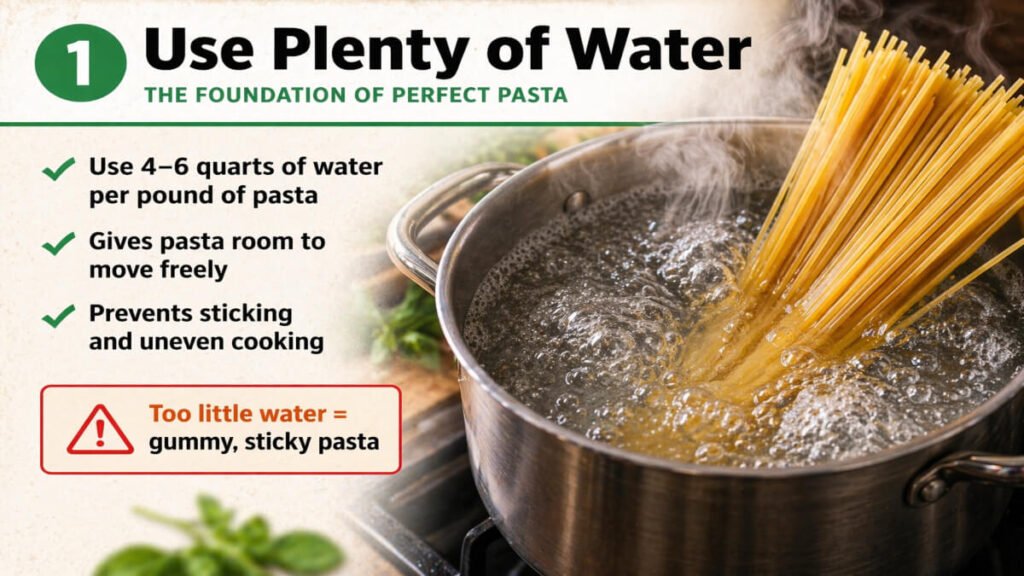
- Use 4–6 quarts of water per pound of pasta
- Gives pasta room to move freely
- Prevents sticking and uneven cooking
👉 Too little water = gummy, sticky pasta
2. Salt the Water Properly
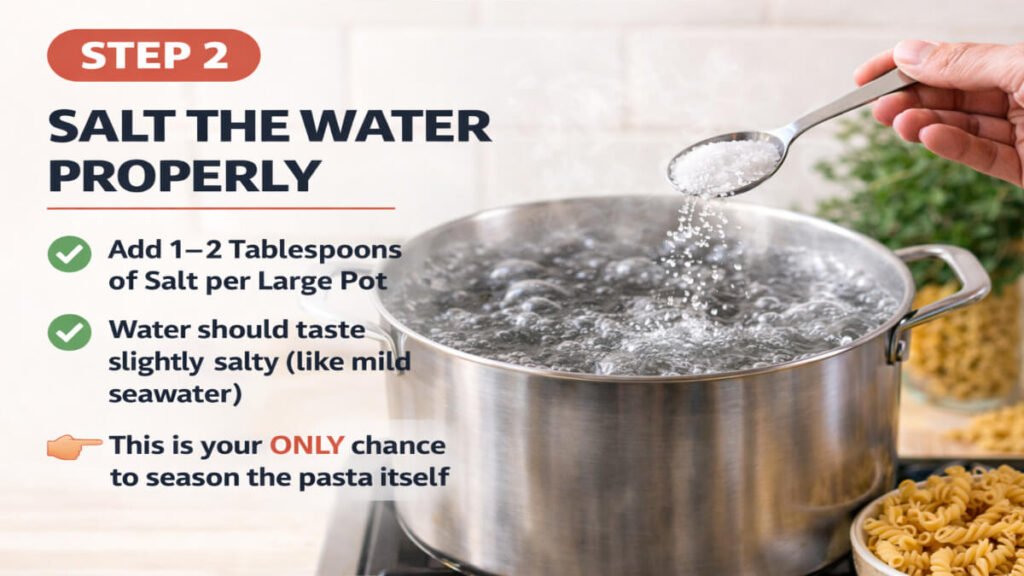
- Add 1–2 tablespoons of salt per large pot
- Water should taste slightly salty (like mild seawater)
👉 This is your ONLY chance to season the pasta itself
3. Always Start with a Full Rolling Boil
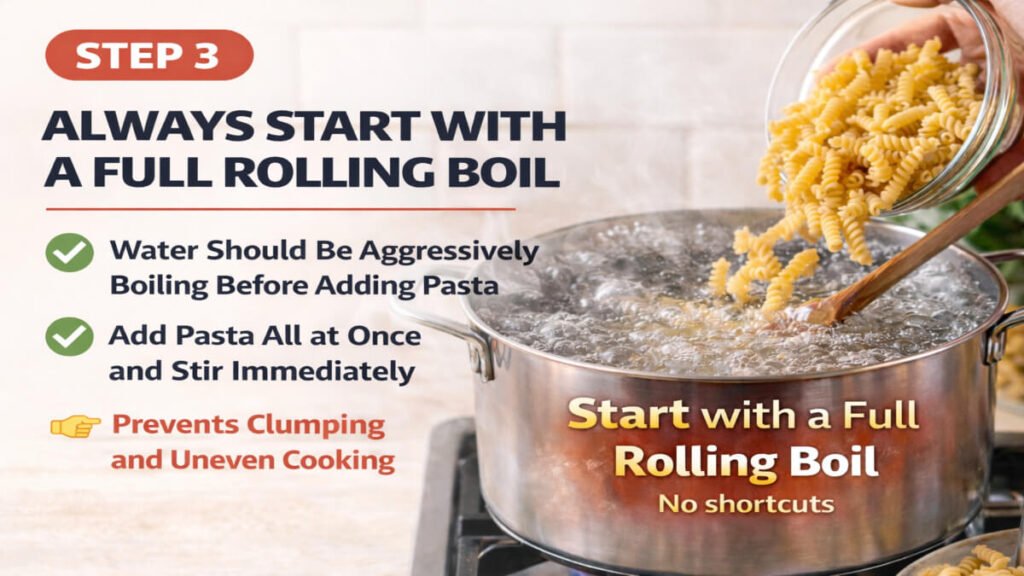
- Water should be aggressively boiling before adding pasta
- Add pasta all at once and stir immediately
👉 Prevents clumping and uneven cooking
4. Stir at the Right Times
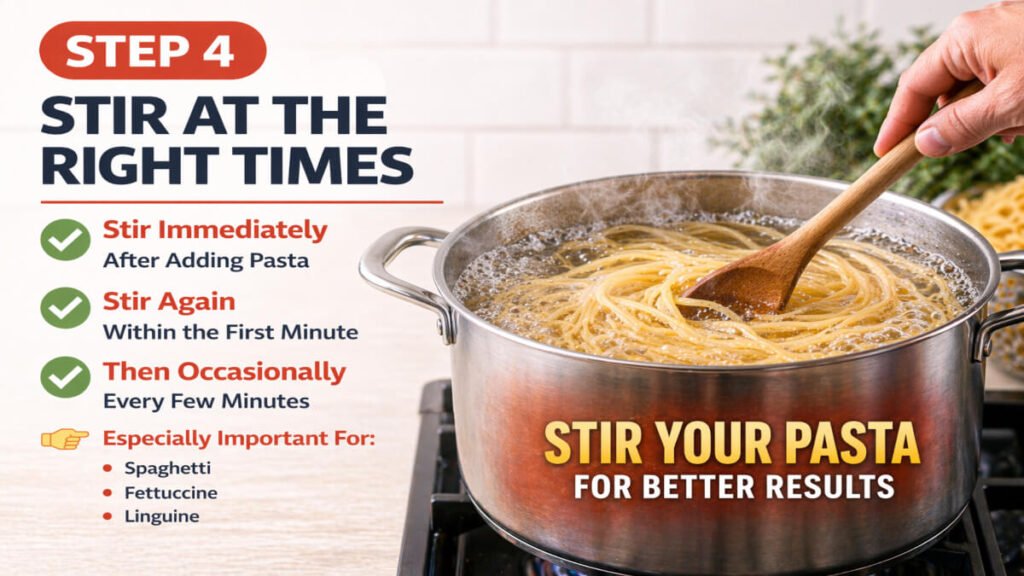
- Stir immediately after adding pasta
- Stir again within the first minute
- Then occasionally every few minutes
Especially important for:
- Spaghetti
- Fettuccine
- Linguine
5. Cook to Al Dente
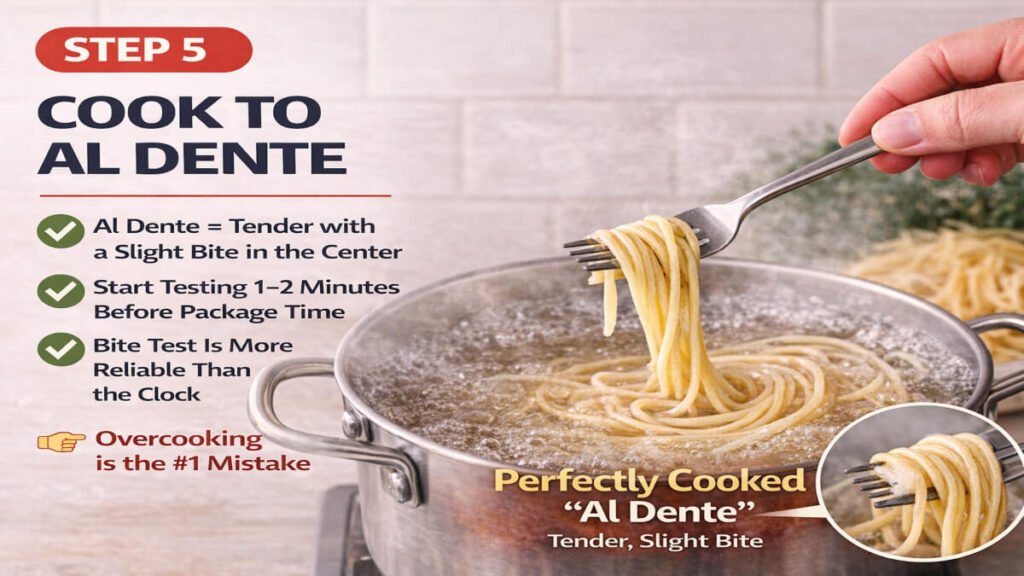
Al dente = tender with a slight bite in the center
- Start testing 1–2 minutes before package time
- Bite test is more reliable than the clock
👉 Overcooking is the #1 mistake
6. Save Your Pasta Water (Critical Step)
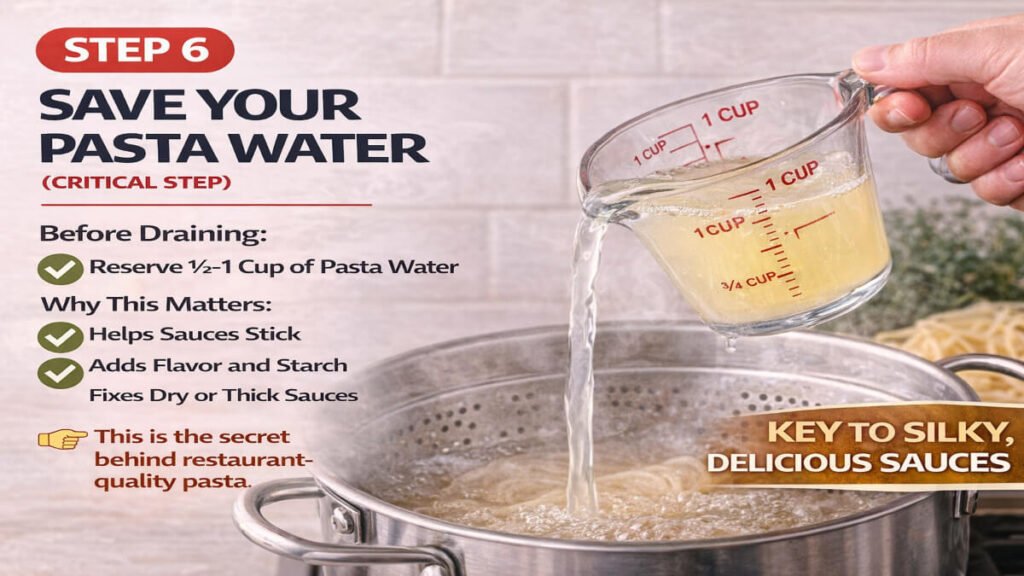
Before draining:
- Reserve ½–1 cup of pasta water
Why this matters:
- Helps sauces stick
- Adds flavor and starch
- Fixes dry or thick sauces
👉 This is the secret behind restaurant-quality sauce
Step-by-Step: Foolproof Pasta Method
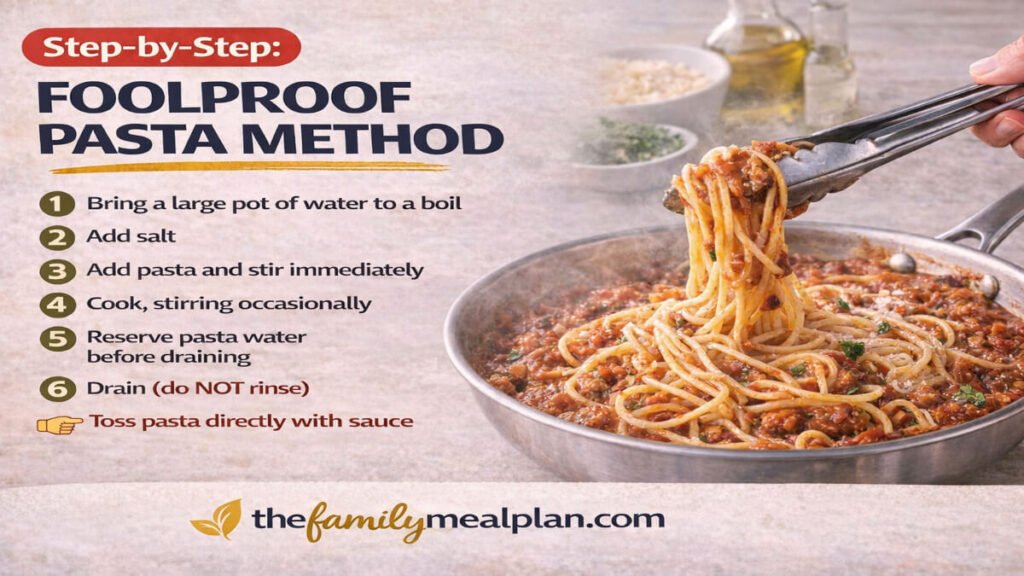
If you’ve ever ended up with pasta that’s bland, mushy, or covered in sauce that just slides off, you’re not alone—these are some of the most common mistakes home cooks make. The good news is that perfect pasta doesn’t require complicated techniques, just a simple method done correctly. By following these steps, you’ll build flavor from the start, cook the pasta to the right texture, and create a dish where the sauce actually clings to every bite.
Here’s how to choose the right pasta to make these results even better.
Types of Pasta & When to Use Them
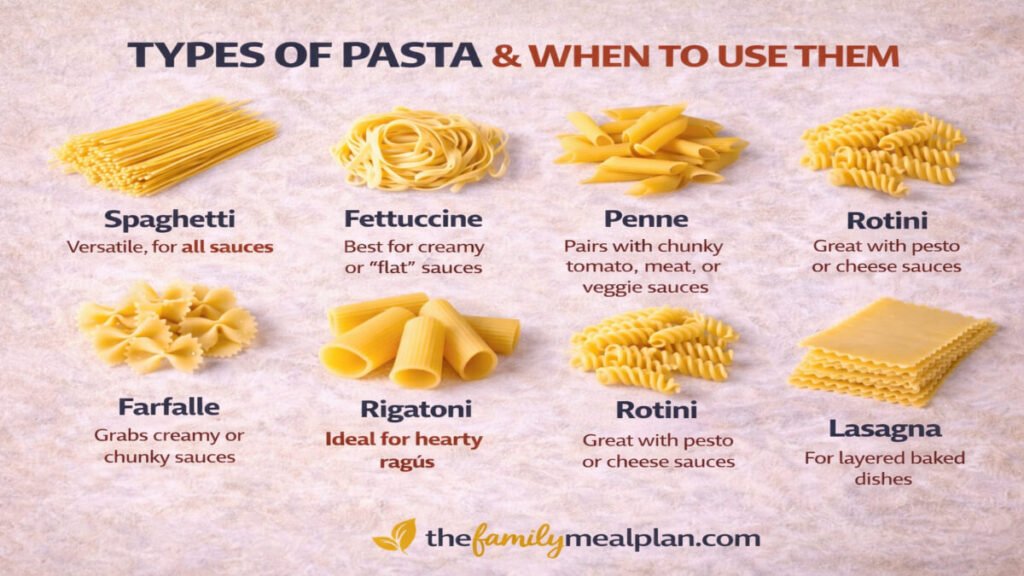
Understanding pasta shapes helps you build better meals.
Long Pasta
- Spaghetti
- Fettuccine
- Linguine
👉 Best for:
- Oil-based sauces
- Light cream sauces
Short Pasta
- Penne
- Rigatoni
- Ziti
👉 Best for:
- Thick sauces
- Chunky sauces
- Baked dishes
Curled & Twisted Pasta
- Fusilli
- Rotini
👉 Best for:
- Holding sauce in grooves
- Pasta salads
Small Pasta
- Orzo
- Ditalini
👉 Best for:
- Soups
- Light meals
Pasta-to-Sauce Pairing Guide (Game Changer)
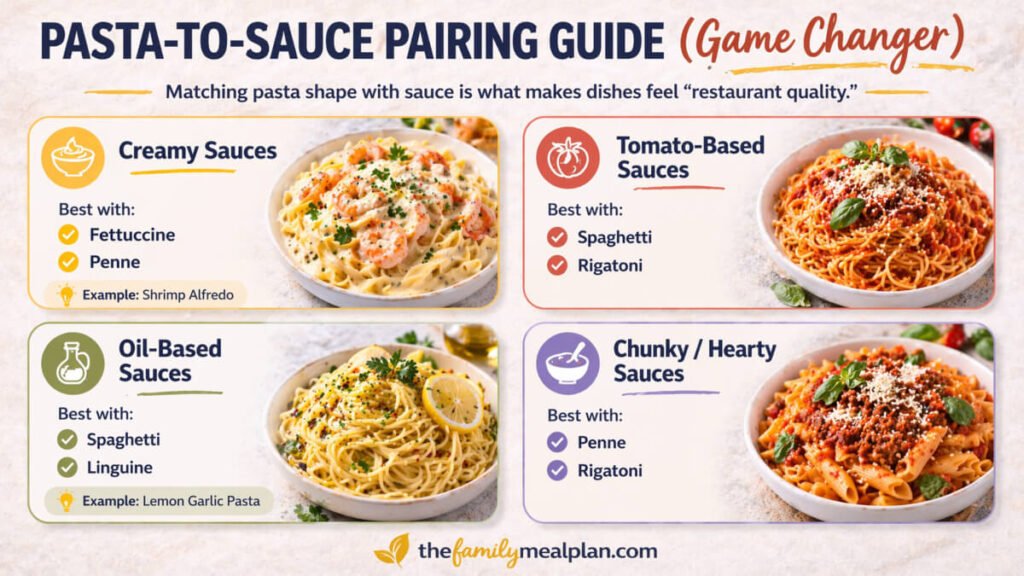
Matching pasta shape with sauce is what makes dishes feel “restaurant quality. Choosing the right combination improves how the sauce clings, enhances texture, and creates a more balanced, flavorful dish from the very first bite.
Creamy Sauces
Best with:
- Fettuccine
- Penne
👉 Example: Shrimp Alfredo
Tomato-Based Sauces
Best with:
- Spaghetti
- Rigatoni
Oil-Based Sauces
Best with:
- Spaghetti
- Linguine
👉 Example: Lemon Garlic Pasta
Chunky / Hearty Sauces
Best with:
- Penne
- Rigatoni
Pasta Cooking Time Chart
| Pasta Type | Cook Time |
|---|---|
| Spaghetti | 8–10 min |
| Penne | 10–12 min |
| Fettuccine | 10–12 min |
| Rotini | 8–10 min |
| Fresh Pasta | 2–4 min |
👉 Always test early for best results
How to Finish Pasta Like a Pro
This is where most home cooks miss the mark.
Instead of:
👉 Cooking pasta and pouring sauce on top
Do this:
👉 Finish pasta inside the sauce
Steps:
- Add drained pasta to sauce pan
- Add a splash of pasta water
- Toss over medium heat
Result:
- Sauce thickens properly
- Pasta absorbs flavor
- Texture becomes silky and cohesive
4 Common Pasta Mistakes (And Fixes)
Mushy Pasta
Cause:
- Overcooking
Fix:
- Cook less time
- Test early
Dry Pasta
Cause:
- Not enough sauce
- No pasta water
Fix:
- Add reserved pasta water
- Toss with sauce longer
Sauce Won’t Stick
Cause:
- Rinsing pasta
- No starch
Fix:
- Never rinse
- Use pasta water
Sticky Pasta
Cause:
- Too little water
- Not stirring early
Fix:
- Use larger pot
- Stir immediately
Cooking Different Types of Pasta
Whole Wheat Pasta
- Needs slightly more time
- Firmer texture
Gluten-Free Pasta
- Cooks faster
- Can become mushy quickly
👉 Watch closely and test often
Fresh Pasta
- Cooks in 2–4 minutes
- Much softer texture
How to Store & Reheat Pasta
Storage
- Airtight container
- Lasts 3–4 days in fridge
Reheating
Best method:
- Add water or sauce
- Heat on stovetop
👉 Prevents drying out
Meal Prep Tips for Pasta
- Cook pasta slightly underdone for storage
- Store sauce separately when possible
- Reheat with added liquid
👉 Perfect for your meal planning strategy
What to Make Next
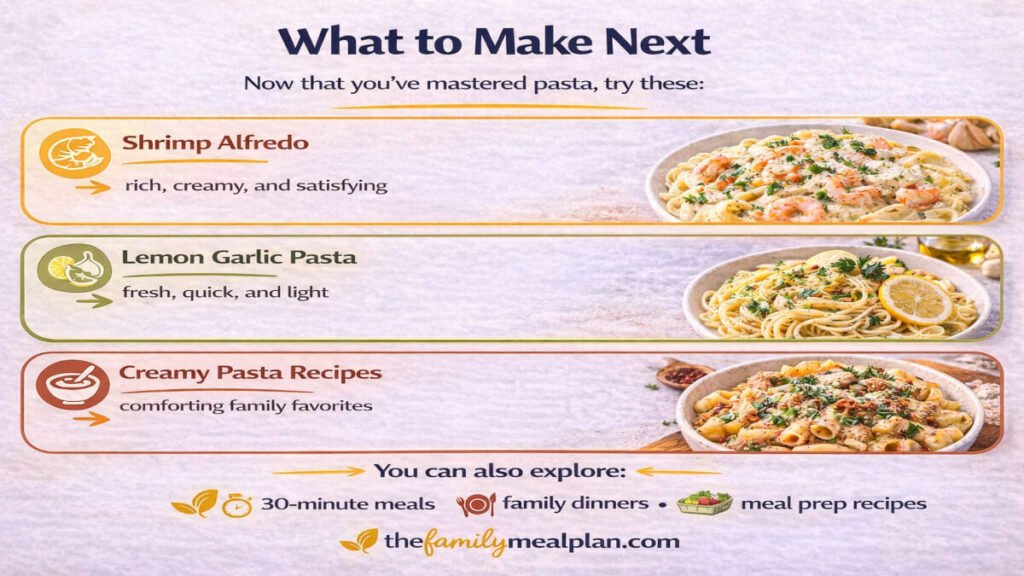
Now that you’ve mastered pasta, try these:
👉 Shrimp Alfredo – rich, creamy, and satisfying
👉 Lemon Garlic Shrimp Pasta – fresh, quick, and light
👉 Creamy Pasta Recipes – comforting family favorites
You can also explore:
Frequently Asked Questions
Should I add oil to pasta water?
No. It doesn’t prevent sticking and reduces sauce adhesion.
Should I rinse pasta?
Only for cold pasta dishes like pasta salad.
How much pasta per person?
- 2 oz dry pasta per person
- 4 oz for larger appetites
Why is my pasta bland?
You didn’t salt the water enough.
Can I cook pasta ahead of time?
Yes—slightly undercook and reheat with sauce.
Final Takeaway
Perfect pasta comes down to mastering a few simple fundamentals:
- Use enough water
- Salt properly
- Cook to al dente
- Save pasta water
- Finish in the sauce
Once you apply these consistently, every pasta dish you make—from quick weeknight dinners to full family meals—will taste noticeably better.