
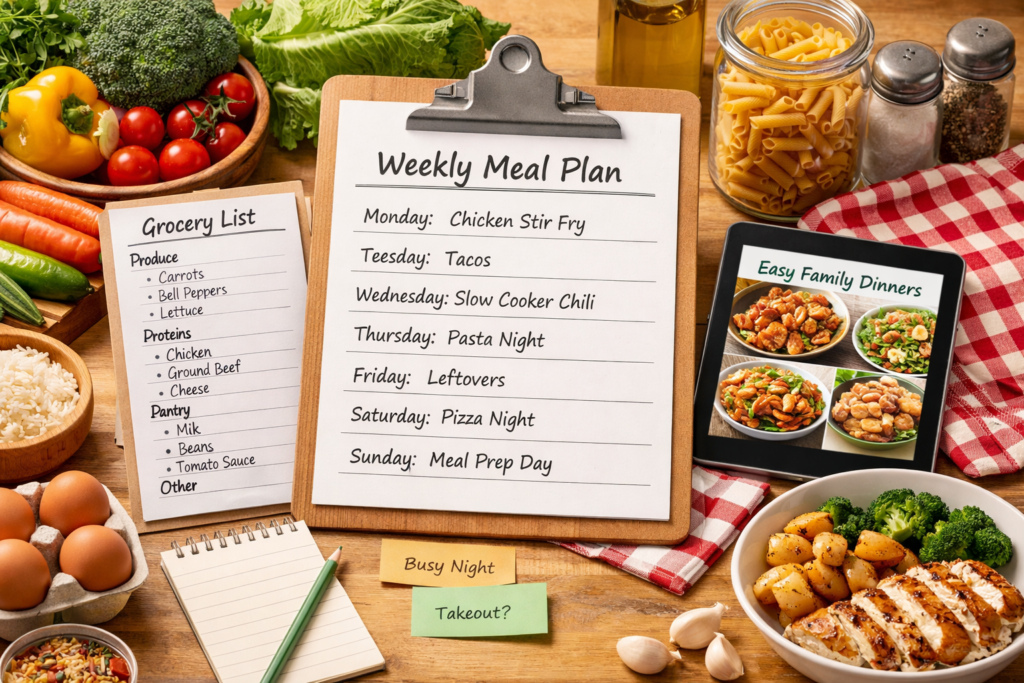
Meal planning is one of the simplest ways to save time, reduce stress, and eat healthier during the week. Instead of wondering what to cook each night, a weekly meal plan gives you a clear roadmap for easy, balanced family meals.
The best part? It doesn’t have to be complicated.
In this guide, you’ll learn exactly how to meal plan for the week using a simple system that works for real life — even on your busiest days.
Looking for meal ideas to plug into your plan? Browse our Easy Meals, Family Dinners, Healthy Recipes, and Weekly Meal Plans to quickly build your week with recipes your family will love to eat.
Why Meal Planning Works
Meal planning isn’t just about organization — it’s about making everyday life easier.
Key Benefits
- Saves time during busy weekdays
- Reduces daily decision fatigue
- Helps stick to a grocery budget
- Encourages healthier eating habits
- Minimizes food waste
Once you build a simple routine, meal planning becomes second nature.
Step-by-Step: How to Meal Plan for the Week
Step 1: Choose Your Planning Day
Pick one day each week to plan your meals.
Most people choose:
- Saturday (prep ahead of Sunday shopping)
- Sunday (most popular)
- Friday (plan before weekend shopping)
Consistency is more important than the specific day.
Step 2: Check Your Schedule
Before choosing meals, look at your week.
Ask:
- Which nights are busy?
- When do you need quick meals?
- When can you cook something more involved?
Example:
- Monday → Quick 30-minute meal
- Wednesday → Slow cooker meal
- Friday → Easy or takeout-style meal
This keeps your plan realistic.
Step 3: Pick 4–6 Core Dinners
You don’t need to plan every single meal.
Focus on:
- 4–6 dinners
- Leftovers for 1–2 nights
- One flexible night (easy meal or takeout)
Simple Weekly Structure:
- Chicken dish
- One-pan meal
- Pasta night
- Rice or bowl meal
- Leftovers
Save This Simple Weekly Meal Plan Template
Here’s a simple example of how your weekly meal plan can look:
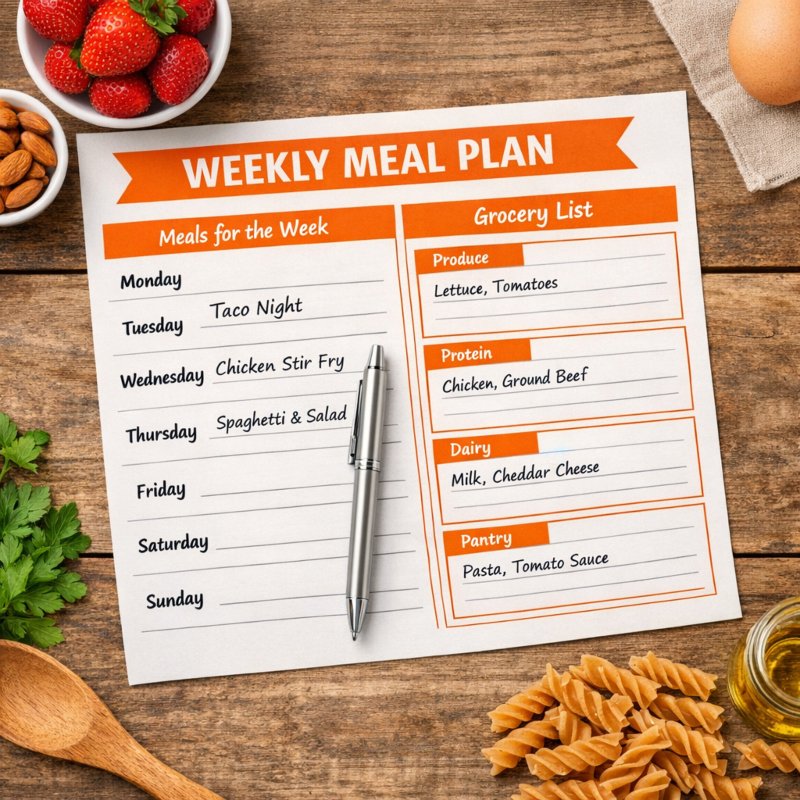
📌Save this weekly meal plan for later!
Click the image to pin it and come back to it anytime you need to plan your week.
Monday:
Tuesday:
Wednesday:
Thursday:
Friday:
Saturday:
Sunday:
Build Your Grocery List the Smart Way
Organizing your grocery list by category makes shopping faster and helps you avoid forgetting key ingredients.
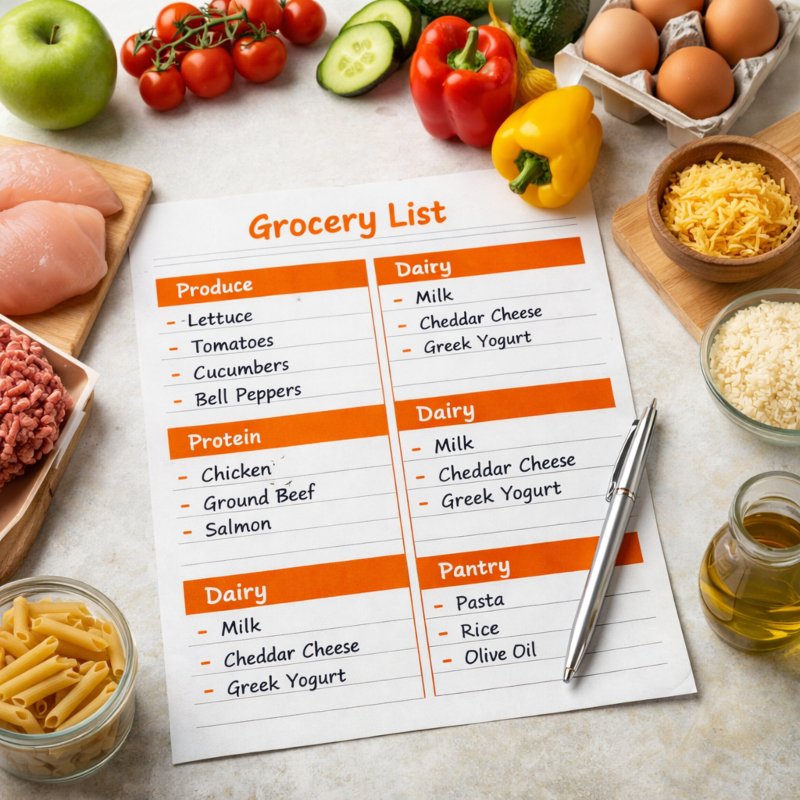
Once your meals are set, create your grocery list based on ingredients.
How to Do It Efficiently
Group items by category:
- Proteins
- Vegetables
- Pantry items
- Dairy
- Frozen
This makes shopping faster and more organized.
Keep Meals Simple (The 80/20 Rule)
You don’t need complicated recipes every night.
Stick to:
- 80% simple meals
- 20% new or fun recipes
This balance prevents burnout and keeps meal planning sustainable.
Prep Ahead to Save Time
Prepping ingredients ahead of time makes weeknight cooking faster, easier, and less stressful.
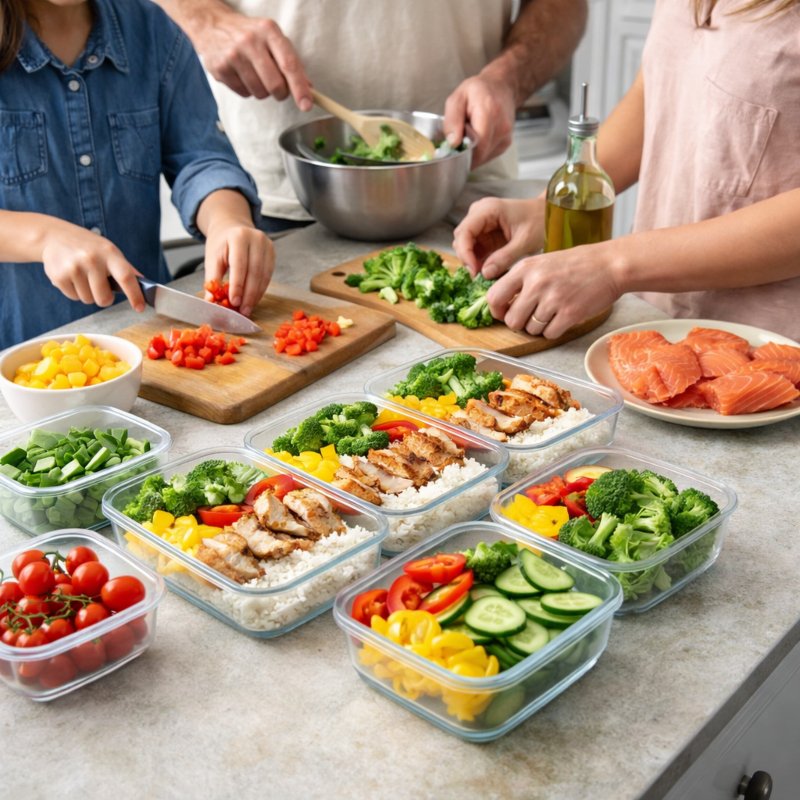
A little prep goes a long way.
Quick Prep Ideas
- Chop vegetables in advance
- Cook rice or grains ahead
- Marinate proteins
- Pre-portion snacks
Even 30 minutes of prep can save hours during the week.
Common Meal Planning Mistakes to Avoid
Avoid these common pitfalls:
- Planning overly complicated meals
- Not accounting for busy nights
- Trying too many new recipes at once
- Skipping a flexible meal option
- Not using leftovers
Keep it simple and flexible.
Example Weekly Meal Plan
Here’s a realistic sample:
- Monday: Garlic Chicken with Vegetables
- Tuesday: Chicken and Rice Skillet
- Wednesday: Slow Cooker Chicken Bowls
- Thursday: Pasta Night
- Friday: Leftovers
- Saturday: Quick Stir Fry
- Sunday: Meal Prep + Simple Dinner
What to Serve with Your Meals
Keep sides simple:
- Steamed vegetables
- Side salads
- Rice or quinoa
- Bread or rolls
This keeps meals balanced without extra effort.
Frequently Asked Questions
How long does meal planning take?
About 20–30 minutes once you get into a routine.
Do I need to plan every meal?
No — focus on dinners first. Add other meals if needed.
What if plans change?
That’s normal. Swap meals or use your flexible night.
How do I keep meal planning from getting boring?
Rotate recipes and try one new meal each week.